Tag Archives: pandemic

Collegiality as a defence against pandemic burnout

photograph of a flower for decorative purposes onlyMany of my less experienced colleagues ask, ‘what is collegiality?’  Collegiality is the glue that holds universities together according to Neeta Baporikar.  While Roland S. Barth suggested that if students are to learn and develop, then their teachers must also learn and develop and collegiality is the set of practices and culture that support this adult growth.  In this context, Thomas Hoerr has proposed that collegiality has five components: (i) teachers talking about students with teachers; (ii) teachers working together to develop education programmes; (iii) teachers observing one another; (iv) teachers teaching each other; and (v) teachers talking about education and working together on committees.  Neeta Baporikar echoes this view by concluding that if we hope to teach students to participate, examine issues, collaborate, think critically and synthesise new approaches then we should be their model.  

In an environment where research is a priority, it is possible to substitute ‘researcher’ for ‘teacher’ in the descriptions above.  Then collegiality becomes researchers talking about [research] students, researchers working together to develop research programmes, researchers observing one another, researchers teaching each other, and researchers talking about research and working together on committees.  The idea that collegiality is a strategy for excellence holds as well as for research as it does for teaching.

The pressures on early career academics in a research university can be intense and the temptation to focus exclusively on delivering teaching and performing research can lead individuals to work in isolation and to neglect the opportunities provided by active engagement with their colleagues.  However, leaders must also take responsibility for creating an environment in which collegiality can thrive and encouraging active participation – it is part our service to the academic community as leaders to create and maintain a culture of scholarship and excellence [see ‘Clueless on leadership style’ on June 14th, 2017].  Neeta Baporikar provides steps that heads of departments can take to nurture collegiality, including providing a vision, encouraging collaborative participation, listening to diverse opinions, building on people’s strengths, and being aware of the world outside the department.  This is similar to the shepherding approach to leadership that I wrote about in May 2017 [‘Leadership is like shepherding’ on May 10th, 2017].  However, it has all become much more difficult in a pandemic – both collegiality and leadership.  Last week an article in Nature suggested that pandemic burnout is rife amongst academics working long hours in isolation to transpose and deliver their teaching materials online, to maintain their research without the spontaneity of face-to-face discussions with their team or collaborators, and to support the well-being and mental health of students who are also at risk of burnout.  It is suggested that burnout can be managed by finding a forum to express your feelings, creating ways to detach from stress, prioritizing and normalizing conversations about mental health, and fighting the isolation through meeting with peers.  These steps are a combination of traditional collegiality and the five ways to well-being: connect, be active, take notice, keep learning and give [see graphic in ‘On the impact of writing on well-being’ on March 3rd, 2021].

References

Neeta Baporikar, Collegiality as a strategy for excellence in academia, IJ Strategic Change Management, 6(1), 2015.

Roland Barth, Improving schools from within, Jossey-Bass, 2010.

Virginia Gewin, Pandemic burnout is rampant in academia, Nature, 591: 489-491, 2021.

Thomas R. Hoerr, Principal Connection: The Juggler’s Guide to Collegiality, Communication Skills for Leaders, 72(7): 88 -89, 2015.


Lacking creativity

detail tl from abstract painting by Zahrah RI feel that I am moving to the next level of experience with online meetings but I am unsure that it will address the slow down in productivity and a loss of creativity being reported by most leaders of research groups to whom I have spoken recently.  About a month ago, we organised an ‘Away Day’ for all staff in the School of Engineering with plenary presentations, breakout groups and a Q&A session.  Of course, the restrictions induced by the pandemic meant that we were only ‘away’ in the sense of putting aside our usual work routine and it only lasted for half a day because we felt a whole day in an online conference would be counter productive; nevertheless, the feedback was positive from the slightly more than one hundred staff who participated.  On a smaller scale, we have experimented with randomly allocating members of my research team to breakout sessions during research group meetings in an attempt to give everyone a chance to contribute and to stimulate those serendipitous conversations that lead to breakthroughs, or least alternative solutions to explore.  We have also invited external speakers to join our group meetings – last month we had a talk from a researcher in Canada.  We are trying to recreate the environment in which new ideas bubble to the surface during casual conversations at conferences or visits to laboratories; however, I doubt we are succeeding.  The importance of those conversations to creativity and innovation in science is highlighted by the story of how Emmanuelle Charpentier and Jennifer Doudna met for the first time at a conference in Puerto Rico.   While wandering around San Juan on a warm Caribbean evening in 2011 discussing the way bacteria protect themselves against viruses by chopping up the DNA of the virus, they realised that it could be turned into molecular scissors for cutting and editing the genes of any living creature.  They went home after the conference to their labs in Umea University, Sweden and UC Berkeley respectively and collaborated round the clock to implement their idea for which they won this year’s Nobel Prize for Chemistry.  Maybe the story is apocryphal; however, based on my own experience of conversations on the fringes of scientific meetings, they are more productive than the meeting itself and their loss is a significant casualty of the COVID-19 pandemic.  There are people who point to the reduction in the carbon footprint of science research caused by the cancellation of conferences and who argue that, in order to contribute to UN Goals for Sustainable Development, we should not return to gatherings of researchers in locations around the world.  I agree that we should consider our carbon footprint more carefully when once again we can travel to scientific meetings; however, I think the innovations required to achieve the UN Goals will emerge very slowly, or perhaps not all, if researchers are limited to meeting online only.

Source:

Clive Cookson, A dynamic Nobel duo with natural chemistry, FT Weekend, 10/11 October 2020.

Image: Extract from abstract by Zahrah Resh.

Shaping the mind during COVID-19

Books on a window sillIf you looked closely at our holiday bookshelf in my post on August 12th 2020, you might have spotted ‘The Living Mountain‘ by Nan Shepherd [1893-1981] which a review in the Guardian newspaper described as ‘The finest book ever written on nature and landscape in Britain’.  It is an account of the author’s journeys in the Cairngorm mountains of Scotland.  Although it is  short, only 108 pages, I have to admit that it did not resonate with me and I did not finish it.  However, I did enjoy the Introduction by Robert MacFarlane and the Afterword by Jeanette Winterson, which together make up about a third of the book. MacFarlane draws parallels between Shepherd’s writing and one of her contemporaries, the French philosopher,  Maurice Merleau-Ponty [1908-1961] who was a leading proponent of existentialism and phenomenology.  Existentialists believe that the nature of our existence is based on our experiences, not just what we think but what we do and feel; while phenomenology is about the connections between experience and consciousness.  Echoing Shepherd and in the spirit of Merleau-Ponty, MacFarlane wrote in 2011 in his introduction that ‘we have come increasingly to forget that our minds are shaped by the bodily experience of being in the world’.  It made me think that as the COVID-19 pandemic pushes most university teaching on-line we need to remember that sitting at a computer screen day after day in the same room will shape the mind rather differently to the diverse experiences of the university education of previous generations.  I find it hard to imagine how we can develop the minds of the next generation of engineers and scientists without providing them with real, as opposed to virtual, experiences in the field, design studio, workshop and laboratory.

Source:

Nan Shepherd, The Living Mountain, Edinburgh: Canongate Books Ltd, 2014 (first published in 1977 by Aberdeen University Press)


Condition-monitoring using infrared imaging

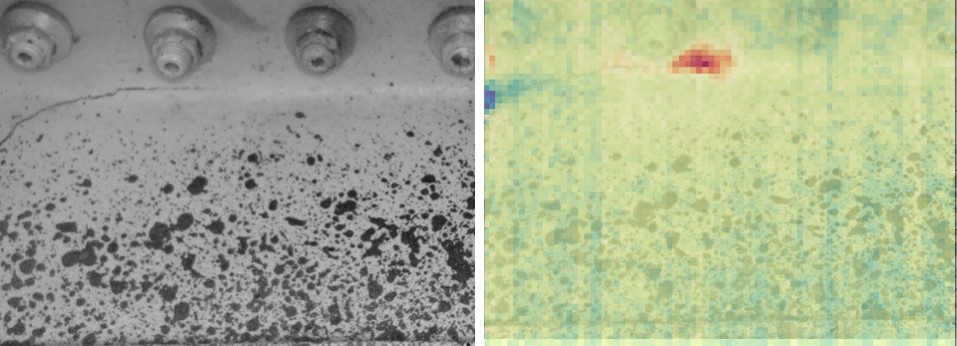
If you have travelled in Asia then you will probably have experienced having your health monitored by infrared cameras as you disembarked from your flight.  It has been common practice in many Asian countries since long before the COVID-19 pandemic and perhaps will become more usual elsewhere as a means of easily identifying people with symptoms of a fever that raises their body temperature.  Since, research has shown that infrared thermometers are slightly more responsive as well as quicker and easier to use than other types of skin surface thermometers [1].  In my research group, we have been using infrared cameras for many years to monitor the condition of engineering structures by evaluating the distribution of load or stress in them [see ‘Counting photons to measure stress‘ on November 18th, 2015 and  ‘Insidious damage‘ on December 2nd, 2015].  In the DIMES project, we have implemented a low-cost sensor system that integrates infrared and visible images with information about applied loads from point sensors, which allows the identification of initiation and tracking of damage in aircraft structures [2].  I reported in December 2019 [see ‘When seeing nothing is a success‘] that we were installing prototype systems in a test-bench at Empa.  Although the restrictions imposed by the pandemic have halted our tests, we were lucky to obtain data from our sensors during the propagation of damage in the section of wing at Empa before lockdown.  This is a landmark in our project and now we are preparing to install our system in test structures at Airbus once the pandemic restrictions are relaxed sufficiently.  Of course, we will also be able to use our system to monitor the health of the personnel involved in the test (see the top image of one of my research team) as well as the health of the structure being tested – the hardware is the same, it’s just the data processing that is different.

The image is a composite showing images from a visible camera (left) and processed data from infrared camera overlaid on the same visible image (right) from inside a wing box during a test at Empa with a crack extending from left to right with its tip surrounded by the red area in the right image.  Each nut in the image is about 20 mm in diameter and a constant amplitude load at 1.25 Hz was being applied causing a wing tip displacement of 80 mm +/- 15 mm.

The University of Liverpool is the coordinator of the DIMES project and the other partners are Empa, Dantec Dynamics GmbH and Strain Solutions Ltd.

The DIMES project has received funding from the Clean Sky 2 Joint Undertaking under the European Union’s Horizon 2020 research and innovation programme under grant agreement No. 820951.


The opinions expressed in this blog post reflect only the author’s view and the Clean Sky 2 Joint Undertaking is not responsible for any use that may be made of the information it contains.

References

[1] Burnham, R.S., McKinley, R.S. and Vincent, D.D., 2006. Three types of skin-surface thermometers: a comparison of reliability, validity, and responsiveness. American journal of physical medicine & rehabilitation, 85(7), pp.553-558.

[2] Middleton, C.A., Gaio, A., Greene, R.J. and Patterson, E.A., 2019. Towards automated tracking of initiation and propagation of cracks in aluminium alloy coupons using thermoelastic stress analysis. Journal of Nondestructive Evaluation, 38(1), p.18.