Category Archives: Soapbox

Preparing for winter

I had been queueing slowly up the steps to board a plane thinking about nothing in particular when, as I stepped into the plane, one of cabin staff said to me ‘Are you getting ready for winter?’  I looked at her somewhat perplexed because it was only September, and she pointed to the book that I was holding ready to read on the flight home.  It was ‘Winter’ by Ali Smith.  It is a novel with much to say on many issues.

One of the central characters in the novel, Art writes a blog and someone challenges him to write about a real thing, something that he remembers happening and not a blog thing.  He describes a real childhood memory and when it is suggested that he should write about it, his response is he could never put something like that on-line because ‘it’s way to real’.  I have some empathy with Art, because it can be difficult writing about your thoughts and memories for anyone to read.  However, I have noticed that the readership of the blog goes up when I do write about such things [see for example ‘Thinking more clearly by writing weekly‘ on May 2nd, 2018 or ‘Depressed by exams‘ on January 31st, 2018].  So, if people are interested  perhaps I should do it more often.

Another passage that resonated with me was about age.  The narrator is her sixties, which I will be soon, and comments that ‘You never stop being yourself on the inside whatever age people think you are by looking at you from the outside.’  I think that this is true but perhaps difficult to reconcile with consciousness being an accumulation of sensory experiences [see ‘Is there a real ‘you’ or ‘I’‘ on March 6th, 2019]

Source: Ali Smith, Winter, London: Penguin Books, 2018 (see pages 188-9 for Art recalling his childhood memory and page 251 for discussion about being in your sixties).
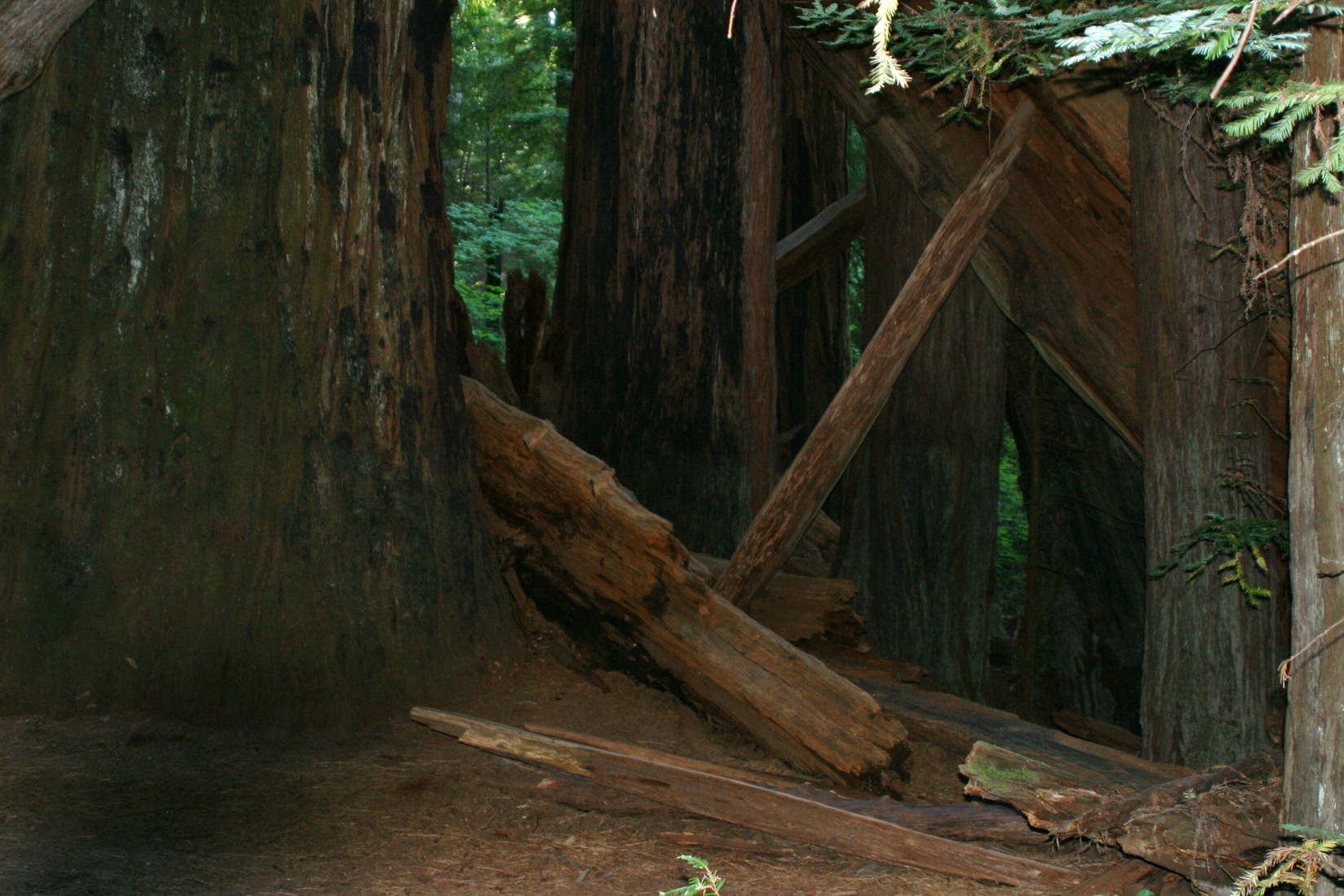
Trees are amongst the slowest moving beings with which we share our world

Last month I mentioned that I started reading ‘Overstory’ by Richard Powers on my trip back from the US [see ‘When an upgrading is downgrading‘ on August 21st, 2019].  I only finished it about ten days ago because I have not had much time to read and it is a long book at 629 pages.  It is a well-written book including some quotable passages, but one that I particularly liked which seems relevant in this era of polarised perspectives: ‘The best arguments in the world won’t change a person’s mind.  The only thing that can is a good story.’  And, Richard Powers tells a good story about the destruction of the ecosystem, on which we are dependent, as a result of large-scale felling of ancient forests.  The emphasis should be on ‘ancient’ because time for trees appears to run at a different speed than for humans.  While we can observe the seasonal changes in an ancient woodland, we are barely conscious on the growth and movement of the woodland.  When we read Shakespeare’s lines in Macbeth about ‘Great Birnam wood to high Dunsinane Hill shall come’,  we think of it moving over the landscape at the speed of an army of people, whereas woods move so slowly that we do not live long enough to notice the change.  For instance, there is a spruce tree in Sweden that is 9,500 years old.  Our spatial understanding of a tree also leads to a misconception because we can only see the overstory, i.e. what is happening above ground; so, we think that each trunk is an individual tree, whereas for many types of tree many apparently individual trunks belong to the same organism with an extensive understory below ground which might be thousands of years old.  All trees are involved in a substantial understory communicating with each other in ways that we can barely imagine let alone comprehend.  Most of the ancient forests in Europe were cut down before science revealed the scale and complexity of life in them; yet, we still continue to fell forests as if there was an inexhaustible supply rather than one that could take as long to replicate as humans have been recording our history.

If you would like to arguments about trees then read ‘The Hidden Life of Trees’ by Paul Wohlleben, London: William Collins, 2017 (my title is a quote from this book).  If you are unconvinced then read the ‘Overstory’ by Richard Powers, London: Penguin (Vintage), 2019.

Thought leadership in fusion engineering

The harnessing of fusion energy has become something of a holy grail – sought after by many without much apparent progress.  It is the energy process that ‘powers’ the stars and if we could reproduce it on earth in a controlled environment then it would offer almost unlimited energy with very low environmental costs.  However, understanding the science is an enormous challenge and the engineering task to design, build and operate a fusion-fuelled power station is even greater.  The engineering difficulties originate from the combination of two factors: the emergent behaviour present in the complex system and that it has never been done before.  Engineering has achieved lots of firsts but usually through incremental development; however, with fusion energy it would appear that it will only work when all of the required conditions are present.  In other words, incremental development is not viable and we need everything ready before flicking the switch.  Not surprisingly, engineers are cautious about flicking switches when they are not sure what will happen.  Yet, the potential benefits of getting it right are huge; so, we would really like to do it.  Hence, the holy grail status: much sought after and offering infinite abundance.

Last week I joined the search, or at least offered guidance to those searching, by publishing an article in Royal Society Open Science on ‘An integrated digital framework for the design, build and operation of fusion power plants‘.  Working with colleagues at the Culham Centre for Fusion Energy, Richard Taylor and I have taken our earlier work on an integrated nuclear digital environment for the nuclear energy using fission [see ‘Enabling or disruptive technology for nuclear engineering?‘ on january 28th, 2015] and combined it with the hierarchical pyramid of testing and simulation used in the aerospace industry [see ‘Hierarchical modelling in engineering and biology‘ on March 14th, 2018] to create a framework that can be used to guide the exploration of large design domains using computational models within a distributed and collaborative community of engineers and scientists.  We hope it will shorten development times, reduce design and build costs, and improve credibility, operability, reliability and safety.  It is a long list of potential benefits for a relatively simple idea in a relatively short paper (only 12 pages).  Follow the link to find out more – it is an open access paper, so it’s free.

References

Patterson EA, Taylor RJ & Bankhead M, A framework for an integrated nuclear digital environment, Progress in Nuclear Energy, 87:97-103, 2016.

Patterson EA, Purdie S, Taylor RJ & Waldon C, An integrated digital framework for the design, build and operation of fusion power plants, Royal Society Open Science, 6(10):181847, 2019.

On the trustworthiness of multi-physics models

I stayed in Sheffield city centre a few weeks ago and walked past the standard measures in the photograph on my way to speak at a workshop.  In the past, when the cutlery and tool-making industry in Sheffield was focussed around small workshops, or little mesters, as they were known, these standards would have been used to check the tools being manufactured.  A few hundred years later, the range of standards in existence has extended far beyond the weights and measures where it started, and now includes standards for processes and artefacts as well as for measurements.  The process of validating computational models of engineering infrastructure is moving slowly towards establishing an internationally recognised standard [see two of my earliest posts: ‘Model validation‘ on September 18th, 2012 and ‘Setting standards‘ on January 29th, 2014].  We have guidelines that recommend approaches for different parts of the validation process [see ‘Setting standards‘ on January 29th, 2014]; however, many types of computational model present significant challenges when establishing their reliability [see ‘Spatial-temporal models of protein structures‘ on March 27th, 2019].  Under the auspices of the MOTIVATE project, we are gathering experts in Zurich on November 5th, 2019 to discuss the challenges of validating multi-physics models, establishing credibility and the future use of data from experiments.  It is the fourth in a series of workshops held previously in Shanghai, London and Munich.  For more information and to register follow this link. Come and join our discussions in one of my favourite cities where we will be following ‘In Einstein’s footprints‘ [posted on February 27th, 2019].

The MOTIVATE project has received funding from the Clean Sky 2 Joint Undertaking under the European Union’s Horizon 2020 research and innovation programme under grant agreement No. 754660.

The opinions expressed in this blog post reflect only the author’s view and the Clean Sky 2 Joint Undertaking is not responsible for any use that may be made of the information it contains.