Category Archives: Engineering

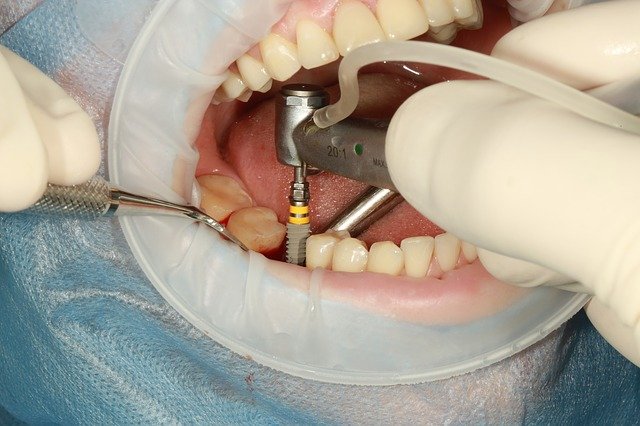
Turning the screw in dentistry

Dental implant surgery showing implant being screwed into placeTwo weeks ago, I wrote about supervising PhD students and my own PhD thesis [‘35 years later and still working on a PhD thesis‘ on September 16th, 2020].  The tedium of collecting data as a PhD student without digital instrumentation stimulated me to work subsequently on automation in experimental mechanics which ultimately led to projects like INSTRUCTIVE and DIMES.  In INSTRUCTIVE we developed  low-cost digital sensors for tracking damage in components; while in DIMES we are transitioning the technology into the industrial environment using tests on full-scale aircraft systems as demonstrators.  However, my research in automating and digitising measurements in experimental mechanics has not generated my most cited publications; instead, my two most cited papers describe the development and application of results in my PhD thesis to osseointegrated dental implants.  One, published in 1994, describes the ‘Tightening characteristics for screwed joints in osseointegrated dental implants‘; while, the other published two years earlier provides a ‘Theoretical analysis of the fatigue life of fixture screws in osseointegrated dental implants‘.  In other words, the former tells you how to tighten the screws so that the implants do not come loose and the latter how long the screws will survive before they need to be replaced – both quite useful pieces of information for dentists which perhaps explains their continued popularity.

Statistics footnote: my two most cited papers received five times as many citations in the last 18 months and also since publication than the most popular paper from my PhD thesis. The details of the three papers are given below:

Burguete, R.L., Johns, R.B., King, T. and Patterson, E.A., 1994. Tightening characteristics for screwed joints in osseointegrated dental implants. Journal of Prosthetic Dentistry, 71(6), pp.592-599.

Patterson, E.A. and Johns, R.B., 1992. Theoretical analysis of the fatigue life of fixture screws in osseointegrated dental implants. The International journal of oral & maxillofacial implants, 7(1), p.26.

Kenny, B. and Patterson, E.A., 1985. Load and stress distribution in screw threads. Experimental Mechanics, 25(3), pp.208-213.

Logos of Clean Sky 2 and EUThe INSTRUCTIVE and DIMES projects have received funding from the Clean Sky 2 Joint Undertaking under the European Union’s Horizon 2020 research and innovation programme under grant agreements No. 685777 and No. 820951 respectively.

The opinions expressed in this blog post reflect only the author’s view and the Clean Sky 2 Joint Undertaking is not responsible for any use that may be made of the information it contains.

Image by володимир волощак from Pixabay.

Shaping the mind during COVID-19

Books on a window sillIf you looked closely at our holiday bookshelf in my post on August 12th 2020, you might have spotted ‘The Living Mountain‘ by Nan Shepherd [1893-1981] which a review in the Guardian newspaper described as ‘The finest book ever written on nature and landscape in Britain’.  It is an account of the author’s journeys in the Cairngorm mountains of Scotland.  Although it is  short, only 108 pages, I have to admit that it did not resonate with me and I did not finish it.  However, I did enjoy the Introduction by Robert MacFarlane and the Afterword by Jeanette Winterson, which together make up about a third of the book. MacFarlane draws parallels between Shepherd’s writing and one of her contemporaries, the French philosopher,  Maurice Merleau-Ponty [1908-1961] who was a leading proponent of existentialism and phenomenology.  Existentialists believe that the nature of our existence is based on our experiences, not just what we think but what we do and feel; while phenomenology is about the connections between experience and consciousness.  Echoing Shepherd and in the spirit of Merleau-Ponty, MacFarlane wrote in 2011 in his introduction that ‘we have come increasingly to forget that our minds are shaped by the bodily experience of being in the world’.  It made me think that as the COVID-19 pandemic pushes most university teaching on-line we need to remember that sitting at a computer screen day after day in the same room will shape the mind rather differently to the diverse experiences of the university education of previous generations.  I find it hard to imagine how we can develop the minds of the next generation of engineers and scientists without providing them with real, as opposed to virtual, experiences in the field, design studio, workshop and laboratory.

Source:

Nan Shepherd, The Living Mountain, Edinburgh: Canongate Books Ltd, 2014 (first published in 1977 by Aberdeen University Press)


35 years later and still working on a PhD thesis

It is about 35 years since I graduated with my PhD.  It was not ground-breaking although, together with my supervisor, I did publish about half a dozen technical papers based on it and some of those papers are still being cited, including one this month which surprises me.  I performed experiments and computer modelling on the load and stress distribution in threaded fasteners, or nuts and bolts.  There were no digital cameras and no computer tomography; so, the experiments involved making and sectioning models of nuts and bolts in transparent plastic using three-dimensional photoelasticity [see ‘Art and Experimental Mechanics‘ on July 17th, 2012].  I took hundreds of photographs of the sections and scanned the negatives in a microdensitometer.  The computer modelling was equally slow and laborious because there were no graphical user interfaces (GUI); instead, I had to type strings of numbers into a terminal, wait overnight while the calculations were performed, and then study reams of numbers printed out on long rolls of paper.  The tedium of the experimental work inspired me to work on utilising digital technology to revolutionise the field of experimental mechanics over the following 15 to 20 years.  In the past 15 to 20 years, I have moved back towards computer modelling and focused on transforming the way in which measurement data are used to improve the fidelity of computer models and to establish confidence in their predictions [see ‘Establishing fidelity and credibility in tests and simulations‘ on July 25th, 2018].  Since completing my PhD, I have supervised 32 students to successful completion of their PhDs.  You might think that was a straightforward process of an initial three years for the first one to complete their research and write their thesis, followed by one graduating every year.  But that is not how it worked out, instead I have had fallow years as well as productive years.  At the moment, I am in a productive period, having graduated two PhD students per year since 2017 – that’s a lot of reading and I have spent much of the last two weekends reviewing a thesis which is why PhD theses are the topic of this post!

Footnote: the most cited paper from my thesis is ‘Kenny B, Patterson EA. Load and stress distribution in screw threads. Experimental Mechanics. 1985 Sep 1;25(3):208-13‘ and this month it was cited by ‘Zhang D, Wang G, Huang F, Zhang K. Load-transferring mechanism and calculation theory along engaged threads of high-strength bolts under axial tension. Journal of Constructional Steel Research. 2020 Sep 1;172:106153‘.

Slow start to an exciting new project on thermoacoustic response of AM metals

We held the kick-off meeting for a new research project this week.  It’s a three-way collaboration involving three professors based in Portugal, the UK and USA [Chris Sutcliffe, John Lambros at UIUC and me]; so, our kick-off meeting should have involved at least two of us travelling to the laboratory of the third collaborator and spending some time brainstorming about the challenges that we have agreed to tackle over the next three years.  Instead we had a call via Skype and a rather procedural meeting in which we covered all of the issues without really engendering any excitement or sparking any new ideas.  It would appear that we need the stimulus of new environments to maximise our creativity and that we use body language as well as facial expressions to help us reach a friendly consensus on which  crazy ideas are worth pursuing and which should be quietly forgotten.

Our new research project has a long title: ‘Thermoacoustic response of Additively Manufactured metals: A multi-scale study from grain to component scales‘.  In simple terms, we are going to look at whether residual stresses could be designed to be beneficial to the performance of structural parts used in demanding environments such as those found in reusable spacecraft, hypersonic flight vehicles and breeder blankets in fusion reactors.  Residual stresses are often induced during the manufacture of parts and are usually detrimental to the performance of the part.  Our hypothesis is that in additive manufacturing, or 3D printing, we have sufficient control of the manufacture of the part that we can introduce ‘designer stresses’ which will improve the part’s performance in demanding environments.  The research is funded jointly by the National Science Foundation (NSF) in the USA and the Engineering and Physical Sciences Research Council (EPSRC) in the UK and is supported by The MTC and Renishaw plc; you can find out more at Grants on the Web. The research will be building on our recent research on ‘Potential dynamic buckling in hypersonic vehicle skin‘ [posted July 1st, 2020] and earlier work, see ‘Hot stuff‘ on September 13th, 2012.  While the demanding environment is not new to us, we will be using 3D printed parts for the first time instead of components made by conventional (subtractive) machining and taking them to higher temperatures.

The thumbnail shows measured modal shapes for a subtractively-manufactured plate subject to the three temperature regimes: room temperature (left), transverse heating of the centre of the plate (middle) and longitudinal heating on one edge (right) from Silva, A.S., Sebastian, C.M., Lambros, J. and Patterson, E.A., 2019. High temperature modal analysis of a non-uniformly heated rectangular plate: Experiments and simulations. J. Sound & Vibration, 443, pp.397-410.