Author Archives: Eann Patterson

Homework practical exercises in structural mechanics

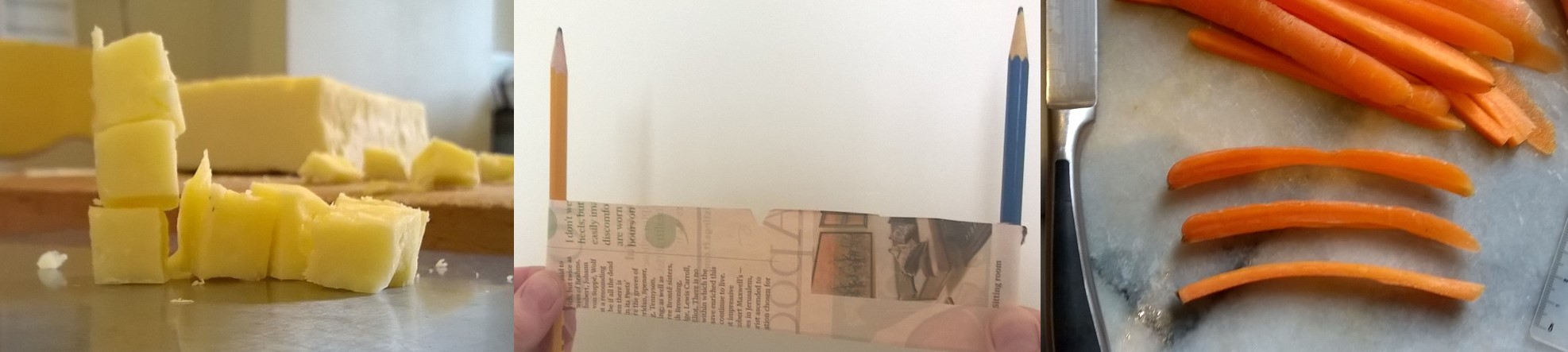
Last week I wrote about the practical exercises that I have been setting as homework in my first year undergraduate course on thermodynamics.  The instruction sheets that I published had been used by thousands of learners on my MOOC, Energy! The Thermodynamics of Everyday Life; and slightly modified versions had been used by more than a thousand students at the University of Liverpool.  A few years ago, I produced another MOOC called ‘Understanding Superstructures’ which also contained three practical exercises for online learners to perform in their kitchens.  I have not used them as part of a blended undergraduate course but nevertheless they have been completed by hundreds of participants in the MOOC.  I have decided to share them for colleagues to use in support of first year courses on the Mechanics of Solids or the Mechanics of Structures.  There is strong food flavour and no additional equipment is needed. Please feel free to use them to support your teaching.

Instruction sheets for thermodynamics practical exercises as homework:

Structural collapse | Crushing and toppling of towers

Stress concentrations | Newspaper tension tests

Residual stresses | Bending carrots


Thermodynamics labs as homework

Many of my academic colleagues are thinking about modifying their undergraduate teaching for next academic year so that they are more resilient to coronavirus.  Laboratory classes present particular challenges when access and density of occupation are restricted.  However, if the purpose of laboratory classes is to allow students to experience phenomena, to enhance understanding, to develop intuition and to acquire skills in using equipment, making measurements and analysing data, then I believe this can achieved using practical exercises for homework.  I created practical exercises, that can be performed in a kitchen at home, as part of a Massive Open Online Course (MOOC) about thermodynamics [See ‘Engaging learners on-line‘ on May 25th, 2016].  I have used the same exercises as part of my first year undergraduate module on thermodynamics for the past four years with similar levels of participation to those experienced by my colleagues who run traditional laboratory classes [see ‘Laboratory classes thirty years on‘ on May 15th, 2019].  I have had a number of enquiries from colleagues in other universities about these practical exercises and so I have decided to make the instruction sheets available to all.  Please feel free to use them to support your teaching.

The versions below are from the MOOC entitled ‘Energy: Thermodynamics in Everyday Life‘ and provide information about where to obtain the small amount of equipment needed, and hence are self-contained.  Although the equipment only costs about £20, at the University of Liverpool, we lend our students a small bag of equipment containing a measuring beaker, a digital thermometer, a plug-in power meter and a plumber’s manometer.  I also use a slightly different version of these instructions sheets that provide information about ‘lab’ reports that students must submit as part of their coursework.

I reported on the initial introduction of blended learning and these practical exercises in Patterson EA, 2019, Using everyday examples to engage learners on a massive open online course, IJ Mechanical Engineering Education, 0306419018818551.

Instruction sheets for thermodynamics practical exercises as homework:

Energy balance using the first law of thermodynamics | Efficiency of a kettle

Ideal gas behaviour | Estimating the value of absolute zero

Overall heat transfer coefficient | Heat losses from a coffee cup & glass


The blind leading the blind

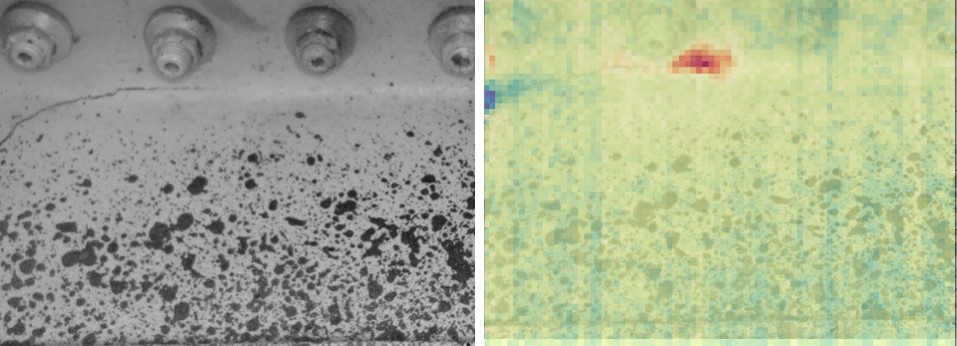
Three years after it started, the MOTIVATE project has come to an end [see ‘Getting smarter’ on June 21st, 2017].  The focus of the project has been about improving the quality of validation for predictions of structural behaviour in aircraft using fewer, better physical tests.  We have developed an enhanced flowchart for model validation [see ‘Spontaneously MOTIVATEd’ on June 27th, 2018], a method for quantifying uncertainty in measurements of deformation in an industrial environment [see ‘Industrial uncertainty’ on December 12th, 2018] and a toolbox for quantifying the extent to which predictions from computational models represent measurements made in the real-world [see ‘Alleviating industrial uncertainty’ on May 13th, 2020].  In the last phase of the project, we demonstrated all of these innovations on the fuselage nose section of an aircraft.  The region of interest was the fuselage skin behind the cockpit window for which the out-of-plane displacements resulting from an internal pressurisation load were predicted using a finite element model [see ‘Did cubism inspire engineering analysis?’ on January 25th, 2017].  The computational model was provided by Airbus and is shown on the left in the top graphic with the predictions for the region of interest on the right.  We used a stereoscopic imaging system  to record images of a speckle pattern on the fuselage before and after pressurization; and from these images, we evaluated the out-of-plane displacements using digital image correlation (DIC) [see ‘256 shades of grey‘ on January 22, 2014 for a brief explanation of DIC].  The bottom graphic shows the measurements being made with assistance from an Airbus contractor, Strain Solutions Limited.  We compared the predictions quantitatively against the measurements in a double-blind process which meant that the modellers and experimenters had no access to one another’s results.  The predictions were made by one MOTIVATE partner, Athena Research Centre; the measurements were made by another partner, Dantec Dynamics GmbH supported by Strain Solutions Limited; and the quantitative comparison was made by the project coordinator, the University of Liverpool.  We found that the level of agreement between the predictions and measurements changed with the level of pressurisation; however, the main outcome was the demonstration that it was possible to perform a double-blind validation process to quantify the extent to which the predictions represented the real-world behaviour for a full-scale aerospace structure.

The content of this post is taken from a paper that was to be given at a conference later this summer; however, the conference has been postponed due to the pandemic.  The details of the paper are: Patterson EA, Diamantakos I, Dvurecenska K, Greene RJ, Hack E, Lampeas G, Lomnitz M & Siebert T, Application of a model validation protocol to an aircraft cockpit panel, submitted to the International Conference on Advances in Experimental Mechanics to be held in Oxford in September 2021.  I would like to thank the authors for permission to write about the results in this post and Linden Harris of Airbus SAS for enabling the study and to him and Eszter Szigeti for providing technical advice.

For more on the validation flowchart see: Hack E, Burguete R, Dvurecenska K, Lampeas G, Patterson E, Siebert T & Szigeti, Steps towards industrial validation experiments, In Multidisciplinary Digital Publishing Institute Proceedings (Vol. 2, No. 8, p. 391) https://www.mdpi.com/2504-3900/2/8/391

For more posts on the MOTIVATE project: https://realizeengineering.blog/category/myresearch/motivate-project/

The MOTIVATE project has received funding from the Clean Sky 2 Joint Undertaking under the European Union’s Horizon 2020 research and innovation programme under grant agreement No. 754660 and the Swiss State Secretariat for Education, Research and Innovation under contract number 17.00064.

The opinions expressed in this blog post reflect only the author’s view and the Clean Sky 2 Joint Undertaking is not responsible for any use that may be made of the information it contains.

Physical actions to inhibit COVID-19 infection

Figure 4 from Ai & Melikov, 2017

Politicians in many countries are fond of claiming that they are following scientific advice when telling us what we can or cannot do in an effort to prevent the spread of the coronavirus, COVID-19.  However, neither they nor the journalists who report their statements tell us what scientists have actually established.  So, I have been reading some of the literature.

A paper by Leung et al [1] published this month in Nature Medicine reports that surgical face masks could prevent transmission of human coronavirus and influenza viruses from symptomatic individuals.  Their conclusions were based on a study of 246 individuals ranging in age from 11 to more than 65 years old of which 59% were female.  Sande et al [2] in 2008, found that any type of general mask is likely to decrease viral exposure and infection risk on a population level; with surgical masks being more effective than home-made masks and children being less well protected.  The relative ineffectiveness of fabrics used in home-made masks, including sweatshirts, T-shirts, towels and scarfs, was demonstrated in 2010 by Rengasamy et al [3], who found that these fabrics had 40-97% instantaneous penetration for monodisperse aerosol particles in the 20 to 1000 nm range.  While in the same year, Cowling et al [4] conducted a systematic review of the subject and concluded there was some evidence to support the wearing of masks or respirators during illness to protect others, and public health emphasis on mask wearing during illness may help reduce influenza virus transmission.  There were fewer data to support the use of masks or respirators to prevent becoming infected.  So, the rational conclusion appears to be that we should wear face masks to protect society as a whole and remember they do not necessarily protect us as individuals.

The emphasis on social distancing is causing widespread economic distress and also appears to be causing a decrease in mental health.  It perhaps should be called physical distancing because that is what we asked to do – to keep 2 m apart or 1.5 m in some places.  In 2017, a team of engineers from the University of Hong Kong and Aalborg University in Denmark [5], concluded that a threshold distance of 1.5 m distinguished between two basic transmission processes of droplets, i.e. a short-range mode and a long-range airborne route.  They reviewed the literature, conducted experiments and performed computational simulations before concluding the risk of infection arising from person-to-person interactions was significantly reduced when people were more than 1.5 m apart because droplets greater than 60 microns in diameter are not transmitted further than 1.5 m; however, smaller droplets are carried further.  In the same year, Ai & Melikov [6] reviewed the airborne spread of expiratory droplets in indoors environments; they found inconsistent results due to different boundary conditions used in computer models and the available instrumentation being too slow to provide accurate time-dependent measurements.  However, it would appear, based on several investigations, that the risk of cross-infection is decreased sharply at distances of 0.8 to 1.5 m (see graphic).  Indoors, the flow interactions in the human microenvironment dominate airborne transmission over short distances (<0.5 m) while the general ventilation flow is more important over longer distances.  Hence, at short distances, the posture and orientation of individuals is important; while at longer distances, if the rate of change of air in the room is high enough then the risk of cross-infection is low.

These findings would seem to suggest that there is some scope to balance restarting social and economic activity with protecting people from the coronavirus by relaxing ‘social’ distancing from 2 m to 1.5 m unless you are  wearing a mask.  After all, we would simply following the example of Taiwan where there are almost no new cases.

References

[1] Leung NH, Chu DK, Shiu EY, Chan KH, McDevitt JJ, Hau BJ, Yen HL, Li Y, Ip DK, Peiris JM, Seto WH. Respiratory virus shedding in exhaled breath and efficacy of face masks. Nature Medicine. 2020 Apr 3:1-5.

[2] van der Sande M, Teunis P, Sabel R. Professional and home-made face masks reduce exposure to respiratory infections among the general population. PLoS One. 2008;3(7).

[3] Rengasamy S, Eimer B, Shaffer RE. Simple respiratory protection—evaluation of the filtration performance of cloth masks and common fabric materials against 20–1000 nm size particles. Annals of occupational hygiene. 2010 Oct 1;54(7):789-98.

[4] Cowling BJ, Zhou YD, Ip DK, Leung GM, Aiello AE. Face masks to prevent transmission of influenza virus: a systematic review. Epidemiology & Infection. 2010 Apr;138(4):449-56.

[5] Liu L, Li Y, Nielsen PV, Wei J, Jensen RL. Short‐range airborne transmission of expiratory droplets between two people. Indoor Air. 2017 Mar;27(2):452-62.

[6] Ai ZT, Melikov AK. Airborne spread of expiratory droplet nuclei between the occupants of indoor environments: A review. Indoor air. 2018 Jul;28(4):500-24.