 A longer post this week because I was invited to write an article for the Citizens of Everywhere project being organised by the Centre for New and International Writing at the University of Liverpool. The article is reproduced below:
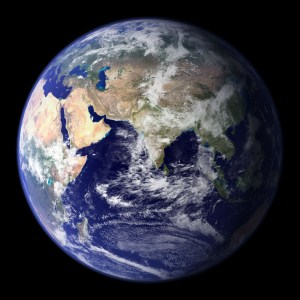
Scientists seek to discover and describe knowledge, while engineers seek to apply and deploy the same knowledge by creating technology that supports our global society. In their quests, both scientists and engineers are dependent on each other and on those that have gone before them. On each other, because scientists increasingly need technology in order make discoveries, and because engineers need new scientific discoveries to drive innovation; and both groups stand on the shoulders of their predecessors, to mis-quote Isaac Newton who said he was able to see further by standing on the shoulders of his predecessors. Scientists and engineers have to build on the achievements of their predecessors, otherwise nothing would be achieved in a single lifetime. This process is enabled by the global dissemination of knowledge and understanding in our society, which does not recognise any boundaries and flows around the world largely unimpeded by the efforts of nation states and private corporations. As Poincaré is reputed to have said ‘the scientist does not study nature because it is useful; he studies it because he delights in it, and he delights in it because it is beautiful’. The feeling of delight is a reward for hours of intense study; but, the realization that you are the first to recognise or discover a new scientific fact generates so much excitement that you want to tell everyone. Scientists have always met to share their findings and discuss the implications. As a young researcher, I had a postcard above my desk showing a photograph of the attendees at the 5th Solvay Conference in 1927 at which 29 scientists from around the world met to debate the latest discoveries relating to electrons and photons. Seventeen of the 29 attendees at this conference went on to receive Nobel prizes. Not all scientific meetings are as famous, or perhaps as significant, as the Solvay conference; but, today they are happening all around the world involving thousands of researchers from scores of countries. Besides the bureaucratic burden of obtaining visas, national boundaries have little impact on these exchanges of scientific and technological knowledge and understanding. If you are a researcher working in the subject with sufficient funding then you can attend; and if your work is sufficiently novel, rigorous and significant, as judged by your peers, then you can present it at one of these meetings. You can also listen to the world’s leading experts in the field, have a discussion over a coffee, or even a meal, with them before going back to your laboratory or office and attempting to add to society’s knowledge and understanding. Most scientists and engineers work as part of a global community contributing to, and exploiting, a shared knowledge and understanding of natural and manufactured phenomena; and in this process, as global citizens, we are relatively unaware and uninfluenced by the national boundaries drawn and fought over by politicians and leaders. Of course, I have described a utopian world to which reality does not conform, because in practice corporations attempt to protect their intellectual property for profit and national governments to classify information in the national interests and sometimes restrict the movement of scientists and technologist to and from states considered to be not playing by the right set of rules. However, on the timescale of scientific discovery, these actions are relatively short-term and rarely totally effective. Perhaps this is because the delight in the beauty of discovery overcomes these obstacles, or because the benefits of altruistic sharing outweigh the selfish gain from restrictive practices. (Of course, the scientific community has its charlatans, fraudsters and free-loaders; but, these counterfeiters tend to operate on a global stage so that even their fake science impacts on the world-wide community of scientists and engineers.) Participation in this global exchange of ideas and information makes many of us feel part of a world-wide community, or citizens of the world, who are enfranchised by our contributions and interactions with other citizens and international organisations. Of course, along with everyone else, we are also inhabitants of the world; and these two actions, namely enfranchisement and inhabiting, are key characteristics of a citizen, as defined by the Shorter Oxford English Dictionary. Theresa May in her speech last October, at the Conservative party conference said: ‘If you believe you’re a citizen of the world, you’re a citizen of nowhere.’ If she is right, then she rendered many scientists and engineers as aliens; however, I don’t think she is, because citizenship of the world does not exclude us from also being citizens of other, local communities; even though politicians may want to redraw the boundaries of these communities and larger unions to which they belong. However, in practice, it is hard to avoid the fact that we are all inhabitants of planet Earth and have a responsibility for ensuring that it remains habitable for our grand-children and great-grandchildren; so, we are all citizens of the world with its associated responsibilities.
When I was a student, thirty years ago, James Lovelock published his famous book, ‘Gaia’ in which he postulated that the world was a unified living system with feedback control that preserved its own stability but not necessarily the conditions for the survival of the human race. More recently, Max Tegmark, in his book ‘Our Mathematical Universe’, has used the analogy of spaceship Earth stocked with large but limited supplies of water, food and fuel, and equipped with both an atmospheric shield and a magnetic field to protect us from life-threatening ultra-violet and cosmic rays, respectively. Our spaceship has no captain; and we spend next to nothing on maintenance such as avoiding onboard explosions, overheating, ultra-violet shield deterioration or premature depletion of supplies. Lovelock and Tegmark are part of a movement away from a reductionist approach to science that has dominated since Descartes and Newton, and towards systems thinking, in which it is recognised that the whole is more than the sum of the parts. It’s hard for most of us to adopt this new thinking, because our education was configured around dividing everything into its smallest constituent parts in order to analyse and understand their function; but, this approach often misses, or even destroys, the emergent behaviour of the complex system – it’s like trying to understand the functioning of the brain by physically dissecting it. Recently reported statements about citizens of the world and about climate change, suggest that some world leaders and politicians find it easier, or more convenient, to use reductionism to ignore or deny the potential for complex systems, such as our global society and planet Earth, to exhibit emergent behaviour.
Thomas L. Friedmann in his book, ‘The World is Flat’ warned that ‘every young American would be wise to think of themselves competing against every young Chinese, Indian or Brazilian’. He was right; we cannot turn back the globalisation of knowledge. The hunger for knowledge and understanding is shared by all and courses provided over the internet are democratizing knowledge to an unprecedented level. For instance, I recently taught a course on undergraduate thermodynamics – not normally a popular subject; but, it was made available globally as a massive open on-line course (MOOC) and taken by thousands of learners in more than 130 countries. The citizens of the world are becoming empowered by knowledge and simultaneously more networked. Large complex networks are systems that exhibit emergent behaviour, which tends to be unexpected and surprising, especially if you only consider their constituents.
 Eighteen months ago I wrote about an insight on high-speed photography that Clive Siviour shared during his 2016 JSA Young Investigator Lecture [see my post entitled ‘Popping balloons‘ on June 15th, 2016]. Clive is interested in high-speed photography because he studies the properties of materials when they are subject to very high rates of deformation, in particular polymers used in mobile phones and cycle helmets – the design requirements for these two applications are very different. The polymer used in the case of your mobile phone needs to protect the electronics inside your phone by absorbing the kinetic energy when you drop the phone on a tiled floor and it needs to be able to do this repeatedly because you are unlikely to replace the case after each accidental drop. A cyclist’s helmet also needs to protect what is inside it but it only needs to do this once because you will replace your helmet after an accident. So, the kinetic energy resulting from an impact can be dissipated through the propagation of damage in the helmut; but in the phone case, it has to be absorbed temporarily as strain energy and then released, like in a spring.

 Realize Engineering
.jpg)