Category Archives: design

On the trustworthiness of multi-physics models

I stayed in Sheffield city centre a few weeks ago and walked past the standard measures in the photograph on my way to speak at a workshop.  In the past, when the cutlery and tool-making industry in Sheffield was focussed around small workshops, or little mesters, as they were known, these standards would have been used to check the tools being manufactured.  A few hundred years later, the range of standards in existence has extended far beyond the weights and measures where it started, and now includes standards for processes and artefacts as well as for measurements.  The process of validating computational models of engineering infrastructure is moving slowly towards establishing an internationally recognised standard [see two of my earliest posts: ‘Model validation‘ on September 18th, 2012 and ‘Setting standards‘ on January 29th, 2014].  We have guidelines that recommend approaches for different parts of the validation process [see ‘Setting standards‘ on January 29th, 2014]; however, many types of computational model present significant challenges when establishing their reliability [see ‘Spatial-temporal models of protein structures‘ on March 27th, 2019].  Under the auspices of the MOTIVATE project, we are gathering experts in Zurich on November 5th, 2019 to discuss the challenges of validating multi-physics models, establishing credibility and the future use of data from experiments.  It is the fourth in a series of workshops held previously in Shanghai, London and Munich.  For more information and to register follow this link. Come and join our discussions in one of my favourite cities where we will be following ‘In Einstein’s footprints‘ [posted on February 27th, 2019].

The MOTIVATE project has received funding from the Clean Sky 2 Joint Undertaking under the European Union’s Horizon 2020 research and innovation programme under grant agreement No. 754660.

The opinions expressed in this blog post reflect only the author’s view and the Clean Sky 2 Joint Undertaking is not responsible for any use that may be made of the information it contains.
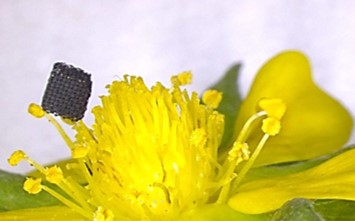
Amazing innovation in metamaterials

Most manufactured things break when you subject them to 90% strain; however Professor Xiaoyu Rayne Zheng of the Department of Mechanical Engineering at Virginia Tech has developed additively-manufactured metamaterials that completely recover from being deformed to this level.  Strains are usually defined as the change in length divided by the original length and is limited in most engineering structures to less than 2%, which is the level at which steel experiences permanent deformation.  Professor Zheng has developed a microstructure with a recurring architecture over seven orders of magnitude that allows an extraordinary level of elastic recovery; and then his team manufactures the material using microstereolithography.  Stereolithography is a form of three-dimensional printing.  Professor Zheng presented some of his research at the USAF research review that I attended last month [see ‘When an upgrade is downgrading‘ on August 21st, 2019 and ‘Coverts inspire adaptive wing design’ on September 11th, 2019].  He explained that, when these metamaterials are made out of a piezoelectric nanocomposite, they can be deployed as tactile sensors with directional sensitivity, or smart energy-absorbing materials.

Rayne Zheng and Aimy Wissa [‘Coverts inspire adaptive wing design’ on September 11th, 2019] both made Compelling Presentations [see post on March 21st, 2018] that captured my attention and imagination; and kept my phone in my pocket!

The picture is from https://www.raynexzheng.com/

For details of the additively-manufactured metamaterials see: Zheng, Xiaoyu, William Smith, Julie Jackson, Bryan Moran, Huachen Cui, Da Chen, Jianchao Ye et al. “Multiscale metallic metamaterials.” Nature materials 15, no. 10 (2016): 1100

For details of the piezoelectric metamaterials see: Cui, Huachen, Ryan Hensleigh, Desheng Yao, Deepam Maurya, Prashant Kumar, Min Gyu Kang, Shashank Priya, and Xiaoyu Rayne Zheng. “Three-dimensional printing of piezoelectric materials with designed anisotropy and directional response.” Nature materials 18, no. 3 (2019): 234

Digital twins and seeking consensus

A couple of weeks ago I wrote about our work on a proof-of-concept for a digital twin of a fission nuclear reactor and its extension to fusion energy [‘Digitally-enabled regulatory environment for fusion power plants‘ on March 20th, 2019].  In parallel with this work and together with a colleague in the Dalton Nuclear Institute, I am supervising a PhD student who is studying the potential role of virtual reality and social network analysis in delivering nuclear infrastructure projects.  In a new PhD project, we are aiming to extend this research to consider the potential provided by an integrated nuclear digital environment [1] in planning the disposal of nuclear waste.  We plan to look at how provision of clear, evidence-based information and in the broader adoption of digital twins to enhance public confidence through better engagement and understanding.  This is timely because the UK’s Radioactive Waste Management (RWM) have launched their new consent-based process for siting a Geological Disposal Facility (GDF). The adoption of a digital environment to facilitate a consent-based process represents a new and unprecedented approach to the GDF or any other nuclear project in the UK. So this will be an challenging and exciting research project requiring an innovative and multi-disciplinary approach involving both engineering and social sciences.

The PhD project is fully-funded for UK and EU citizens as part of a Centre for Doctoral Training and will involve a year of specialist training followed by three years of research.  For more information following this link.

Reference:

[1] Patterson EA, Taylor RJ & Bankhead M, A framework for an integrated nuclear digital environment, Progress in Nuclear Energy, 87:97-103, 2016.

Image: Artist’s impression of geological disposal facility from https://www.gov.uk/government/news/geological-disposal-understanding-our-work


Digitally-enabled regulatory environment for fusion powerplants

Digital twins are a combination of computational models and real-world data describing the form, function and condition of a system [see ‘Can you trust your digital twin?‘ on November 23rd 2016]. They are beginning to transform design processes for complex systems in a number of industries.  We have been working on a proof-of-concept study for a digital reactor in fission energy based on the Integrated Nuclear Digital Environment (INDE) [1].  The research has been conducted by the Virtual Engineering Centre (VEC) at the University of Liverpool together with partners from industry and national laboratories with funding from the UK Government for nuclear innovation.  In parallel, I having been working with a colleague at the University of Manchester and partners at the Culham Centre for Fusion Energy on the form of a digital environment for fusion energy taking account of the higher order of complexity, the scale of resources, the integration of novel technologies, and the likely diversity and distribution of organisations involved in designing, building and operating a fusion powerplant.  We have had positive interactions with the regulatory authorities during the digital fission reactor project and the culture of enabling-regulation [2] offers an opportunity for a new paradigm in the regulation of fusion powerplants.  Hence, we propose in a new PhD project to investigate the potential provided by the integration of digital twins with the regulatory environment to enable innovation in the design of fusion powerplants.

The PhD project is fully-funded for UK and EU citizens as part of a Centre for Doctoral Training and will involve a year of specialist training followed by three years of research.  For more information following this link.

References:

[1] Patterson EA, Taylor RJ & Bankhead M, A framework for an integrated nuclear digital environment, Progress in Nuclear Energy, 87:97-103, 2016.

[2] http://www.onr.org.uk/documents/2018/guide-to-enabling-regulation-in-practice.pdf

Image: https://www.pexels.com/photo/diagram-drawing-electromagnetic-energy-326394/