Tag Archives: Engineering

Amazing innovation in metamaterials

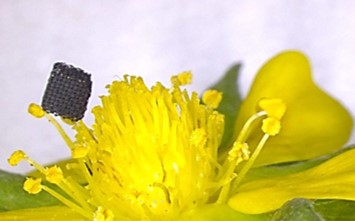
Most manufactured things break when you subject them to 90% strain; however Professor Xiaoyu Rayne Zheng of the Department of Mechanical Engineering at Virginia Tech has developed additively-manufactured metamaterials that completely recover from being deformed to this level.  Strains are usually defined as the change in length divided by the original length and is limited in most engineering structures to less than 2%, which is the level at which steel experiences permanent deformation.  Professor Zheng has developed a microstructure with a recurring architecture over seven orders of magnitude that allows an extraordinary level of elastic recovery; and then his team manufactures the material using microstereolithography.  Stereolithography is a form of three-dimensional printing.  Professor Zheng presented some of his research at the USAF research review that I attended last month [see ‘When an upgrade is downgrading‘ on August 21st, 2019 and ‘Coverts inspire adaptive wing design’ on September 11th, 2019].  He explained that, when these metamaterials are made out of a piezoelectric nanocomposite, they can be deployed as tactile sensors with directional sensitivity, or smart energy-absorbing materials.

Rayne Zheng and Aimy Wissa [‘Coverts inspire adaptive wing design’ on September 11th, 2019] both made Compelling Presentations [see post on March 21st, 2018] that captured my attention and imagination; and kept my phone in my pocket!

The picture is from https://www.raynexzheng.com/

For details of the additively-manufactured metamaterials see: Zheng, Xiaoyu, William Smith, Julie Jackson, Bryan Moran, Huachen Cui, Da Chen, Jianchao Ye et al. “Multiscale metallic metamaterials.” Nature materials 15, no. 10 (2016): 1100

For details of the piezoelectric metamaterials see: Cui, Huachen, Ryan Hensleigh, Desheng Yao, Deepam Maurya, Prashant Kumar, Min Gyu Kang, Shashank Priya, and Xiaoyu Rayne Zheng. “Three-dimensional printing of piezoelectric materials with designed anisotropy and directional response.” Nature materials 18, no. 3 (2019): 234

Coverts inspire adaptive wing design

Earlier this summer, when we were walking the South West Coastal Path [see ‘The Salt Path‘ on August 14th, 2019], we frequently saw kestrels hovering above the path ahead of us.  It is an enthralling sight watching them use the air currents around the cliffs to soar, hang and dive for prey.  Their mastery of the air looks effortless.  What you cannot see from the ground is the complex motion of their wing feathers changing the shape and texture of their wing to optimise lift and drag.  The base of their flight feathers are covered by small flexible feathers called ‘coverts’ or ‘tectrix’, which in flight reduce drag by providing a smooth surface for airflow.  However, at low speed, such as when hovering or landing, the coverts lift up and the change the shape and texture of the wing to prevent aerodynamic stalling.  In other words, the coverts help the airflow to follow the contour of the wing, or to remain attached to the wing, and thus to generate lift.  Aircraft use wing flaps on their trailing edges to achieve the same effect, i.e. to generate sufficient lift at slow speeds, but birds use a more elegant and lighter solution: coverts.  Coverts are deployed passively to mitigate stalls in lower speed flight, as in the picture.  When I was in the US last month [see ‘When upgrading is downgrading‘ on August 21st, 2019], one of the research reports was by Professor Aimy Wissa of the Department of Mechanical Science & Engineering at the University of Illinois Urbana-Champaign, who is working on ‘Spatially distributed passively deployable structures for stall mitigation‘ in her Bio-inspired Adaptive Morphology laboratory.  She is exploring how flaps could be placed over the surface of aircraft wings to deploy in a similar way to a bird’s covert feathers and provide enhanced lift at low speeds.  This would be useful for drones and other unmanned air vehicles (UAVs) that need to manoeuvre in confined spaces, for instance in cityscapes.

I must admit that I had occasionally noticed the waves of fluttering small feathers across the back of a bird’s wing but, until I listened to Aimy’s presentation, I had not realised their purpose; perhaps that lack of insight is why I specialised in structural mechanics rather than fluid mechanics with the result that I was worrying about the fatigue life of the wing flaps during her talk.


The picture is from a video available at Kestrel Hovering and Hunting in Cornwall by Paul Dinning.


Engineering correspondents needed

Society’s perception  of scientists and engineers is not well-balanced; scientists tend to get the headlines when they make new discoveries while engineers are only in the headlines when things go wrong.  Even worse, when I was a student, the successes of the NASA’s space shuttle were usually reported as scientific achievements while its problems were engineering failures; when the whole programme was an enormous feat of engineering!  Perhaps this is because news organisations tend to have science correspondents and editors but no engineering correspondents.  When you search for engineering journalism jobs most of the results relate to roles associated with the technology of journalism; whereas a search for science journalism jobs results in dozens of vacancies for science writers, correspondents and editors.  The lack of engineering correspondents has been evident in the UK during the past week in reporting about the potential bursting of the dam at Toddbrock Reservoir and flooding of the town of Whaley Bridge in Derbyshire UK.  A 188 year old dam has been damaged by the turbulent flow of water over its spillway following unprecedented levels of rainfall (e.g. https://www.bbc.co.uk/news/uk-england-derbyshire-49222956). There is little discussion of the significant achievement of the Victorian engineers who designed and built a dam in the 1831 that has lasted 188 years or that climate change is causing shifts in weather patterns which have altered the design specifications for engineering infrastructure including dams, bridges and sea defences.  We need more journalists to write about engineering and preferable more journalists who have been educated as engineers particularly as society starts to face the potential existential threat caused by climate change and over-population.

For more on the nature of engineering, and its relationship to science, see ‘Making things happen‘ on September 26th, 2018; ‘Engineering is all about ingenuity‘ on September 14th, 2016 and ‘Life takes engineering‘ on April 22nd 2015.

And on the communication skills of engineers: ‘Poetasting engineers‘ on March 4th, 2015 and ‘Einstein and public engagement‘ on August 8th, 2018.

Joining the dots

Six months ago, I wrote about ‘Finding DIMES’ as we kicked off a new EU-funded project to develop an integrated measurement system for identifying and tracking damage in aircraft structures.  We are already a quarter of the way through the project and we have a concept design for a modular measurement system based on commercial off-the-shelf components.  We started from the position of wanting our system to provide answers to four of the five questions that Farrar & Worden [1] posed for structural health monitoring systems in 2007; and, in addition to provide information to answer the fifth question.  The five questions are: Is there damage? Where is the damage? What kind of damage is present? How severe is the damage?  And, how much useful life remains?

During the last six months our problem definition has evolved through discussions with our EU Topic Manager, Airbus, to four objectives, namely: to quantify applied loads; to provide condition-led/predictive maintenance; to find indications of damage in composites of 6mm diameter or greater and in metal to detect cracks longer than 1mm; and to provide a digital solution.  At first glance there may not appear to be much connection between the initial problem definition and the current version; but actually, they are not very far apart although the current version is more specific.  This evolution from the idealised vision to the practical goal is normal in engineering projects.

We plan to use point sensors, such as resistance strain gauges or fibre Bragg gratings, to quantify applied loads and track usage history; while imaging sensors will allow us to measure strain fields that will provide information about the changing condition of the structure using the image decomposition techniques developed in previous EU-funded projects: ADVISE, VANESSA (see ‘Setting standards‘ on January 29th, 2014) and INSTRUCTIVE.  We will use these techniques to identify and track cracks in metals [2]; while for composites, we will apply a technique developed through an EPSRC iCASE award from 2012-16 on ‘Full-field strain-based methods for NDT & structural integrity measurement’ [3].

I gave a short briefing on DIMES to a group of Airbus engineers last month and it was good see some excitement in the room about the direction of the project.  And, it felt good to be highlighting how we are building on earlier investments in research by joining the dots to create a deployable measurement system and delivering the complete picture in terms of information about the condition of the structure.

Image: Infra red photograph of DIMES meeting in Ulm.

References

  1. Farrar & Worden, An introduction to structural health monitoring, Phil. Trans. R Soc A, 365:303-315, 2007
  2. Middleton, C.A., Gaio, A., Greene, R.J. & Patterson, E.A., Towards automated tracking of initiation and propagation of cracks in aluminium alloy coupons using thermoelastic stress analysis, Nondestructive Evaluation, 38:18, 2019.
  3. Christian, W.J.R., DiazDelaO, F.A. & Patterson, E.A., Strain-based damage assessment of accurate residual strength prediction of impacted composite laminates, Composites Structures, 184:1215-1223, 2018.

The INSTRUCTIVE and DIMES projects have received funding from the Clean Sky 2 Joint Undertaking under the European Union’s Horizon 2020 research and innovation programme under grant agreements No. 685777 and No. 820951 respectively.

The opinions expressed in this blog post reflect only the author’s view and the Clean Sky 2 Joint Undertaking is not responsible for any use that may be made of the information it contains.