
Tag Archives: aerospace

Can you trust your digital twin?

Author's digital twin?

Author’s digital twin?

There is about a 3% probability that you have a twin. About 32 in 1000 people are one of a pair of twins.  At the moment an even smaller number of us have a digital twin but this is the direction in which computational biomedicine is moving along with other fields.  For instance, soon all aircraft will have digital twins and most new nuclear power plants.  Digital twins are computational representations of individual members of a population, or fleet, in the case of aircraft and power plants.  For an engineering system, its computer-aided design (CAD) is the beginning of its twin, to which information is added from the quality assurance inspections before it leaves the factory and from non-destructive inspections during routine maintenance, as well as data acquired during service operations from health monitoring.  The result is an integrated model and database, which describes the condition and history of the system from conception to the present, that can be used to predict its response to anticipated changes in its environment, its remaining useful life or the impact of proposed modifications to its form and function. It is more challenging to create digital twins of ourselves because we don’t have original design drawings or direct access to the onboard health monitoring system but this is being worked on. However, digital twins are only useful if people believe in the behaviour or performance that they predict and are prepared to make decisions based on the predictions, in other words if the digital twins possess credibility.  Credibility appears to be like beauty because it is in eye of the beholder.  Most modellers believe that their models are both beautiful and credible, after all they are their ‘babies’, but unfortunately modellers are not usually the decision-makers who often have a different frame of reference and set of values.  In my group, one current line of research is to provide metrics and language that will assist in conveying confidence in the reliability of a digital twin to non-expert decision-makers and another is to create methodologies for evaluating the evidence prior to making a decision.  The approach is different depending on the extent to which the underlying models are principled, i.e. based on the laws of science, and can be tested using observations from the real world.  In practice, even with principled, testable models, a digital twin will never be an identical twin and hence there will always be some uncertainty so that decisions remain a matter of judgement based on a sound understanding of the best available evidence – so you are always likely to need advice from a friendly engineer   🙂

Sources:

De Lange, C., 2014, Meet your unborn child – before it’s conceived, New Scientist, 12 April 2014, p.8.

Glaessgen, E.H., & Stargel, D.S., 2012, The digital twin paradigm for future NASA and US Air Force vehicles, Proc 53rd AIAA/ASME/ASCE/AHS/ASC Structures, Structural Dynamics and Materials Conference, AIAA paper 2012-2018, NF1676L-13293.

Patterson E.A., Feligiotti, M. & Hack, E., 2013, On the integration of validation, quality assurance and non-destructive evaluation, J. Strain Analysis, 48(1):48-59.

Patterson, E.A., Taylor, R.J. & Bankhead, M., 2016, A framework for an integrated nuclear digital environment, Progress in Nuclear Energy, 87:97-103.

Patterson EA & Whelan MP, 2016, A framework to establish credibility of computational models in biology, Progress in Biophysics & Molecular Biology, doi: 10.1016/j.pbiomolbio.2016.08.007.

Tuegel, E.J., 2012, The airframe digital twin: some challenges to realization, Proc 53rd AIAA/ASME/ASCE/AHS/ASC Structures, Structural Dynamics and Materials Conference.

Models as fables

moel arthurIn his book, ‘Economic Rules – Why economics works, when it fails and how to tell the difference‘, Dani Rodrik describes models as fables – short stories that revolve around a few principal characters who live in an unnamed generic place and whose behaviour and interaction produce an outcome that serves as a lesson of sorts.  This seems to me to be a healthy perspective compared to the almost slavish belief in computational models that is common today in many quarters.  However, in engineering and increasingly in precision medicine, we use computational models as reliable and detailed predictors of the performance of specific systems.  Quantifying this reliability in a way that is useful to non-expert decision-makers is a current area of my research.  This work originated in aerospace engineering where it is possible, though expensive, to acquire comprehensive and information-rich data from experiments and then to validate models by comparing their predictions to measurements.  We have progressed to nuclear power engineering in which the extreme conditions and time-scales lead to sparse or incomplete data that make it more challenging to assess the reliability of computational models.  Now, we are just starting to consider models in computational biology where the inherent variability of biological data and our inability to control the real world present even bigger challenges to establishing model reliability.

Sources:

Dani Rodrik, Economic Rules: Why economics works, when it fails and how to tell the difference, Oxford University Press, 2015

Patterson, E.A., Taylor, R.J. & Bankhead, M., A framework for an integrated nuclear digital environment, Progress in Nuclear Energy, 87:97-103, 2016

Hack, E., Lampeas, G. & Patterson, E.A., An evaluation of a protocol for the validation of computational solid mechanics models, J. Strain Analysis, 51(1):5-13, 2016.

Patterson, E.A., Challenges in experimental strain analysis: interfaces and temperature extremes, J. Strain Analysis, 50(5): 282-3, 2015

Patterson, E.A., On the credibility of engineering models and meta-models, J. Strain Analysis, 50(4):218-220, 2015

Insidious damage

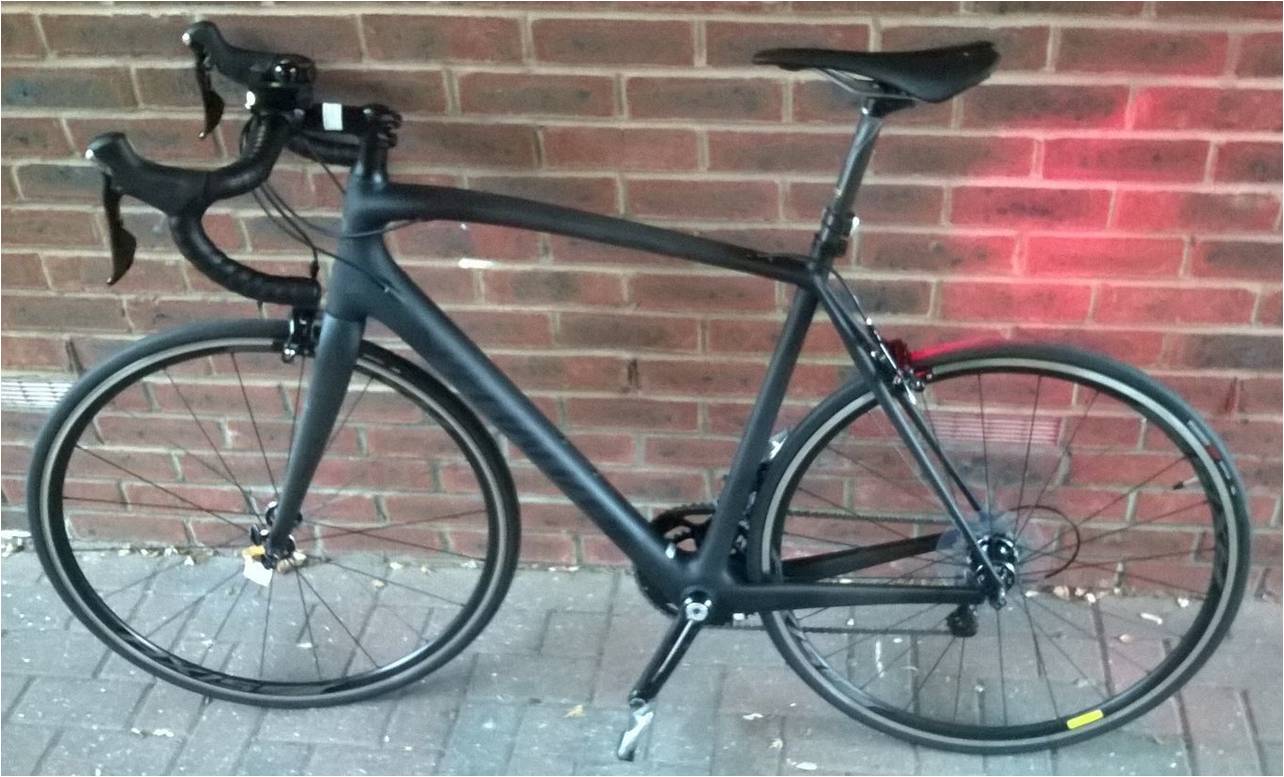
bikeRecently, my son bought a carbon-fibre framed bike for his commute to work. He talked to me about it before he made the decision to go ahead because he was worried about the susceptibility of carbon-fibre to impact damage. The aircraft industry worries about barely visible impact damage (BVID) because while the damage might be barely visible on the accessible face that received the impact, within the carbon-fibre component there can be substantial life-shortening damage. I reassured my son that it is unlikely a road bike would receive impacts of sufficient energy to induce life-shortening damage, at least in ordinary use. However, such impacts are not unusual in aircraft structures which means that they have to be inspected for hidden, insidious damage. The most common method of inspection is based on ultrasound that is reflected preferentially by the damaged areas so that the shape and extent of damage can be mapped. It is difficult to predict the effect on the structural performance of the component from this morphology information so that, when damage is found, the component is usually repaired or replaced immediately. In my research group we have been exploring the use of strain measurements to locate and assess damage by comparing the strain distributions in as-manufactured and in-service components. We can measure the strain fields in components using a number of techniques including digital image correlation (see my post entitled ‘256 shades of grey’) and thermoelastic stress analysis (see my post entitled ‘Counting photons to measure stress‘). The comparison is performed using feature vectors that represent the strain fields, see my post of a few weeks ago entitled ‘Recognising strain’. The guiding principle is that if damage is present but does not change the strain field then the structural performance of the component is unchanged; however when the strain field is changed then it is easier to predict remanent life from strain data than from morphology data. We have demonstrated that these new concepts work in glass-fibre reinforced laminates and are in the process of reproducing the results in carbon-fibre composites.

Sources

Patterson, E.A., Feligiotti, M., Hack, E., 2013, On the integration of validation, quality assurance and non-destructive evaluation, J. Strain Analysis, 48(1):48-59.

Patki, A.S., Patterson, E.A., 2012, Damage assessment of fibre reinforced composites using shape descriptors, J. Strain Analysis, 47(4):244-253.

Engineering novelist

Photo credit: Tom

Photo credit: Tom

Reading books is an important aspect of coming to know who we are [see my post entitled ‘Reading offline’ on March 19th, 2014] and it forms a keycomponent of my deep vacation [see last week’s post]. For the last two years, we have read the books shortlisted for Baileys’ Women’s Fiction Prize [see my comment on Field of Flowers posted on July 8th, 2015] during our family vacation. Our holiday rental cottage was stocked with a large collection of second-hand books and so after the shortlist I moved onto some older novels, one of which was the ‘Lonely Road’ by Nevil Shute. Nevil Shute (1899 – 1960) was an aeronautical engineer who also wrote very successful novels, of which the most famous are perhaps are ‘On the Beach‘ and ‘A Town Like Alice’. His engineering background is often evident in his novels, particularly the pair of novels published posthumously under the title ‘Stephen Morris’. I found his novel, ‘Ruined City’ about industrial and urban regeneration, particular poignant in the current economic climate. These novels were as popular with the younger members of my family as with my generation, which leads me to suggest that they are good vehicles for raising awareness at a subliminal level about engineering. What we need are some modern authors to follow the example provided by Nevil Shute. Maybe it could be your books filling the bookshelves or tablets of budding engineers in a few years time? [see my post entitled ‘Good reads for budding engineers‘ on February 25th, 2015].