Tag Archives: digital

Evolutionary model of knowledge management

Towards the end of last year, I wrote about the challenges in deploying digital technologies in holistic approaches to knowledge management in order to gain organizational value and competitive advantage [see ‘Opportunities lost in knowledge management using digital technology’ on October 25th, 2023].  Almost on the last working day of 2023, we had an article published in PLOS ONE (my first in the journal) in which we explored ‘The impact of digital technologies on knowledge networks in two engineering organizations’.  We used social network analysis and semi-structured interviews to investigate the culture around knowledge management, and the deployment of digital technologies in support of it, in an engineering consultancy and an electricity generator.  The two organizations had different cultures and levels of deployment of digital technologies.  We proposed a new evolutionary model of the culture of knowledge management based on Hudson’s evolutional model of safety culture that is widely used in industry. Our new model is illustrated in the figure from our article, starting from ‘Ignored: we have no knowledge management and no plans for knowledge management’ through to ‘Embedded: knowledge management is integrated naturally into the daily workflow’.  We also proposed that social networks could be used as an indicator of the stage of evolution of knowledge management with low network density and dispersed networks representing higher stages of evolution, based on our findings for the two engineering organizations.

Sources:

Hudson, P.T.W., 2001. Safety management and safety culture: the long, hard and winding road. Occupational health and safety management systems, pp.3-32, 2001

Patterson EA, Taylor RJ, Yao Y. The impact of digital technologies on knowledge networks in two engineering organisations. PLoS ONE 18(12): e0295250, 2023.

 

Empathy with the continuing background noise in society

Image of book cover for 'a flat place' by Noreen MasudResearch has shown that skimming while reading in digital media reduces the inclination and perhaps ability to engage in higher level reading, while a lack of higher-level reading practice compromises the efficacy of skimming when reading. Higher-level reading implies critical and conscious reading, slow reading, non-strategic reading and long-form reading, according to Schuller-Zwierlein et al, 2202.  The psychologist, Steven Pinker has argued that we learn empathy by immersing ourselves in other people’s minds through reading.  During a recent weekend break, I immersed myself in Noreen Masud’s beautiful book, ‘a flat place’.  It is a memoir about childhood trauma, patriarchy and colonialism told through stories associated with flatlands outside Lahore, at Orford Ness, the Cambridgeshire fens, Morecambe Bay and Orkney.  I read it while staying in the flat landscape around Dunham Massey between Warrington and Manchester which made the physical topography described by Masud resonate with me.  However, her reflections on her and our psyche were also deeply significant – she opens one chapter with a quote from Laura S Brown’s article, ‘Not Outside the Range: One Feminist Perspective on Psychic Trauma’, which perhaps is core to her story: ‘…the constant presence and threat of trauma in the lives of girls and woman of all colors, men of color…, lesbian and gay people, people in poverty and people with disabilities has shaped our society, a continuing background noise rather than an unusual event’.

Brown LS. Not outside the range: One feminist perspective on psychic trauma. American Imago. 119-33, 1991.

Masud N, a flat place, Hamish Hamilton, 2023

Schüller-Zwierlein A, Mangen A, Kovač M, van der Weel A. Why higher-level reading is important. First Monday. 27(5) Sep 5, 2022.

Turning the screw in dentistry

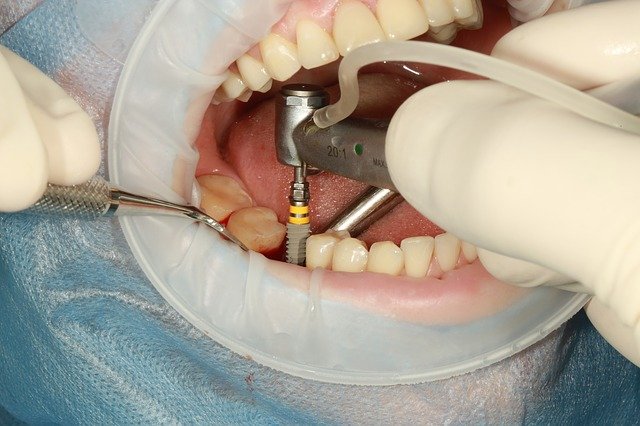
Dental implant surgery showing implant being screwed into placeTwo weeks ago, I wrote about supervising PhD students and my own PhD thesis [‘35 years later and still working on a PhD thesis‘ on September 16th, 2020].  The tedium of collecting data as a PhD student without digital instrumentation stimulated me to work subsequently on automation in experimental mechanics which ultimately led to projects like INSTRUCTIVE and DIMES.  In INSTRUCTIVE we developed  low-cost digital sensors for tracking damage in components; while in DIMES we are transitioning the technology into the industrial environment using tests on full-scale aircraft systems as demonstrators.  However, my research in automating and digitising measurements in experimental mechanics has not generated my most cited publications; instead, my two most cited papers describe the development and application of results in my PhD thesis to osseointegrated dental implants.  One, published in 1994, describes the ‘Tightening characteristics for screwed joints in osseointegrated dental implants‘; while, the other published two years earlier provides a ‘Theoretical analysis of the fatigue life of fixture screws in osseointegrated dental implants‘.  In other words, the former tells you how to tighten the screws so that the implants do not come loose and the latter how long the screws will survive before they need to be replaced – both quite useful pieces of information for dentists which perhaps explains their continued popularity.

Statistics footnote: my two most cited papers received five times as many citations in the last 18 months and also since publication than the most popular paper from my PhD thesis. The details of the three papers are given below:

Burguete, R.L., Johns, R.B., King, T. and Patterson, E.A., 1994. Tightening characteristics for screwed joints in osseointegrated dental implants. Journal of Prosthetic Dentistry, 71(6), pp.592-599.

Patterson, E.A. and Johns, R.B., 1992. Theoretical analysis of the fatigue life of fixture screws in osseointegrated dental implants. The International journal of oral & maxillofacial implants, 7(1), p.26.

Kenny, B. and Patterson, E.A., 1985. Load and stress distribution in screw threads. Experimental Mechanics, 25(3), pp.208-213.

Logos of Clean Sky 2 and EUThe INSTRUCTIVE and DIMES projects have received funding from the Clean Sky 2 Joint Undertaking under the European Union’s Horizon 2020 research and innovation programme under grant agreements No. 685777 and No. 820951 respectively.

The opinions expressed in this blog post reflect only the author’s view and the Clean Sky 2 Joint Undertaking is not responsible for any use that may be made of the information it contains.

Image by володимир волощак from Pixabay.

Tacit hurdle to digital twins

Tacit knowledge is traditionally defined as knowledge that is not explicit or that is difficult to express or transfer from someone else.  This description of what it is not makes the definition itself tacit knowledge which is not very helpful.  Management guides resolve this by giving examples, such as aesthetic sense, or innovation and leadership skills which are elusive skills that are hard to explain [see ‘Innovation out of chaos‘ on June 29th 2016 and  ‘Clueless on leadership style‘ on June 14th, 2017].  In engineering, there are a series of skills that are hard to explain or teach, including creative problem-solving [see ‘Learning problem-solving skills‘  on October 24th, 2018], artful design [see ‘Skilled in ingenuity‘ on August 19th, 2015] and elegant modelling [see ‘Credibility is in the eye of the beholder‘ on April 20th, 2016].  In a university course we attempt to lay the foundations for this tacit engineering knowledge; however, much of it is gained in work through experience and becomes regarded by organisations as part of their intellectual assets – the core of their competitiveness and source of their sustainable technology advantage.  In our work on integrated nuclear digital environments, from which digital twins can be spawned, we would like to capture both explicit and tacit knowledge about complex systems throughout their life cycle which will extend beyond the working lives of their designers, builders and operators.  One of the potential advantages of digital twins is as a knowledge management system by duplicating the life of the physical system and thus allowing its safer and cheaper operation in the long-term as well as its eventual decommissioning.   However, besides the very nature of tacit knowledge that makes its capture difficult, we are finding that its perceived value as an intellectual asset renders stakeholders reluctant to discuss it with us; never mind consider how it might be preserved as part of a digital twin.  Research has shown that tacit knowledge sharing is influenced by environmental factors including national culture, leadership characteristics and social networks [Cai et al, 2020].  I suspect that all of these factors were present in the heyday of the UK civil nuclear power industry when it worked together to construct advanced and complex systems; however, it has not built a power station since 1995 and, at the moment, new power stations are cancelled more often than built, which has almost certainly depressed all of these factors.  So, perhaps we should not be surprised by the difficulties encountered in establishing an integrated nuclear digital environment despite its importance for the future of the industry.

Reference: Cai, Y., Song, Y., Xiao, X. and Shi, W., 2020. The Effect of Social Capital on Tacit Knowledge-Sharing Intention: The Mediating Role of Employee Vigor. SAGE Open, 10(3), p.2158244020945722.