Category Archives: design

More than human

Decorative imageIn his recent book, ‘The Place of Tides’, James Rebanks writes ‘the age of humans will pass.  Perhaps the end has already begun though it may take a long time to play out’.  I grew up when nuclear armageddon appeared to be the major threat to the future of life on Earth and it remains a major threat, especially given current tensions between nations.  However, other threats have gained prominence including both a massive asteroid impact, on the scale of the one that caused the extinction of the dinosaurs 66 million years ago, and climate change, which caused the largest mass extinction, killing 95% of all species, about 252 million years ago.  The current extinction rate is between 100 and 1000 times greater than the natural rate and is being driven by the overexploitation of the Earth’s resources by humans leading to habitat destruction and climate change.  Humans are part of a complex ecosystem, or system of systems, including soil systems with interactions between microorganisms, plants and decaying matter; pollination systems characterised by co-dependence between plants and pollinators; and, aquatic systems connecting rivers, lakes and oceans by the movement of water, nutrients and migratory species.  The overexploitation of these systems to support our 21st century lifestyle is starting to cause systemic failures that are the underlying cause of the increasing rate of species extinction and it is difficult, if not impossible, to predict when it will be our turn.  In his 1936 book, ‘Where Life is Better: An Unsentimental American Journey’, James Rorty observes that the most dangerous fact he has come across is ‘the overwhelming fact of our lazy, irresponsible, adolescent inability to face the truth or tell it’.  Not much has changed in nearly one hundred years, except that the global population has increased fourfold from about 2.2 billion to 8.2 billion with a corresponding increase in the exploitation of the Earth for energy, food and satisfying our materialistic desires.  A recent exhibition at the Design Museum in London, encouraged us to think beyond human-centred design and to consider the impact of our designs on all the species on the planet.  A process sometimes known as life-centred design or interspecies design.  What if designs could help other species to flourish, as well as humans?

References:

Rebanks, James, The place of tides, London: Penguin, 2025.

Rorty, James, Where life is better: an unsentimental journey.  New York, Reynal & Hitchcock, 1936.  (I have not read this book but it was quoted by Joanna Pocock in ‘Greyhound’, Glasgow: Fitzcarraldo Editions, HarperCollins Publishers, 2025, which I have read and enjoyed).

Image: Photograph of Pei yono uhutipo (Spirit of the path) by Sheraonawe Hakihiiwe, a member of the Yanomami Indigenous community who live in the Venezuelan and Brazilian Amazon. One of a series of his paintings in the ‘More than Human‘ exhibition at the Design Museum which form part of an archive of Yanomami knowledge that reflects the abundance of life in the forest.
Commoditisation of civil nuclear power

Logo for BBC Inside ScienceA colleague and I published a paper last month that we hope will bring about a paradigm shift in the nuclear power industry. I was interviewed on BBC Radio 4’s Inside Science on the day following its publication – its the first time one of my scientific papers has made that big a splash in the media!  You can listen to the programme on BBC Sounds at https://www.bbc.co.uk/sounds/play/m001zdwv.

In the paper we describe a blueprint for the factory-production of sealed micro-power units with a digitally-enabled, holistic assurance framework.  Currently, several designs of micro-reactors are progressing to the prototype stage with hazards contained on-site.  The integration of these approaches enables a transformation of the regulatory regime to type or series approval at the factory, similar to the aerospace industry, and supported by digital tools such as block chains to provide transparent quality assurance within the supply chain.  The transformation of the regulatory regime and the shift to ‘flow’ production in a factory would remove the financial risk from the power plant to the factory thereby enabling nuclear power to become a realistic competitor for intermittent green energy sources, such as wind and solar, both in terms of financial and ecological costs.  The output from three production lines could replace the current electricity generating capacity from fossil fuels in the UK over approximately 15 years thus making a significant contribution to achieving net zero greenhouse gas emissions.  We propose a design philosophy for the micro-power units that will allow them to go unnoticed in an urban environment or even become an iconic product that signals a community’s commitment to responsible stewardship of the Earth’s resources.  Our blueprint represents a revolutionary change for the nuclear power industry that would likely lead to the commoditisation of nuclear power whereas the status quo probably leads to extinction.

The paper is published with open access (its free) at Patterson EA & Taylor RJ, 2024, The commoditisation of civil nuclear power, Royal Society Open Science, 11:240021.

Happy New Year!

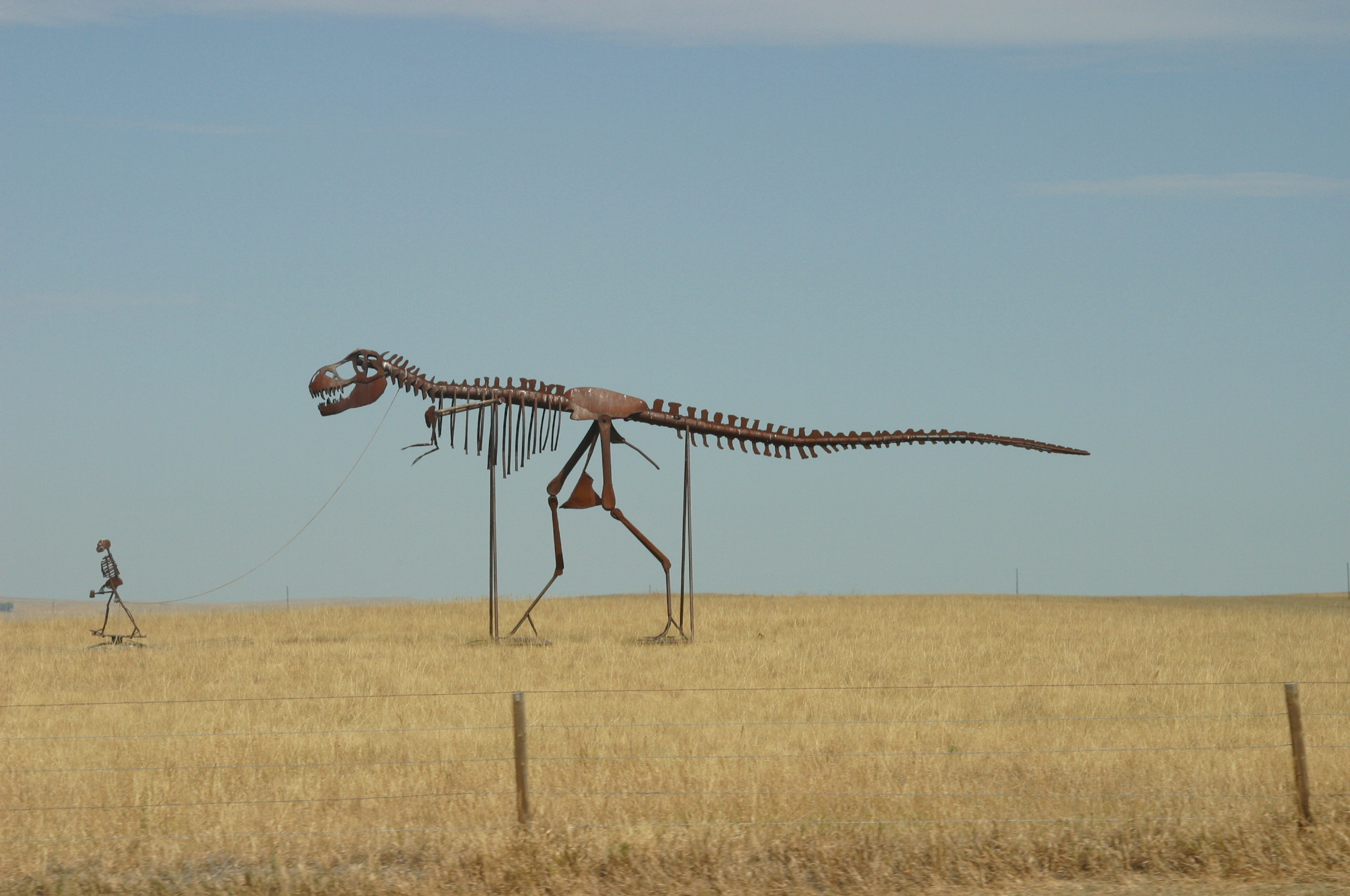
Decorative photograph of sculpture of a skeletal person leading a skeletal dinosaurThis year I have written about 20,000 words in 52 posts (including this one); and, since this is the last post of the year, I thought I would take a brief look back at what has preoccupied me in 2021.  Perhaps, not surprisingly the impact of the coronavirus on our lifestyle has featured regularly – almost every week for a month between mid-March and mid-April when we were in lockdown in the UK.  However, the other topics that I have written about frequently are my research on the dynamics of nanoparticles and, in the last six months, on dealing with uncertainty in digital engineering and decision making.  I have also returned several times to innovation processes and transitioning lab-based research into industry.  While following the COP26 in early November, I wrote a series of three posts focussed on energy consumption and the paradigm shifts required to slow down climate change.  There are some connections between these topics: viruses are nanoparticles whose transport and dynamics we do not fully understand; and, digital engineering tools are being used to explore zero-carbon approaches to, for example, energy generation and air transport.  The level of complexity, innovation and urgency associated with developing solutions to these challenges mean that there are always some unknowns and uncertainty when making associated decisions.

The links below are grouped by the topics mentioned above.  I expect there will be more on all of these topics in 2022; however, the topic of next week’s post is unknown because I have not written any posts in advance.  I hope that the uncertainty about the topic of the next post will keep you reading in 2022! 

Coronavirus pandemic: ‘Distancing ourselves from each other‘ on January 13th, 2021; ‘On the impact of writing on well-being‘ on March 3rd, 2021; ‘Collegiality as a defence against pandemic burnout‘ on March 24th, 2021; ‘It’s tiring looking at yourself‘ on March 31st, 2021; ‘Switching off and walking in circles‘ on April 7th, 2021; ‘An upside to lockdown‘ on April 14th, 2021; ‘A brief respite in a long campaign to overcome coronavirus‘ on June 23rd, 2021; and ‘It is hard to remain positive‘ November 3rd 2021.

Energy and climate change: ‘When you invent the ship, you invent the shipwreck‘ on August 25th, 2021; ‘It is hard to remain positive‘ November 3rd 2021; ‘Where we are and what we have‘ on November 24th, 2021; ‘Disruptive change required to avoid existential threats‘ on December 1st, 2021; and ‘Bringing an end to thermodynamic whoopee‘ on December 8th, 2021.

Innovation processes: ‘Slowly crossing the valley of death‘ on January 27th, 2021; ‘Out of the valley of death into a hype cycle?‘ on February 24th, 2021; ‘Innovative design too far ahead of the market?‘ on May 5th, 2021 and ‘Jigsaw puzzling without a picture‘ on October 27th, 2021.

Nanoparticles: ‘Going against the flow‘ on February 3rd, 2021; ‘Seeing things with nanoparticles‘ on March 10th, 2021; and ‘Nano biomechanical engineering of agent delivery to cells‘ on December 15th, 2021.

Uncertainty: ‘Certainty is unattainable and near-certainty is unaffordable‘ on May 12th, 2021; ‘Neat earth objects make tomorrow a little less than certain‘ on May 26th, 2021; ‘Negative capability and optimal ambiguity‘ on July 7th, 2021; ‘Deep uncertainty and meta ignorance‘ on July 21st, 2021; ‘Somethings will always be unknown‘ on August 18th, 2021; ‘Jigsaw puzzling without a picture‘ on October 27th, 2021; and, ‘Do you know RIO?‘ on November 17th, 2021.

Follow your gut

Decorative image of a fruit fly nervous system Albert Cardona HHMI Janelia Research Campus Welcome Image Awards 2015Data centres worldwide consume about 1% of global electricity generation, that’s 200-250 TWh (Masenet et al, 2020), and if you add in mining of cryptocurrencies then consumption jumps by about 50% (Gallersdörfer et al, 2020). Data transmission consumes about 260-340 TWh or at least another 1% of global energy consumption (IEA, 2020).  The energy efficiency of modern computers has been improving; however, their consumption is still many millions times greater than the theoretical limit defined by Landauer’s principle which was verified in 2012 by Bérut et al.  According to Landauer’s principle, a computer operating at room temperature would only need 3 zJ (300 billion billionths of a Joule) to erase a bit of information.  The quantity of energy used by modern computers is many millions times the Landauer limit.  Of course, progress is being made almost continuously, for example a team at EPFL in Lausanne and ETH Zurich recently described a new technology that uses only a tenth of the energy of current transistors (Oliva et al 2020).  Perhaps we need turn to biomimetics because Escherichia Coli, which are bacteria that live in our gut and have to process information to reproduce, have been found to use ten thousand times less energy to process a bit of information than the average human-built device for processing information (Zhirnov & Cavin, 2013).  So, E.coli are still some way from the Landauer limit but demonstrate that there is considerable potential for improvement in engineered devices.

References

Bérut A, Arakelyan A, Petrosyan A, Ciliberto S, Dillenschneider R & Lutz E. Experimental verification of Landauer’s principle linking information and thermodynamics. Nature, 483: 187–189, 2012.

IEA (2021), Data Centres and Data Transmission Networks, IEA, Paris https://www.iea.org/reports/data-centres-and-data-transmission-networks

Gallersdörfer U, Klaaßen L, Stoll C. Energy consumption of cryptocurrencies beyond bitcoin. Joule. 4(9):1843-6, 2020.

Masanet E, Shehabi A, Lei N, Smith S, Koomey J. Recalibrating global data center energy-use estimates. Science. 367(6481):984-6, 2020.

Oliva N, Backman J, Capua L, Cavalieri M, Luisier M, Ionescu AM. WSe 2/SnSe 2 vdW heterojunction Tunnel FET with subthermionic characteristic and MOSFET co-integrated on same WSe 2 flake. npj 2D Materials and Applications. 4(1):1-8, 2020.

Zhirnov VV, Cavin RK. Future microsystems for information processing: limits and lessons from the living systems. IEEE Journal of the Electron Devices Society. 1(2):29-47, 2013.