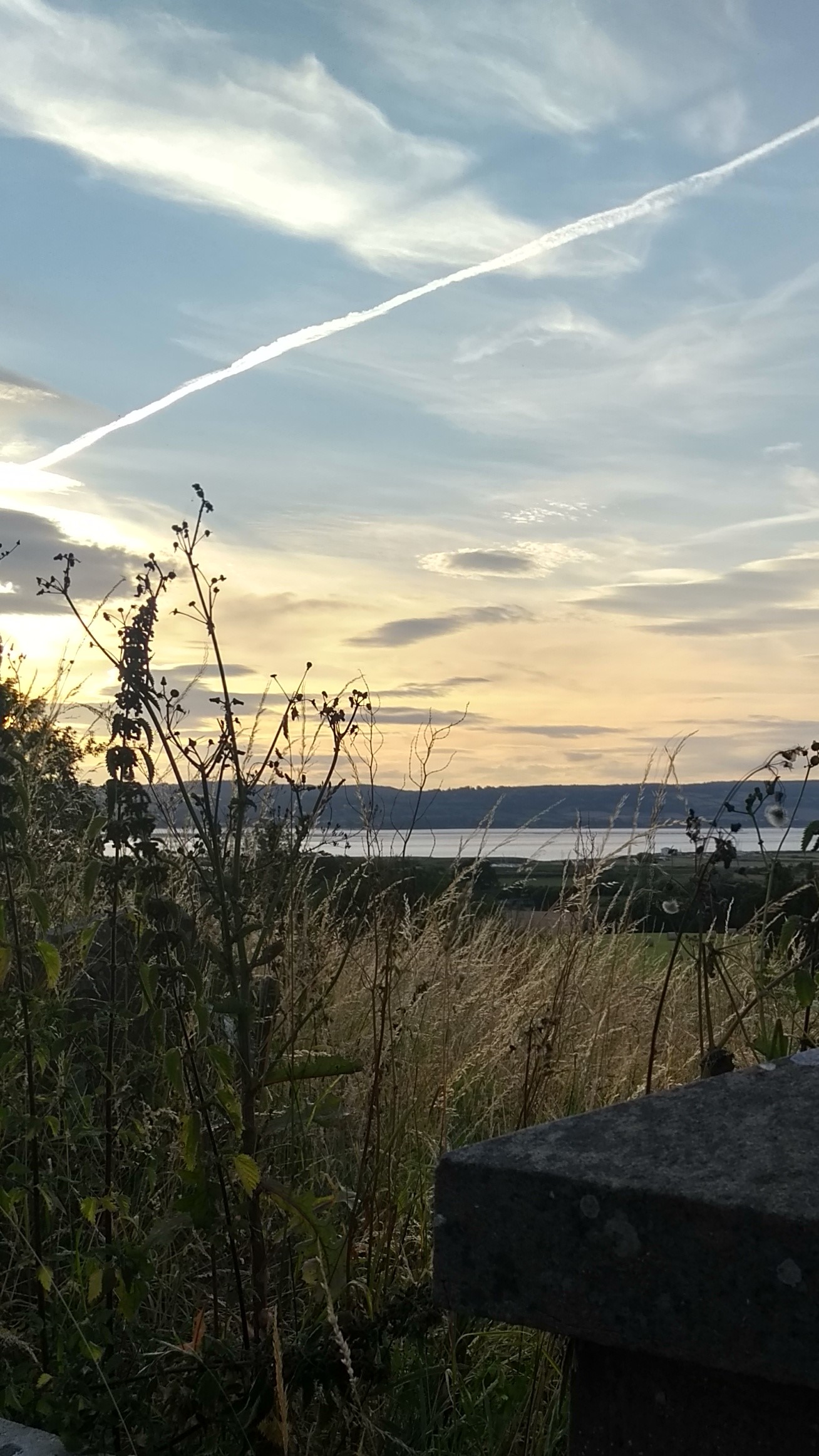
 Two weeks ago, over a period of forty-eight hours, I visited four churches. An unusual event for me. We travelled from Liverpool to Bristol one afternoon to attend a Thanksgiving Service the following morning for an extraordinary engineer and a lovely man, Eddie O’Brien. The evening before the service, we stayed in a village pub in Oldbury-on-Severn and after dinner walked up the hill to the 13th century church dedicated to St Arilda. It was locked so we strolled around the overgrown churchyard along a narrow mowed path and enjoyed the view across the Severn to Wales. The following morning we drove into Bristol city centre to attend the Thanksgiving Service which was held in the Zetland Evangelical church. The church was plain, unpretentious and packed. The service was led by a retired pastor who preached with a gentle, thoughtful passion about Eddie’s life and its meaning. I knew only one, possibly two, facets of his life: his professional life as an engineer and leading exponent of experimental mechanics; and his life as a student. Eddie was twenty years my senior and thirty years ago I supervised his MPhil and PhD in experimental mechanics. He was in his fifties and I was in my thirties – it was a challenge for both of us and we learnt from each other. When he graduated he presented me with a copy of his PhD thesis that he had hand-bound in leather himself. We left Bristol after the service and drove north across the Severn Bridge to Tintern Abbey where we stopped for lunch looking out over an empty cricket pitch across a green enclosed valley before exploring the ruins of the Cistercian abbey. The abbey was founded in 1131 and in 1536 it was surrendered to Henry VIII during the dissolution of the monasteries. The lead from the roof was removed and five hundred years of decay started creating the ruins you can wander around today. Back in Liverpool, the following evening we went, with our neighbours, to a ‘Music at the Met’ concert at the Liverpool Metropolitan Cathedral called ‘Music for a King’ and featuring uplifting pieces, including ‘Zadok the Priest’ and ‘Crown Imperial’. The bold grandeur of the concrete structure, richly coloured stained glass, thunderous organ and combined choirs of the anglican and catholic cathedrals contrasted starkly with the simple service of Thanksgiving for Eddie O’Brien we had attended the previous day when we sang hymns recalled from childhood, including ‘The Lord’s My Shepherd’.
Image: view across River Severn to Wales from St Arilda’s churchyard.



 Realize Engineering