Tag Archives: creativity

On the impact of writing on well-being

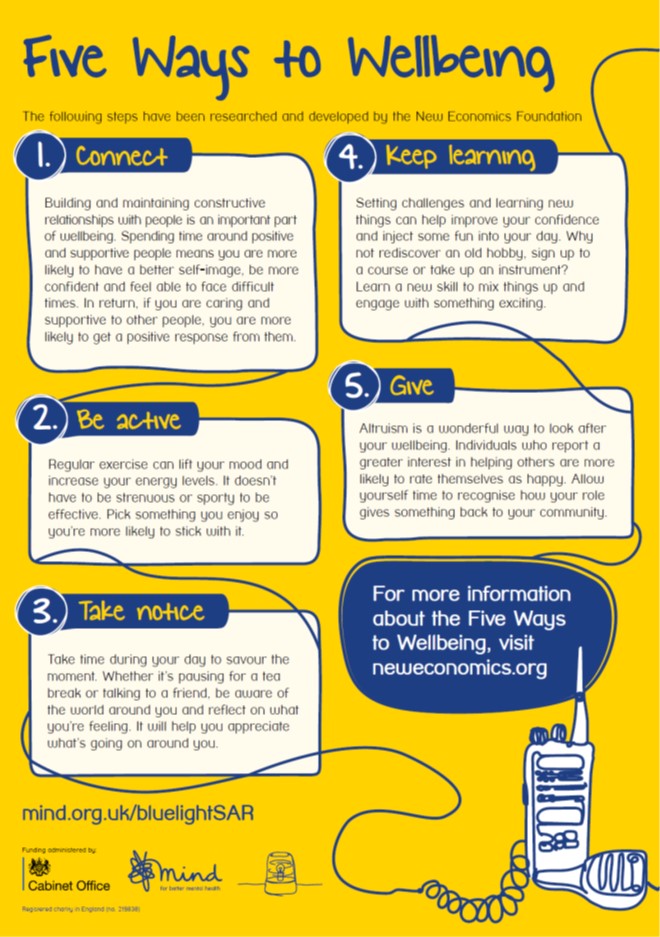
Poster showing five ways to well-being: connect, be active, take notice, keep learning, giveLast week, the continuation until at least the end of March of the lockdown, which has been in place in England since the start of the year, was announced. Many people are feeling jaded and worn out by the constraints and hardships imposed by the lockdown and are struggling to maintain their well-being and mental health. While others are trying to cope with the direct impact of the coronavirus on themselves and their family and friends. I have written before about the power of writing to transport me away from the pressures of everyday life [see ‘Feeling extraordinary at ease‘ on January 8th, 2020] and to help me order my thoughts [see ‘Thinking more clearly by writing weekly‘ on May 2nd, 2018].  These posts were inspired by reading books by Natalia Ginzburg and Sylvain Tesson.  I have just finished reading ‘A Fly Girl’s Guide to University‘ edited by Odelia Younge in which Suhaiymah Manzoor-Khan writes about ‘times when my mental health was bad…writing became a solace and a friend’.  In the context of institutional pressures, racism and exclusion, she describes writing about her feelings to help her to feel and listening to her own voice when nobody else would.  I was reading the book to gain an appreciation of the experiences of woman of colour in a university; however, I think Manzoor-Khan’s words are relevant to everyone, especially when we are locked away and can only meet with much of our support networks via our computers and phones.  Tim Hayward, in the FT in January 2021, wrote a deeply moving and insightful account of his experience of fighting coronavirus, including ten days on life support, and concludes by reflecting on how writing the article helped him handle the trauma.  Of course, you don’t have to write for a newspaper, a book or a blog; although writing for an audience does focus your mind, you can write for yourself or friend and in doing so you can keep learning, take notice of your surroundings, and connect with people which will hit three out of five of the ways to well-being.

Sources:

Lola Olufemi, Odelia Younge, Waithera Sebatindira & Suhaiymah Manzoor-Khan, A Fly Girl’s Guide to University, Verve Poetry Press, Birmingham, 2019

Tim Hayward, Covid and me: 10 days on life support, FT Magazine, January 22nd, 2021.

Psychological entropy increased by ineffectual leaders

Decorative image of a flowerYou might have wondered why I used ‘entropy’, and ‘psychological entropy’ in particular, as examples in my post on drowning in information a couple of weeks ago [‘We are drowning in information while starving for wisdom‘ on January 20th, 2021].  It was not random.  I spent some of the Christmas break catching up on my reading pile of interesting looking scientific papers and one on psychological entropy stimulated my thinking.  Psychological entropy is the concept that our brains are self-organising systems in a continual dialogue with the environment which leads to the emergence of a relatively small number of stable low-entropy states.  These states could be considered to be assemblies of neurons or patterns of thoughts, perhaps a mindset.  When we are presented with a new situation or problem to solve for which the current assembly or mindset is unsuitable then we start to generate new ideas by generating more and different assemblies of neurons in our brains.  Our responses become unpredictable as the level of entropy in our minds increases until we identify a new approach that deals effectively with the new situation and we add it to our list of available low-entropy stable states.  If the external environment is constantly changing then our brains are likely to be constantly churning through high entropy states which leads to anxiety and psychological stress.  Effective leaders can help us cope with changing environments by providing us with a narrative that our brains can use as a blueprint for developing the appropriate low-entropy state.  Raising psychological entropy by the right amount is conducive to creativity in the arts, science and leadership but too much leads to mental breakdown.

Sources:

Hirsh JB, Mar RA, Peterson JB. Psychological entropy: A framework for understanding uncertainty-related anxiety. Psychological review. 2012 Apr;119(2):304

Handscombe RD & Patterson EA, The Entropy Vector: connecting science and business, Singapore: World Scientific Press, 2004.

Puzzles and mysteries

Detail from abstract by Zahrah ReshPuzzles and mysteries are a pair of words that have taken on a whole new meaning for me since reading John Kay’s and Mervyn King’s book called ‘Radical uncertainty: decision-making for an unknowable future‘ during the summer vacation [see ‘Where is AI on the hype curve?‘ on August 12th, 2020]. They describe puzzles as well-defined problems with knowable solutions; whereas mysteries are ill-defined problems, that have no objectively correct solution and are imbued with vagueness and indeterminacy.  I have written before about engineers being creative problems-solvers [see ‘Learning problem-solving skills‘ on October 24th, 2018] which leads to the question of whether we specialise in solving puzzles or mysteries, or perhaps both types of problems.  The problems that I set for students to solve for homework to refine and evaluate their knowledge of thermodynamics [see ‘Problem-solving in thermodynamics‘ on May 6th, 2015] clearly fall into the puzzle category because they are well-defined and there is a worked solution available.  Although for many students these problems might appear to be mysteries, the intention is that with greater knowledge and understanding the mysteries will be transformed into mere puzzles.  It is also true that many real-world mysteries can be transformed into puzzles by research that advances the collective knowledge and understanding of society.  Part of the purpose of an engineering education is to equip students with the skills to make this transformation from mysteries to puzzles.  At an undergraduate level we use problems that are mysteries only to the students so that success is achievable; however, at the post-graduate level we use problems that are perceived as mysteries to both the student and the professor with the intention that the professor can guide the student towards a solution.  Of course, some mysteries are intractable often because we do not know enough to define the problem sufficiently that we can even start to think about possible solutions.  These are tricky to tackle because it is unreasonable to expect a research student to solve them in limited timeframe and it is risky to offer to solve them in exchange for a research grant because you are likely to damage your reputation and prospects of future funding when you fail.  On the other hand, they are what makes research interesting and exciting.

Image: Extract from abstract by Zahrah Resh.

Lacking creativity

detail tl from abstract painting by Zahrah RI feel that I am moving to the next level of experience with online meetings but I am unsure that it will address the slow down in productivity and a loss of creativity being reported by most leaders of research groups to whom I have spoken recently.  About a month ago, we organised an ‘Away Day’ for all staff in the School of Engineering with plenary presentations, breakout groups and a Q&A session.  Of course, the restrictions induced by the pandemic meant that we were only ‘away’ in the sense of putting aside our usual work routine and it only lasted for half a day because we felt a whole day in an online conference would be counter productive; nevertheless, the feedback was positive from the slightly more than one hundred staff who participated.  On a smaller scale, we have experimented with randomly allocating members of my research team to breakout sessions during research group meetings in an attempt to give everyone a chance to contribute and to stimulate those serendipitous conversations that lead to breakthroughs, or least alternative solutions to explore.  We have also invited external speakers to join our group meetings – last month we had a talk from a researcher in Canada.  We are trying to recreate the environment in which new ideas bubble to the surface during casual conversations at conferences or visits to laboratories; however, I doubt we are succeeding.  The importance of those conversations to creativity and innovation in science is highlighted by the story of how Emmanuelle Charpentier and Jennifer Doudna met for the first time at a conference in Puerto Rico.   While wandering around San Juan on a warm Caribbean evening in 2011 discussing the way bacteria protect themselves against viruses by chopping up the DNA of the virus, they realised that it could be turned into molecular scissors for cutting and editing the genes of any living creature.  They went home after the conference to their labs in Umea University, Sweden and UC Berkeley respectively and collaborated round the clock to implement their idea for which they won this year’s Nobel Prize for Chemistry.  Maybe the story is apocryphal; however, based on my own experience of conversations on the fringes of scientific meetings, they are more productive than the meeting itself and their loss is a significant casualty of the COVID-19 pandemic.  There are people who point to the reduction in the carbon footprint of science research caused by the cancellation of conferences and who argue that, in order to contribute to UN Goals for Sustainable Development, we should not return to gatherings of researchers in locations around the world.  I agree that we should consider our carbon footprint more carefully when once again we can travel to scientific meetings; however, I think the innovations required to achieve the UN Goals will emerge very slowly, or perhaps not all, if researchers are limited to meeting online only.

Source:

Clive Cookson, A dynamic Nobel duo with natural chemistry, FT Weekend, 10/11 October 2020.

Image: Extract from abstract by Zahrah Resh.