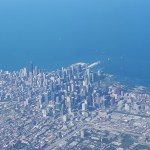
 The conference that I attended last week was in Reno, Nevada and, on my way to it, I stopped over in Dayton, Ohio and visited the US Air Force Research Laboratory to present the results from our research project supported by their European Office of Aerospace Research & Development (EOARD). The journey from Liverpool to Dayton, via Manchester and Altanta airports, took 17 hours; however, that was short compared to the journey from Dayton to Reno, via Chicago and San Francisco airports, which took 24 hours door-to-door or rather hotel-to-hotel. ‘Only the name of the airport changes’ is a quote from Italo Calvino describing the city of Trude in his book ‘Invisible Cities‘; but it also described how I felt looking out from my window seats at successive airports over the four days that I travelled from Liverpool to Reno.
We arrived at Dayton airport at 5am for a 7am flight to be told that it was cancelled and we were re-booked on a flight leaving at 5.18pm. We tried to re-rent the rental car that we had just returned but were told every car was booked; so, we were stuck in Dayton airport for 12 hours. Your perspective of time changes in these circumstances. At 5am with nothing much to do, 12 hours seemed like infinity; but at 5pm when we were about to board our flight, the same 12 hours seemed short – almost as if we had only arrived at the airport an hour or so earlier. Augustine observed that our consciousness is based on memory and anticipation such that time is entirely present in our minds as memory and as anticipation. While Aristotle considered time to be the measurement of change. Hence, since I was anticipating no change during my 12 hours of waiting, my perception of time was of it passing very slowly. Whereas, when I was boarding my flight 12 hours later, my memory was of having done the same things that I would usually have done while waiting for a flight [reading and editing draft manuscripts from my research group]; and hence my perception of the elapsed 12 hours was compressed into the usual 2-hour period spent at an airport prior to a flight. The apparent unchanging view out of the plane’s window, both in flight and, to a lesser extent, on the ground also tended to distort my perception of the passage of time.
Sources:
Italo Calvino, Invisible Cities, Penguin Vintage Classics, 1997.
Carlo Rovelli, The Order of Time, Penguin, 2019.
 A couple of weeks ago (‘Only the name of the airport changes’ on June 12th, 2019) I wrote about the stretching and compression of time while I waited for my much delayed flight to Reno. I mentioned Aristotle’s view of time as the measurement of change; however, Newton believed that time passes even when nothing changes. Einstein resolved the conundrum, represented by these different views, using the concept of a space-time domain forming a gravitational field containing waves. My title is a quote from Carlo Rovelli’s book, ‘The Order of Time‘. And, according to Rovelli, ‘mass slows down time around itself’, which I think will cause waves in the space-time domain . Conservation of energy implies that the movement of an object will tend towards space where time passes more slowly, i.e. in the vicinity of large masses. Hence, things fall downwards because time runs more slowly close to the Earth. This implies that time passes more slowly at the airport than on the plane in flight; but, of course, the differences are too small for us to measure or perceive.



 Realize Engineering