Category Archives: sustainability

Ice bores and what they can tell us

Map of Greenland sheet showing depth of iceAbout forty years ago, I was lucky enough to be involved in organising a scientific expedition to North-East Greenland.  Our basecamp was on the Bersaerkerbrae Glacier in Scoresby Land, which at 72 degrees North is well within the Arctic Circle and forty years ago was only accessible in summer when the snow receded.  We measured ablation rates on the glacier [1], counted muskoxen in the surrounding landscape [2] [see ‘Reasons for publishing scientific papers‘ on April 21st 2021] and drilled boreholes in the ice of the glacier.  We performed mechanical tests on the ice cores obtained from different depths in the glacier and in various locations in order to assess the spatial distribution of the material properties of the ice in the glacier. This is important information for producing accurate simulations of the flow of the glacier, although our research did not extend to modelling the glacier.  We could also have used our ice cores to investigate the climatic history of the region.  The Greenland ice sheet contains an archive record of the climate on Earth for about the last half million years, stored in the snow and trapped air bubbles accumulated over that time period.  If the ice sheet melts then that unique record will be lost forever.

The thumbnail image is a map of the depth of ice in the Greenland ice sheet.  The map is about five years old and has a wide green fringe along the east coast.  Scoresby Land is the penisula to the north of the large fiord in the middle of the east coast.  In 1982, the edge of the ice sheet was about 80 miles from the Bersaerkerbrae Glacier, whereas today it is at least twice that distance because the ice sheet is receding.

References:

[1] Patterson EA, 1984, A mathematical model for perched block formation. Journal of Glaciology. 30(106):296-301.

[2] Patterson EA, 1984, ‘Sightings of Muskoxen in Northern Scoresby Land, Greenland’, Arctic, 37(1): 61-63.
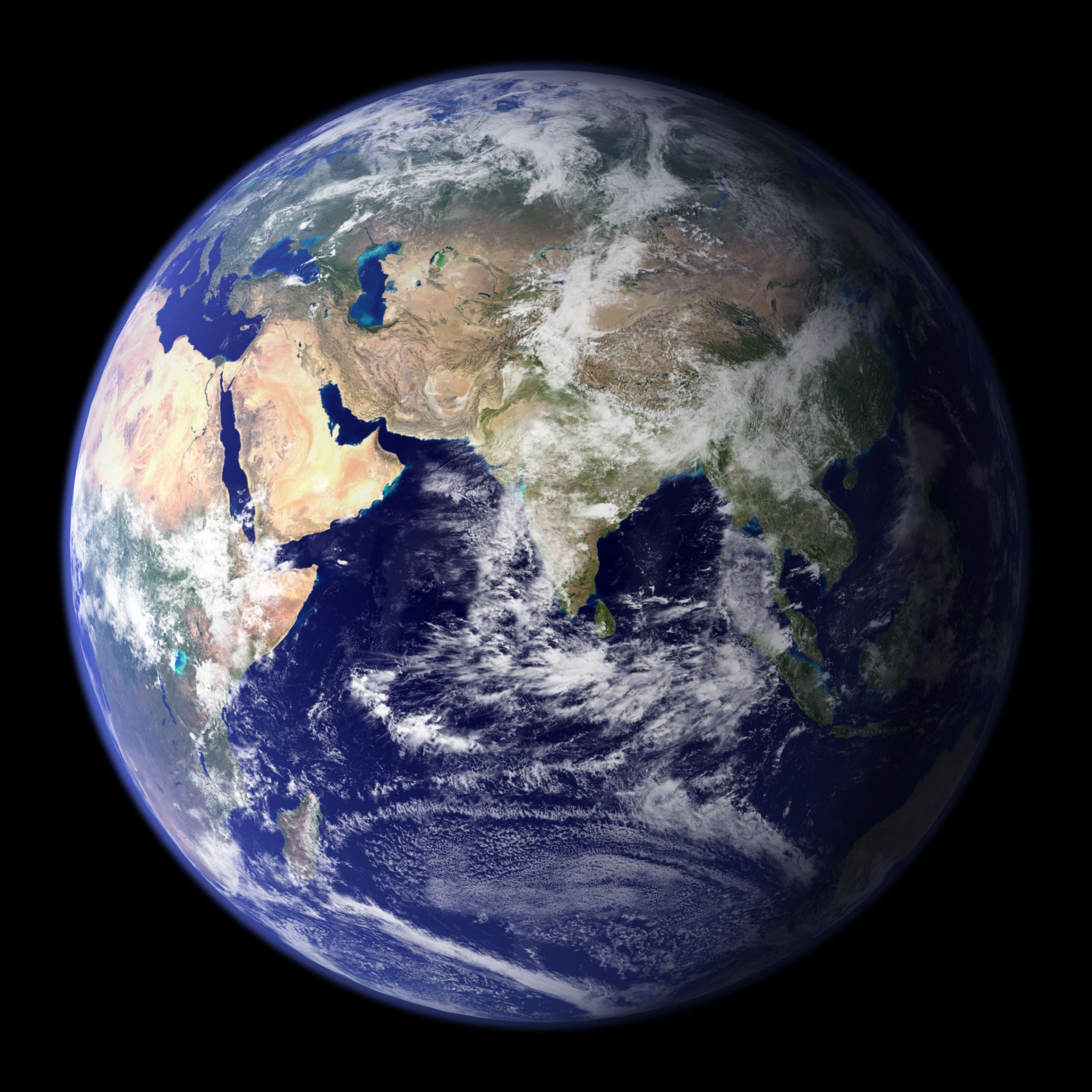
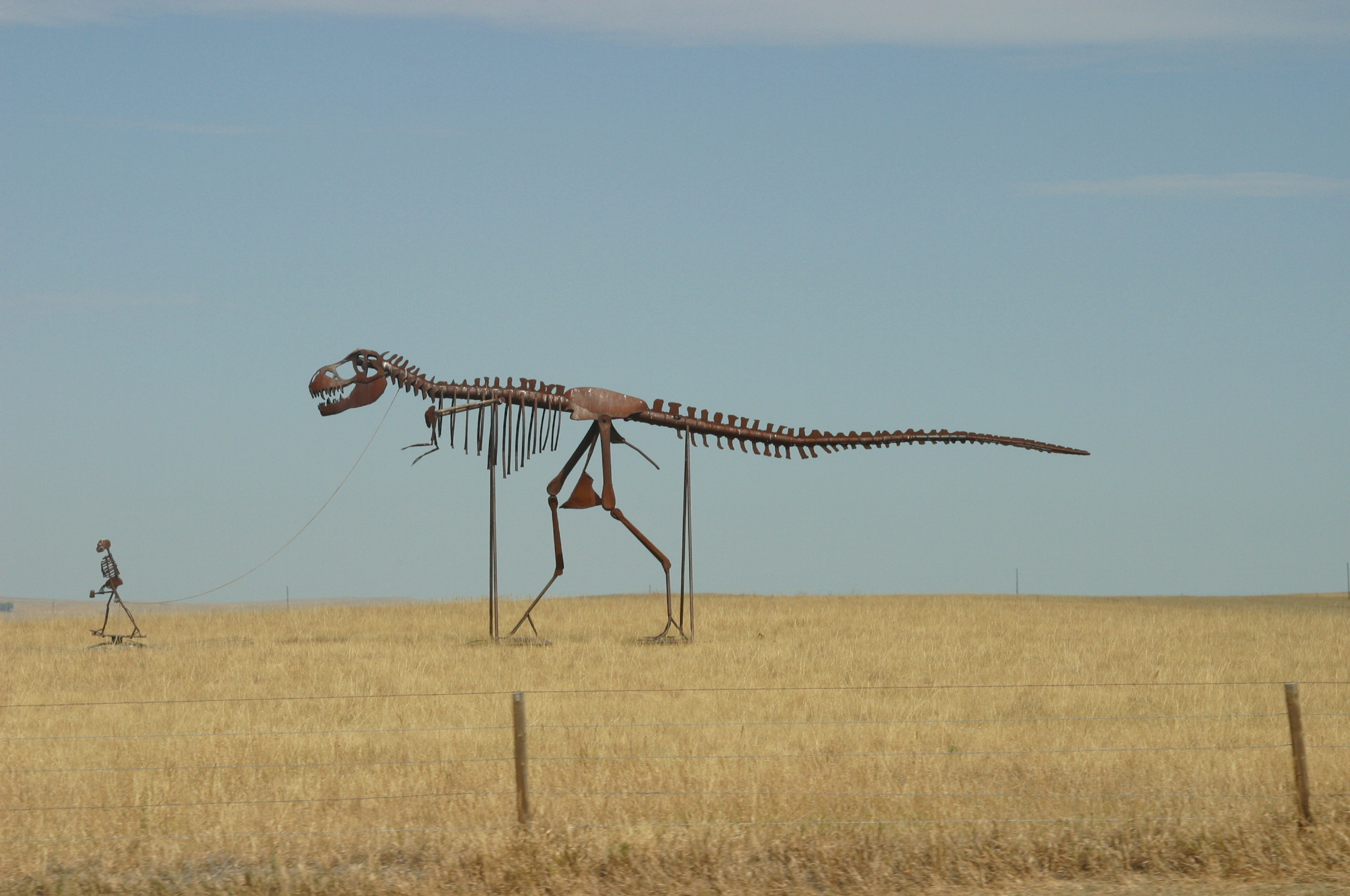
Image: https://upload.wikimedia.org/wikipedia/commons/thumb/b/b5/Greenland_ice_sheet_AMSL_thickness_map-en.svg/2000px-Greenland_ice_sheet_AMSL_thickness_map-en.svg.png

Saving ourselves

I thought the photograph with last week’s blog [see ‘Happy New Year‘ on December 29th, 2021] might cause some comments.  It was taken during a road trip in the USA as we were heading west on the Interstate 90, just west of Murdo in South Dakota, on our way to Yellowstone National Park from Michigan where we lived for nearly a decade.  It shows a skeleton dinosaur being led on a leash by a skeleton human.  As a genus, non-avian dinosaurs existed for about 150 million years and the last one died about 66 million years ago. Our genus, Homo, has only been around for about 2.5 million years so there was never an overlap with dinosaurs. Our species, Homo Sapiens have only been around for about the last 200,000 years. These time-spans are not long relative to the age of the oldest rocks on the planet, which have been estimated to be 4.6 billion years old, and implies that the Earth survived perfectly well without dinosaurs and humans for billions years.  We have thrived during an epoch, the Holocene, during which the climate has been relatively stable compared to the previous epoch, the Pleistocene. However, if we cannot resolve the existential threats facing our species then it is likely that, like non-avian dinosaurs, we will only exist as skeletons in the future and the planet will adapt to existence without us.  Perhaps the emphasis of many campaigns associated with climate change should shift from saving the planet to saving ourselves – we might be more focussed on coming together to address the selfish challenge.

Reference:

Helen Gordon, Notes from Deep Time, London: Profile Books, 2021.

Happy New Year!

Decorative photograph of sculpture of a skeletal person leading a skeletal dinosaurThis year I have written about 20,000 words in 52 posts (including this one); and, since this is the last post of the year, I thought I would take a brief look back at what has preoccupied me in 2021.  Perhaps, not surprisingly the impact of the coronavirus on our lifestyle has featured regularly – almost every week for a month between mid-March and mid-April when we were in lockdown in the UK.  However, the other topics that I have written about frequently are my research on the dynamics of nanoparticles and, in the last six months, on dealing with uncertainty in digital engineering and decision making.  I have also returned several times to innovation processes and transitioning lab-based research into industry.  While following the COP26 in early November, I wrote a series of three posts focussed on energy consumption and the paradigm shifts required to slow down climate change.  There are some connections between these topics: viruses are nanoparticles whose transport and dynamics we do not fully understand; and, digital engineering tools are being used to explore zero-carbon approaches to, for example, energy generation and air transport.  The level of complexity, innovation and urgency associated with developing solutions to these challenges mean that there are always some unknowns and uncertainty when making associated decisions.

The links below are grouped by the topics mentioned above.  I expect there will be more on all of these topics in 2022; however, the topic of next week’s post is unknown because I have not written any posts in advance.  I hope that the uncertainty about the topic of the next post will keep you reading in 2022! 

Coronavirus pandemic: ‘Distancing ourselves from each other‘ on January 13th, 2021; ‘On the impact of writing on well-being‘ on March 3rd, 2021; ‘Collegiality as a defence against pandemic burnout‘ on March 24th, 2021; ‘It’s tiring looking at yourself‘ on March 31st, 2021; ‘Switching off and walking in circles‘ on April 7th, 2021; ‘An upside to lockdown‘ on April 14th, 2021; ‘A brief respite in a long campaign to overcome coronavirus‘ on June 23rd, 2021; and ‘It is hard to remain positive‘ November 3rd 2021.

Energy and climate change: ‘When you invent the ship, you invent the shipwreck‘ on August 25th, 2021; ‘It is hard to remain positive‘ November 3rd 2021; ‘Where we are and what we have‘ on November 24th, 2021; ‘Disruptive change required to avoid existential threats‘ on December 1st, 2021; and ‘Bringing an end to thermodynamic whoopee‘ on December 8th, 2021.

Innovation processes: ‘Slowly crossing the valley of death‘ on January 27th, 2021; ‘Out of the valley of death into a hype cycle?‘ on February 24th, 2021; ‘Innovative design too far ahead of the market?‘ on May 5th, 2021 and ‘Jigsaw puzzling without a picture‘ on October 27th, 2021.

Nanoparticles: ‘Going against the flow‘ on February 3rd, 2021; ‘Seeing things with nanoparticles‘ on March 10th, 2021; and ‘Nano biomechanical engineering of agent delivery to cells‘ on December 15th, 2021.

Uncertainty: ‘Certainty is unattainable and near-certainty is unaffordable‘ on May 12th, 2021; ‘Neat earth objects make tomorrow a little less than certain‘ on May 26th, 2021; ‘Negative capability and optimal ambiguity‘ on July 7th, 2021; ‘Deep uncertainty and meta ignorance‘ on July 21st, 2021; ‘Somethings will always be unknown‘ on August 18th, 2021; ‘Jigsaw puzzling without a picture‘ on October 27th, 2021; and, ‘Do you know RIO?‘ on November 17th, 2021.

Bringing an end to thermodynamic whoopee

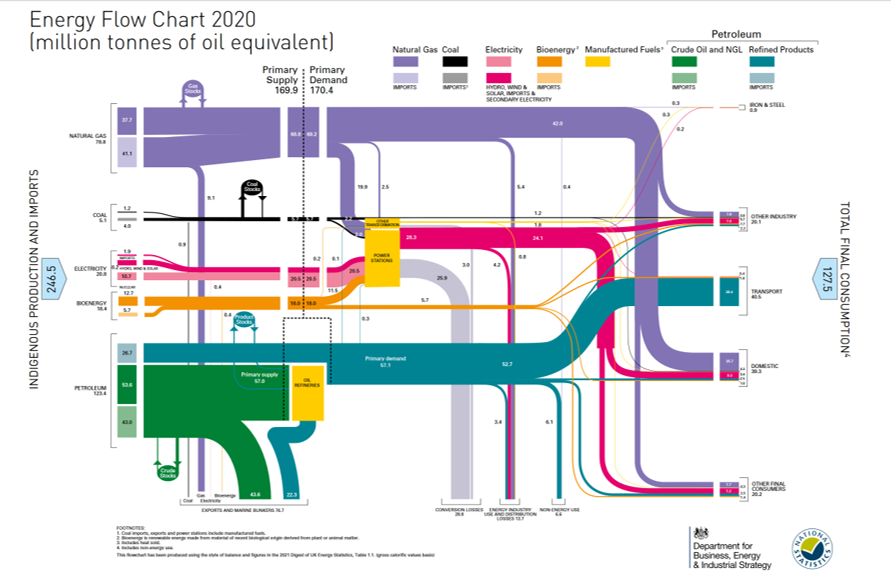
Two weeks ago I used two infographics to illustrate the dominant role of energy use in generating greenhouse gas emissions and the disportionate production of greenhouse gas emission by the rich [see ‘Where we are and what we have‘ on November 24th, 2021].  Energy use is responsible for 73% of global greenhouse gas emissions and 16% of the world’s population are responsible for 38% of global CO2 emissions.  Today’s infographics illustrate the energy flows from source to consumption for the USA (above), UK and Europe (thumbnails below).  In the USA fossil fuels (coal, natural gas and petroleum) are the source of nearly 80% of their energy, in the UK it is a little more than 80% and the chart for Europe is less detailed but the proportion looks similar. COP 26 committed countries to ending ‘support for the international unabated fossil fuel energy sector by the end of 2022’ and recognised ‘investing in unabated fossil-related energy projects increasingly entails both social and economic risks, especially through the form of stranded assets, and has ensuing negative impacts on government revenue, local employment, taxpayers, utility ratepayers and public health.’  However, to reduce our dependency on fossil fuels we need a strategy, a plan of action for a fundamental change in how we power industry, heat our homes and propel our vehicles.  A hydrogen economy requires the production of hydrogen without using fossil fuels, electric cars and electric domestic heating requires our electricity generating capacity to be at least trebled by 2050 in order to hit the net zero target. This scale and speed of  transition to zero-carbon sources is such that it will have to be achieved using an integrated blend of green energy sources, including solar, wind and nuclear energy.  For example, in the UK our current electricity generating capacity is about 76 GW and 1 GW is equivalent to 3.1 million photovoltaic (PV) panels, or 364 utility scale wind turbines [www.energy.gov/eere/articles/how-much-power-1-gigawatt] so trebling capacity from one of these sources alone would imply more than 700 million PV panels, or one wind turbine every square mile.  It is easy to write policies but it is much harder to implement them and make things happen especially when transformational change is required.  We cannot expect things to happen simply because our leaders have signed agreements and made statements.  Now, national plans are required to ween us from our addiction to fossil fuels – it will be difficult but the alternative is that global warming might cause the planet to become uninhabitable for us.  It is time to stop ‘making thermodynamic whoopee with fossil fuels’ to quote Kurt Vonnegut [see ‘And then we discovered thermodynamics‘ on February 3rd, 2016].


Sources:

Kurt Vonnegut, A Man without a Country, New York: Seven Stories Press, 2005.  He wrote ‘we have now all but destroyed this once salubrious planet as a life-support system in fewer than two hundred years, mainly by making thermodynamic whoopee with fossil fuels’.

US Energy flow chart: https://flowcharts.llnl.gov/commodities/energy

EU Energy flow chart: https://ec.europa.eu/eurostat/web/energy/energy-flow-diagrams

UK Energy flow chart: https://www.gov.uk/government/collections/energy-flow-charts#2020