Yearly Archives: 2021

Are these the laws of engineering?

While shopping on-line for books during a pandemic lockdown allows you to buy new books, I found it difficult browse online and find new authors. Perhaps because the algorithms employed by the booksellers are too busy guessing my interests or promoting the latest book that they want me to buy. So it was a pleasure to be able to walk into a bookshop again in a couple of months ago. One of the new authors that I discovered was Niall Williams. I have just finished reading his 2019 novel ‘This is happiness‘ which weaves together the life of an Irish village in which nothing ever changes until the coming of electricity, a tale of coming of age and another of burying the past. In the middle of this beautifully-told story, a salesman is extolling the virtues of the electrical gadgets that they can install in their new electrified homes and says that ‘the first law of engineering was to make the world a better place’. The narrator quietly tells us the second law, which the salesman doesn’t state, ‘that without exception everything that was engineered would one day break down … usually one day after each machine had become indispensable to living’. This is a consequence of the second law of thermodynamics, which is that entropy, or disorder, increases in all real processes. Hence, the localised order, which we create when something is engineered, is constantly being eroded until eventually the disorder leads to a break down. Or, as Murphy’s law states ‘Anything that can go wrong will go wrong’. However, the definition of the first law of engineering was the one that caught my eye and resonated with a corny introduction that I used in a talk on why we need to change the way we teach engineering. I played a recording of Louis Armstrong singing ‘What a wonderful world‘ and then talked about the wonderful world that engineers have created before highlighting the unsustainable environmental costs of our ‘wonderful’ engineered world and that it is inaccessible to a large portion of the world’s population. I gave that talk many times to groups of engineering professors in the USA between about 2006 and 2012; maybe I had some impact but there is still a lot of changes needed to achieve a sustainable society. So, the first law of engineering should be to make the world a better place for everyone.

Reference:

Niall Williams, This is happiness, London: Bloomsbury Publishing, 2019

Negative capability and optimal ambiguity

Decorative photograph of sculpture on Liverpool waterfront at nightHow is your negative capability?  The very term ‘negative capability’ conveys confusion and ambiguity.  It means our ability to accept uncertainty, a lack of knowledge or control.  It was coined by John Keats to describe the skill of appreciating something without fully understanding it.  It implies suspending judgment about something in order to learn more about it.  This is difficult because we have to move out of a low entropy mindset and consider how it fits in a range of possible mindsets or neuronal assemblies, which raises our psychological entropy and with it our anxiety and mental stress [see ’Psychological entropy increased by effectual leaders‘ on February 10th, 2021].  If we are able to tolerate an optimal level of ambiguity and uncertainty then we might be able to develop an appreciation of a complex system and even an ability to anticipate its behaviour without a full knowledge or understanding of it.  Our sub-conscious brain has excellent negative capabilities; for example, most of us can catch a ball without understanding, or even knowing, anything about the mechanics of its flight towards us, or we accept a ride home from a friend with no knowledge of their driving skills and no control over the vehicle.  Although, if our conscious brain knows that they crashed their car last week then it might override the sub-conscious and cause us to think again before declining the offer of a ride home.  Perhaps this is because our conscious brain tends to have less negative capability and likes to be in control.  Engineers like to talk about their intuition which is probably synonymous with their negative capability because it is their ability to appreciate and anticipate the behaviour of an engineering system without a full knowledge and understanding of it.  This intuition is usually based on experience and perhaps resides in the subconscious mind because if you ask an engineer to explain a decision or prediction based on their intuition then they will probably struggle to provide a complete and rational explanation.  They are comfortable with an optimal level of ambiguity although of course you might not be so comfortable.

Sources:

Richard Gunderman, ‘John Keats’ concept of ‘negative capability’ – or sitting in uncertainty –  is needed now more than ever’.  The Conversation, February 21st, 2021.

David Jeffery, Letter: Keats was uneasy about the pursuit of perfection.  FT Weekend, April 2nd, 2021.

Caputo JD. Truth: philosophy in transit. London: Penguin, 2013.

Noisy progressive failure of a composite panel

Photograph showing close-up of progressive failure in a composite materialComposite materials have revolutionized many fields of engineering by providing lightweight strong components whose internal structure can be tailored to optimise their load-bearing capabilities. Engineering composites consist of high-strength fibres embedded in a lightweight matrix that keeps the fibres in position and provides the shape of the component.  While many composite materials have an impressive structural performance, some also exhibit spectacular failure modes with noises like guitar strings snapping when fibres start to fail and with jagged eruptions of material appearing on the surface, as shown in the image.  A year ago, I reported on our work in the DIMES project, to test the capabilities of our integrated measurement system to detect and track damage in real-time in a metallic section from an aircraft wing [see ‘Condition monitoring using infrared imaging‘ on June 17th, 2020].  Last month, we completed a further round of tests at Empa to demonstrate the system’s capabilities on composite structures which have been tested almost to destruction.  One of the advantages of composite structures is their capability to function and bear load despite quite high levels of damage, which meant we were able to record the progressive rupture of one of our test panels during cyclic fatigue loading.  Watch and listen to this short video to see and hear the material being torn apart – ignore the loud creaking and groaning from the test rig, it’s the quieter sound like dead leaves being swept up.

The University of Liverpool is the coordinator of the DIMES project and the other partners are Empa, Dantec Dynamics GmbH and Strain Solutions LtdAirbus is the topic manager on behalf of the Clean Sky 2 Joint Undertaking.

The DIMES project has received funding from the Clean Sky 2 Joint Undertaking under the European Union’s Horizon 2020 research and innovation programme under grant agreement No. 820951.


The opinions expressed in this blog post reflect only the author’s view and the Clean Sky 2 Joint Undertaking is not responsible for any use that may be made of the information it contains.

A brief respite in a long campaign to overcome coronavirus

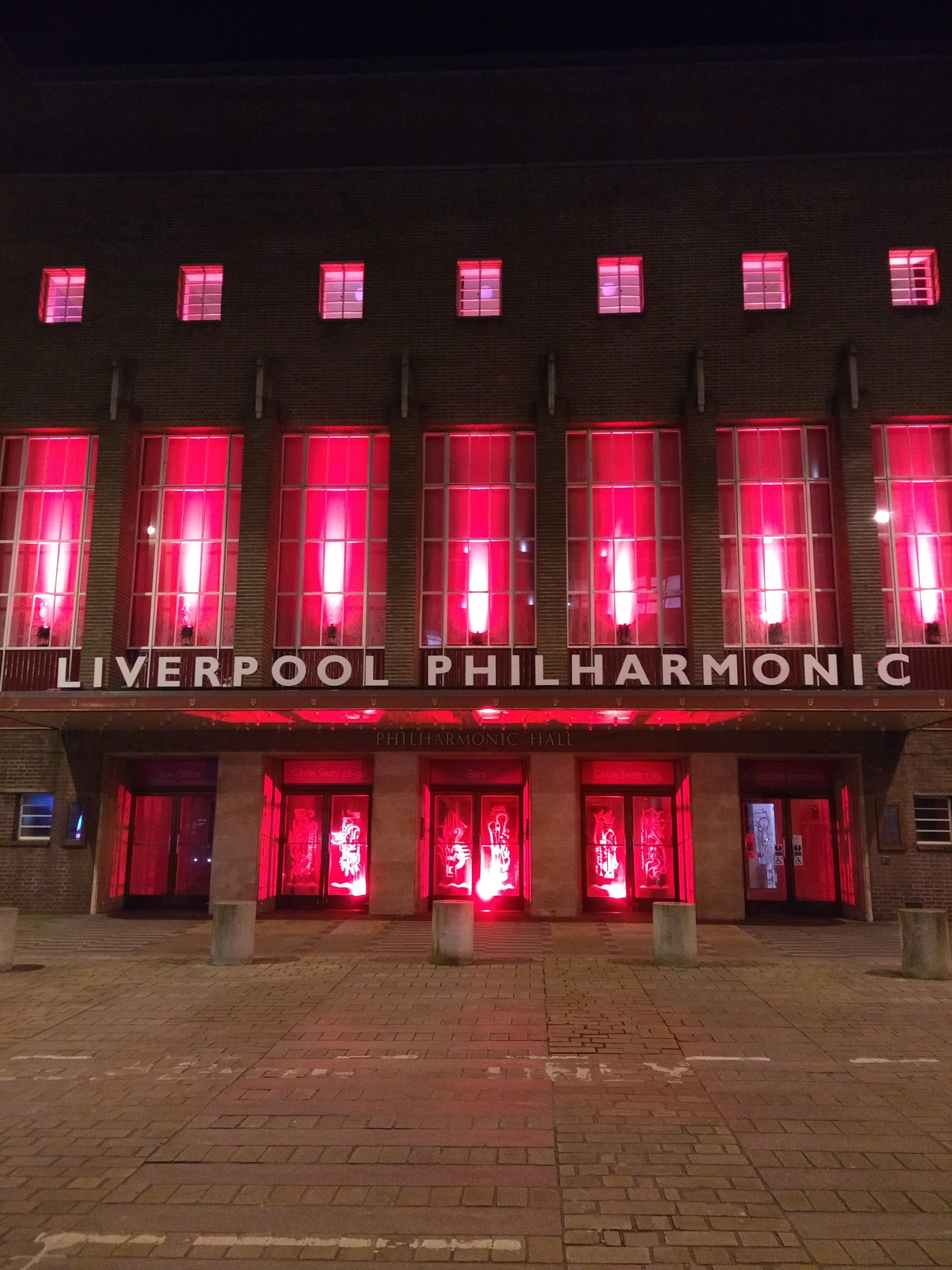
Globally, it is clear that the pandemic is far from over.  However, government restrictions on movement and meeting people imposed at the start of the year combined with a successful vaccination programme have allowed a gradual return to normality in the UK since late April.  I have particularly appreciated this resumption of life over the past fortnight.  While most meetings are still conducted online, I have managed to meet most of my research students in person in our lab, in pavement cafes or occasionally in my office with the window open and wearing masks.  I have even been to the pub after work on two consecutive Tuesdays.  On the first occasion, it was after a progress meeting on a research project when we enjoyed continuing our discussion of a new idea over a couple of beers; and, on the second occasion, t with our faculty management team to celebrate the first anniversary of one of the team joining us, who had only met half the team in person.  On both occasions we had all tested negative using the lateral flow test and we sat outside in the sunshine.  I have also been to three concerts at Liverpool Philharmonic Hall where we wore masks throughout the concert and both the audience and orchestra were socially-distanced.  Last Thursday, I enjoyed Ravel’s Le Tombeau de Couperin and Prokofiev’s Symphony No. 1 ‘Classical’ as well as the world premiere of Dani Howard’s Trombone Concerto.  The second concert featured works by Astor Piazzola which were a revelation to me.  I had never heard of him let alone his music and really enjoyed the concert.  However, as I write this post, the number of cases in Liverpool is rising rapidly and we are being advised to be more cautious in our interactions with other people.  Not enough people have been vaccinated and are taking regular tests to allow us to return to our previous state of social interactions.  Nevertheless, I am optimistic that we can eventually take back control of our lives from the coronavirus.  Our global society is a complex system, which like any other complex system, operates without central control but with simple operating rules generating self-organising and emergent behaviour [see ‘Destruction of society as a complex system?‘ on July 31st, 2019] that allows us to find new states to handle changed circumstances regardless of the efforts of politicians.

You can listen last Thursday’s concert on demand at the Royal Liverpool Philharmonic’s website: https://liverpoolphil.com/whats-on/video-on-demand/on-demand-domingo-hindoyan-conducts-stravinsky-howard-ravel-and-prokofiev-with-peter-moore/3926