Category Archives: Engineering

Reasons I became an engineer: #1

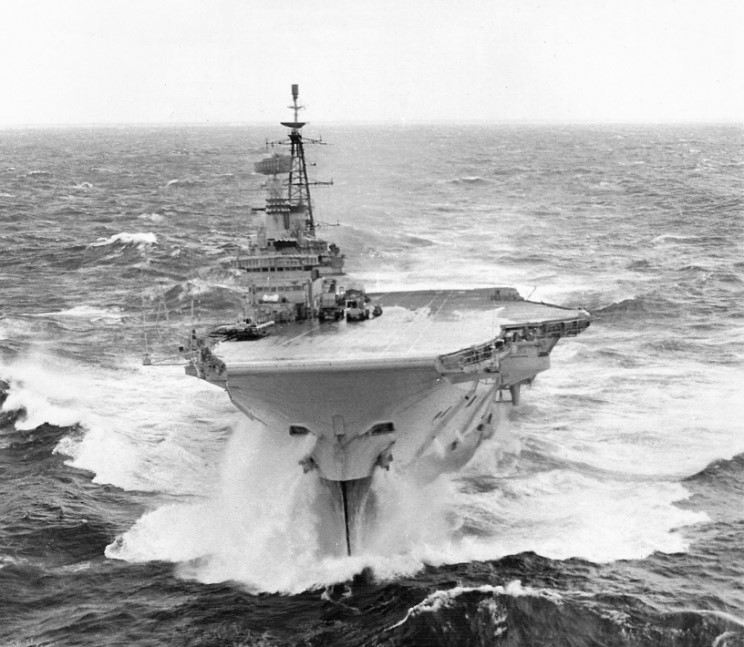
Photograph of aircraft carrier in heavy seas for decorative purposes onlyThis is the first in a series of posts in which I am going to reflect on my route to becoming an engineer.  These events happened around forty years ago so inevitably my recollections probably have more in common with folklore than reliable history.  Nevertheless, I hope they might be of interest.

I was good at mathematics at school but also geography and when required to specialise at the age of sixteen would have preferred to study mathematics, geography and perhaps economics.  However, my parents and my school, had other ideas and decided that partnering chemistry and physics with mathematics would give me more opportunities in terms of university courses and careers.  Physics was manageable but Chemistry was a complete mystery to me.  I left school shortly before my eighteenth birthday and joined the Royal Navy as a midshipman.  I went to Dartmouth Naval College where, as part of my training to become a seaman officer, I was taught to march, navigate, fight fires, sail yachts, drive motor launches and fly helicopters as well as spending time with the Royal Marines.  After my basic naval training, which included time at sea on HMS Hermes, I went to University sponsored by the Royal Navy with a free choice of subject to study.  So, I chose Mechanical Engineering because I thought as an officer on the bridge of a ship, perhaps eventually in command of a ship, it would be useful to understand what the engineers were talking about when they asked for a change in operations due to technical difficulties.  At that stage in my life, I had no intention of becoming an engineer, but with hindsight it was my first step in that direction.

Reliable predictions of non-Newtonian flows of sludge

Regular readers of this blog will be aware that I have been working for many years on validation processes for computational models of structures employed in a wide range of sectors, including aerospace engineering [see ‘The blind leading the blind’ on May 27th, 2020] and nuclear energy [see ‘Million to one’ on November 21st, 2018].  Validation is determining the extent to which predictions from a model are representative of behaviour in the real-world [see ‘Model validation’ on September 18th, 2012].  More recently, I have been working on model credibility, which is the willingness of people, besides the modeller, to use the predictions from models in decision-making [see, for example, ‘Credible predictions for regulatory decision-making’ on December 9th, 2020].  I have started to consider the complex world of predictive modelling of fluid flow and I am hoping to start a collaboration with a new colleague on the flow of sludges.  Sludges are more common than you might think but we are interested in modelling the flow of waste, both wastewater (sewage) and nuclear wastes.  We have a PhD studentship available sponsored jointly by the GREEN CDT and the National Nuclear Laboratory.  The project is interdisciplinary in two dimensions because it will combine experiments and simulations as well as uniting ideas from solid mechanics and fluid mechanics.  The integration of concepts and technologies across these boundaries brings a level of adventure to the project which will be countered by building on well-established research in solid mechanics on quantitative comparisons of measurements and predictions and by employing current numerical and experimental work on wastewater sludges.  If you are interested or know someone who might want to join our research then you can find out more here.

Image: Sewage sludge disposal in Germany: Andrea Roskosch / UBA

Structural damage assessment using infrared detectors in fusion environments

Schematic representation of plasma flux in a fusion reactorAbout six months ago, I described the success of my research group in detecting the early stages of the development of damage in structural components using small, cheap devices based on infrared measurements [see ‘Seeing small changes is a big achievement‘ on October 26th, 2022] after it had been reported in the Proceedings of the Royal Society.  The research was motivated by the needs of the aerospace industry and largely supported via the European Union’s Horizon 2020 research and innovation programme.  We are planning to extend the research to allow our technology to be used for diagnostics in future fusion power plants.  Plasma facing components in these powerplants will experience significant structural and functional degradation in service due to the extreme condition in the reactor.  Our aim is to develop systems based on our infrared monitoring technology that can identify and track material degradation without the need for plant shutdown thereby enabling unplanned maintenance to be undertaken at the earliest sign of component failure.  We are collaborating with the UKAEA and are looking to recruit a PhD student to work on the project supported by the GREEN CDT and Eurofusion.  If you are interested or know someone who might be interested then please follow this link for more information.

Reference:

Amjad, K., Lambert, C.A., Middleton, C.A., Greene, R.J., Patterson, E.A., 2022, A thermal emissions-based real-time monitoring system for in situ detection of cracks, Proc. R. Soc. A., 478: 20210796.

Inducing chatbots to write nonsense

titanium dental implant face profile technical pictureThe chatbot, ChatGPT developed by OpenAI, has been in the news recently and is the subject of much discussion in universities primarily because of its potential use by students to complete their coursework assignments but also the positive uses to which it might be applied. After last week’s invitations to edit two special issues in different journals on cosmetic dentistry and wire arc additive manufacturing (WAAM) [‘Wire arc additive manufacturing and cosmetic dentistry?‘ on February 8th, 2023], I did a little research in the scientific literature to find out if anyone had published research on using WAAM to make parts for cosmetic dentistry but found nothing.  I was not surprised – the level of precision achievable with WAAM is about 1 millimetre which would be insufficient for most applications in cosmetic dentistry.  Then, I signed up for a free trial with ChatGPT and conducted an experiment by asking it to write about wire arc additive manufacturing and cosmetic dentistry.  The chatbot produced 128 words about how WAAM is becoming increasing popular in cosmetic dentistry because of its accuracy and precision also because a wide range of materials can be used allowing a match to the colour and texture of teeth.  I repeated the experiment and the chatbot produced 142 different words, again stating that dental prostheses can be produced using WAAM with high precision and accuracy to match a patient’s existing teeth in colour so that restorations appear natural and undetectable.  In each case the six or seven sentences were well-written and included some facts that were used to construct a set of false statements, which superficially appeared reasonable; however, only a modicum of knowledge would be required to identify the fallacious rationale.  Some of my colleagues are already exploring incorporating the chatbot into students’ coursework by asking students to use it to generate a description of a technical topic and then asking them to critique its output in order to assess their understanding of the topic.  I expect chatbots will improve rapidly but for the moment it is relatively easy to induce them to write nonsense.

Bibliography

Li Y, Su C, Zhu J. Comprehensive review of wire arc additive manufacturing: Hardware system, physical process, monitoring, property characterization, application and future prospects. Results in Engineering,100330, 2021.

Image: www.authoritydental.org CC BY 2.0 downloaded from https://www.flickr.com/photos/dental-photos/50730990757