Tag Archives: PhD

Webs of expertise and knowledge

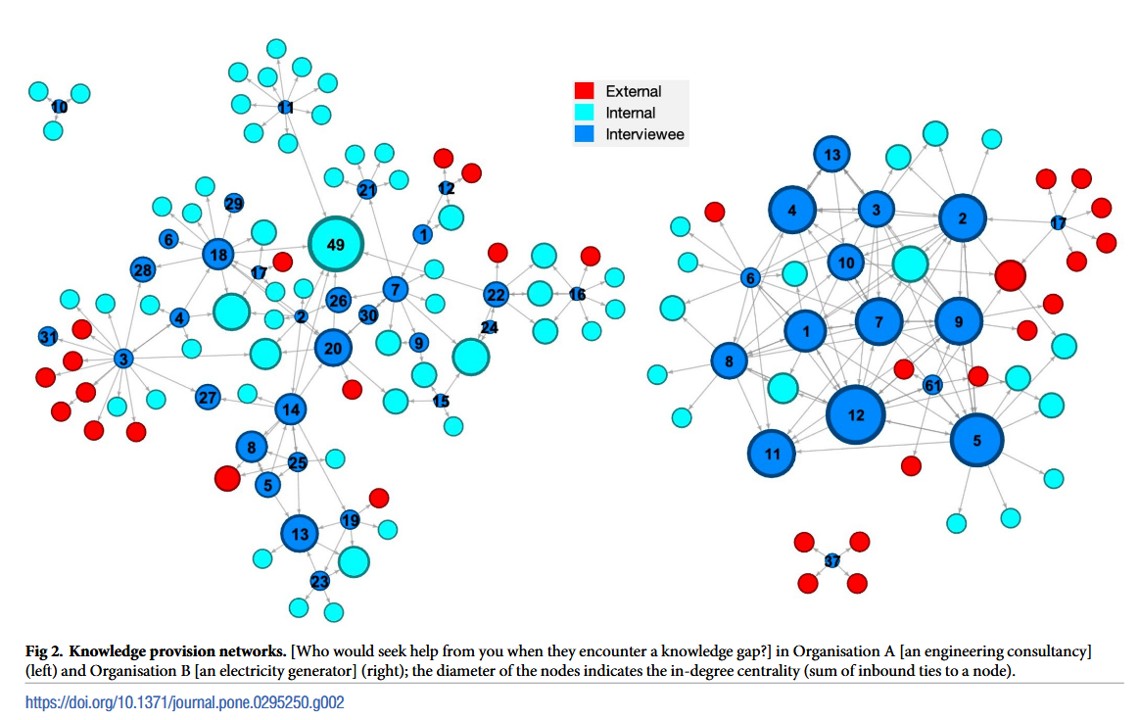
I am writing this post while I am in the middle of leading a breakout activity for more than a hundred PhD students from our Centres for Doctoral Training in nuclear science and engineering, GREEN and SATURN.  We have asked them to construct a knowledge network for a start-up company commissioned to build either a fusion energy power station or a power station based on small modular reactors (SMRs).  A knowledge network is a web of expertise and information whose value comes from the connections and interactions within and outside an organization.  Our aim is to encourage students to think beyond science and engineering and consider the interactions required to deliver safe, economic nuclear power.

We have brought the students together in York from six universities located in the North of England (Lancaster, Leeds, Liverpool, Manchester & Sheffield) and Scotland (Strathclyde).  This is an annual event usually held in the first working week of the New Year (see ‘Nuclear Winter School’ on January 23rd 2019).

The breakout activity has three one-hour time-slots on three consecutive days.  In today’s time-slot, we have divided the students into twenty groups of seven and given them paper, pencils, and a circle stencil plus an eraser with which to draw knowledge networks.  We are hoping for creativity, lively discussions, and some fun.  In yesterday’s one-hour slot, they had briefings from the Chief Manufacturing Engineer for a company building SMRs and the Deputy Chief Engineer of a company developing a fusion power station, as well as from a Digital Knowledge Management Consultant whose PhD led to a paper on knowledge networks, which we shared with the students last month (see ‘Evolutionary model of knowledge management’ on March 6th, 2024).  Tomorrow, one person from each group will have two minutes to present their knowledge network, via a portable visualiser, to an audience of several hundred.  What can go wrong?  Twenty two-minute presentations in one hour with one minute for questions and changeover.

GREEN (Growing skills for Reliable Economic Energy from Nuclear) is co-funded by a consortia of industrial organisations and the UK EPSRC (grant no. EP/S022295/1).

SATURN (Skills And Training Underpinning a Renaissance in Nuclear) succeeded GREEN and is also co-funded by a consortia of industrial organisations and the UK EPSRC (grant no. EP/Y034856/1).

Image shows thumbnail of figure from shared paper with knowledge networks for an engineering consultancy company and an electricity generator, follow this link for full size image.


Opportunities lost in knowledge management using digital technology

Decorative imageRegular readers of this blog will know that I occasionally feature publications from my research group.  The most recent was ‘Predicting release rates of hydrogen from stainless steel’ on September 13th, 2023 and before that ‘Label-free real-tracking of individual bacterium’ on January 25th 2023 and ‘A thermal emissions-based real-time monitoring system for in situ detection of cracks’ in ‘Seeing small changes is a big achievement’ on October 26th 2023.  The subject of these publications might seem a long way apart but they are linked by my interest in trying to measure events in the real-world and use the data to develop and validate high-fidelity digital models.  Recently, I have stretched my research interests still further through supervising a clutch of PhD students with a relatively new collaborator working in the social sciences.  Two of the students have had their first papers published by the ASME (American Society of Mechanical Engineers) and the IEEE (Institute of Electrical and Electronics Engineers).  Their papers are not directly connected but they both explore the use of published information to gain new insights on a topic.  In the first one [1], we have explored the similarities and differences between safety cases for three nuclear reactors: a pair of research reactors – one fission and one fusion reactor; and a commercial fission reactor.  We have developed a graphical representation of the safety features in the reactors and their relationships to the fundamental safety principles set out by the nuclear regulators. This has allowed us to gain a better understanding of the hazard profiles of fission and fusion reactors that could be used to create the safety case for a commercial fusion reactor.  Fundamentally, this paper is about exploiting existing knowledge and looking at it in a new way to gain fresh insights, which we did manually rather than automating the process using digital technology.  In the second paper [2], we have explored the extent to which digital technologies are being used to create, collate and curate knowledge during and beyond the life-cycle of an engineering product.  We found that these processes were happening but generally not in a holistic manner.  Consequently, opportunities were being lost through not deploying digital technology in knowledge management to undertake multiple roles simultaneously, e.g., acting as repositories, transactive memory systems (group-level knowledge sharing), communication spaces, boundary objects (contact points between multiple disciplines, systems or worlds) and non-human actors.  There are significant challenges, as well as competitive advantages and organisational value to be gained, in deploying digital technology in holistic approaches to knowledge management.  However, despite the rapid advances in machine learning and artificial intelligence [see ‘Update on position of AI on hype curve: it cannot dream’ on July 26th 2023] that will certainly accelerate and enhance knowledge management in a digital environment, a human is still required to realise the value of the knowledge and use it creatively.

References

  1. Nguyen, T., Patterson, E.A., Taylor, R.J., Tseng, Y.S. and Waldon, C., 2023. Comparative maps of safety features for fission and fusion reactors. Journal of Nuclear Engineering and Radiation Science, pp.1-24
  2. Yao, Y., Patterson, E.A. and Taylor, R.J., 2023. The Influence of Digital Technologies on Knowledge Management in Engineering: A Systematic Literature Review. IEEE Transactions on Knowledge and Data Engineering.

Slicing the cake equally or engineering justice

Decorative photograph of sliced chocolate cakeIn support of the research being performed by one of the PhD students that I am supervising, I have been reading about ‘energy justice’.  Energy justice involves the equitable sharing of the benefits and burdens of the production and consumption of energy, including the fair treatment of individuals and communities when making decisions about energy.  At the moment our research is focussed on the sharing of the burdens associated with energy production and ways in which digital technology might improve decision-making processes.  Justice incorporates the distribution of rights, liberties, power, opportunities, and money – sometimes known as ‘primary goods’.  The theory of justice proposed by the American philosopher, John Rawls in the 1970’s is a recurring theme: that these primary goods should be distributed in a manner a hypothetical person would choose, if, at the time, they were ignorant of their own status in society.  In my family, this is the principle we use to divide cakes and other goodies equally between us, i.e., the person slicing the cake is the last person to take a slice.  While many in society overlook the inequalities and injustices that sustain their privileged positions, I believe that engineers have a professional responsibility to work towards the equitable distribution of the benefits and burdens of engineering on the individuals and communities, i.e., ‘engineering justice’ [see ‘Where science meets society‘ on September 2nd, 2015].  This likely involves creating a more diverse engineering profession which is better equipped to generate engineering solutions that address the needs of the whole of our global society [see ‘Re-engineering engineering‘ on August 30th, 2017].  However, it also requires us to rethink our decision-making processes to achieve  ‘engineering justice’.  There is a clear and close link to ‘procedure justice’ and ‘fair process’ [see ‘Advice to abbots and other leaders‘ November 13th, 2019] which involves listening to people, making a decision, then explaining the decision to everyone concerned.  In our research, we are interested in how digital environments, including digital twins and industrial metaverses, might enable wider and more informed involvement in decision-making about major engineering infrastructure projects, with energy as our starting point.

Sources:

Derbyshire J, Justice, fairness and why Rawls still matters today, FT Weekend, April 20th, 2023.

MacGregor N, How to transcend the culture wars, FT Weekend, April 29/30th, 2023.

Rawls J, A Theory of Justice, Cambridge MA: Belknap Press, 1971

Sovacool BK & Dworkin MH, Global Energy Justice: Problems, Principles and Practices, Cambridge: Cambridge University Press, 2014.

Image: https://www.alsothecrumbsplease.com/air-fryer-chocolate-cake/

Reasons I became an engineer: #2

Decorative photograph showning the entrance to the Engineering Faculty at the University of SheffieldThis is the second in a series of posts reflecting on my route to becoming an engineer.  In the first one I described how I chose a degree in mechanical engineering so that I would have appreciation of the technical difficulties that engineers might cite when requesting operational changes for a ship that I hoped one day to command [see ‘Reasons I became an engineer: #1’ on April 19th, 2023].  I think I selected mechanical engineering because it provided a broader engineering education than other engineering degrees and I did not know enough to choose any other branch of engineering.  I went to the University of Sheffield and during vacations returned to the Royal Navy serving onboard HMS Active and flew out to join her wherever she was in the world, except when I went to the Royal Navy Engineering College at Manadon outside Plymouth to undertake engineering applications training.  I cast a brass nameplate, which I still have in my office, and made a toolbox that I also still have at home.  After graduation, I returned full-time to the Royal Navy as a sub-lieutenant and started my career as a naval officer in the executive or seaman branch.  However, I did not settle and missed engineering so I asked for and was refused a transfer to the Royal Corps of Naval Constructors who work on the design and development of warships.  As a result, I resigned my commission in the Royal Navy and got a job as a research assistant in the Department of Mechanical Engineering at the University of Sheffield where I registered for a PhD in engineering.  I had taken a positive step towards becoming an engineer but perhaps on the premise of what I did not want to do rather than what I did want to do.