Category Archives: Uncategorized

Eternal non-existence

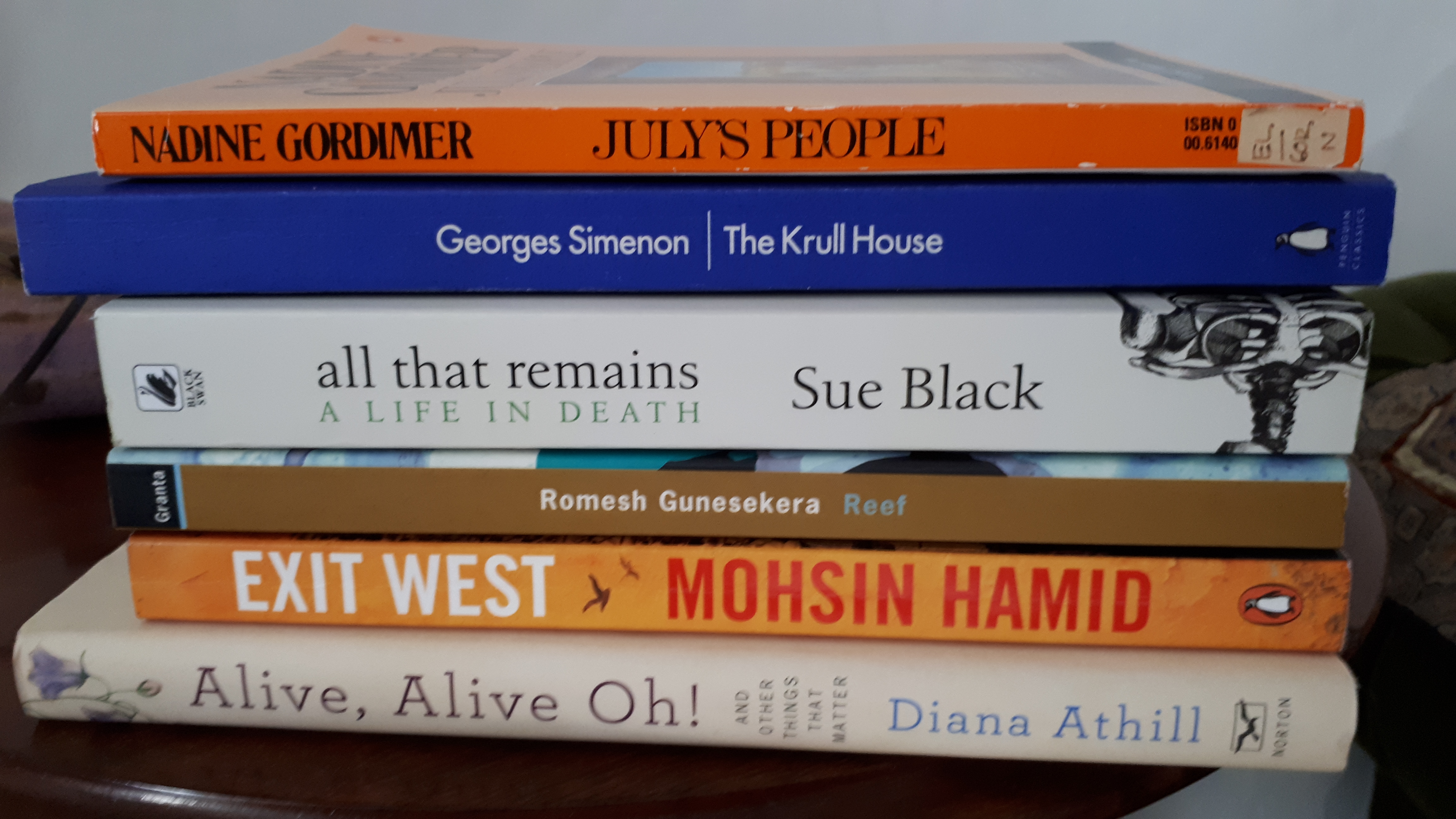
I was on holiday last week in the Lake District.  The weather was beautiful all week and we spent every day walking the hills around the Duddon Valley before sampling a different real ale each evening in the Manor Arms in Broughton-in-Furness.  I also found time to read a small pile of books in which a recurring theme seemed to be death, perhaps because I was sensitised to it by the most substantial book on the pile: ‘All that remains: a life in death‘ by Sue Black, who is a leading professor of anatomy and forensic anthropology. In her brilliant memoir, she identifies three stages: dying, death and being dead.  She worries most about the first stage, dying, which in common with most people, she would like to skip through as quickly as possible.  However, she is intrigued by the threshold that separates dying from being dead and would like to experience it when the time comes; although that sounds like professional curiosity to me and I would be happy to skip through that too.  As she points out, those fears that we might have about the third stage, being dead, depend on our belief in what happens to us after death.  Not many people write books at the age 99, so I was curious to read a collection of essays by Diana Athill who was born in 1917 and published ‘Alive, Alive Oh!‘ in 2016.  The final essay is entitled ‘Dead right’ and is about her recollection of a contribution to a discussion on a television programme about death made by the photographer, Rankin.  The contributor said ‘that not existing for thousands and thousands of years before his birth had never worried him for a moment, so why should going back into non-existence at his death cause him dismay?’.

Is there a real ‘you’ or ‘I’?

I have written recently about time and consciousness [see ‘Time at the heart of our problems‘ on January 30th, 2019 and ‘Limits of imagination‘ on February 13th, 2019].  We perceive some things as almost constant or changeless, such as trees and landscapes; however, that is just a consequence of our perception of time.  Nothing that is in equilibrium, and hence unchanging, can be alive.  The laws of thermodynamics tell us that disequilibrium is fundamental in driving all processes including life.  Our perception of experience arises from registering changes in the flow of sensory information to our brains and as well as changes in the networks of neurons in our brains.  Hence, both time and complexity appear to be essential ingredients for consciousness. Even when we sit motionless watching an apparently unchanging scene, as a consequence of the endless motion of connections and signals in our brains, our minds are teeming with activity, churning through great jumbles of ideas, memories and thoughts.  Next time you are sitting quietly, try to find ‘you’; not the things that you do or experience but the elusive ‘I’.  We assume that the elusive ‘I’ is there, but most of us find nothing when we look for it.  Julian Baggini has suggested that the “I” is ‘a nothing, contentless centre around which experiences flutter like butterflies.’

Sources:

Baggini J, The pig that wants to be eaten and 99 other thought experiments, London: Granta Publications, 2008.

Czerski H, Storm in a teacup:the physics of everyday life, London: Penguin Random House, 2016.

Godfrey-Smith P, Other minds: the octopus and the evolution of intelligent life, London: William Collins, 2018.

Rovelli C, Seven brief lessons on physics, London, Penguin Books. 2016.

In Einstein’s footprints?

Grand Hall of the Guild of Carpenters, Zurich

During the past week, I have been working with members of my research group on a series of papers for a conference in the USA that a small group of us will be attending in the summer.  Dissemination is an important step in the research process; there is no point in doing the research if we lock the results away in a desk drawer and forget about them.  Nowadays, the funding organisations that support our research expect to see a plan of dissemination as part of our proposals for research; and hence, we have an obligation to present our results to the scientific community as well as to communicate them more widely, for instance through this blog.

That’s all fine; but nevertheless, I don’t find most conferences a worthwhile experience.  Often, there are too many uncoordinated sessions running in parallel that contain presentations describing tiny steps forward in knowledge and understanding which fail to compel your attention [see ‘Compelling presentations‘ on March 21st, 2018].  Of course, they can provide an opportunity to network, especially for those researchers in the early stages of their careers; but, in my experience, they are rarely the location for serious intellectual discussion or debate.  This is more likely to happen in small workshops focussed on a ‘hot-topic’ and with a carefully selected eclectic mix of speakers interspersed with chaired discussion sessions.

I have been involved in organising a number of such workshops in Glasgow, London, Munich and Shanghai over the last decade.  The next one will be in Zurich in November 2019 in Guild Hall of Carpenters (Zunfthaus zur Zimmerleuten) where Einstein lectured in November 1910 to the Zurich Physical Society ‘On Boltzmann’s principle and some of its direct consequences‘.  Our subject will be different: ‘Validation of Computational Mechanics Models’; but we hope that the debate on credible models, multi-physics simulations and surviving with experimental data will be as lively as in 1910.  If you would like to contribute then download the pdf from this link; and if you just like to attend the one-day workshop then we will be announcing registration soon and there is no charge!

We have published the outcomes from some of our previous workshops:

Advances in Validation of Computational Mechanics Models (from the 2014 workshop in Munich), Journal of Strain Analysis, vol. 51, no.1, 2016

Strain Measurement in Extreme Environments (from the 2012 workshop in Glasgow), Journal of Strain Analysis, vol. 49, no. 4, 2014.

Validation of Computational Solid Mechanics Models (from the 2011 workshop in Shanghai), Journal of Strain Analysis, vol. 48, no.1, 2013.

The workshop is supported by the MOTIVATE project and further details are available at http://www.engineeringvalidation.org/4th-workshop

The MOTIVATE project has received funding from the Clean Sky 2 Joint Undertaking under the European Union’s Horizon 2020 research and innovation programme under grant agreement No. 754660.

Limits of imagination

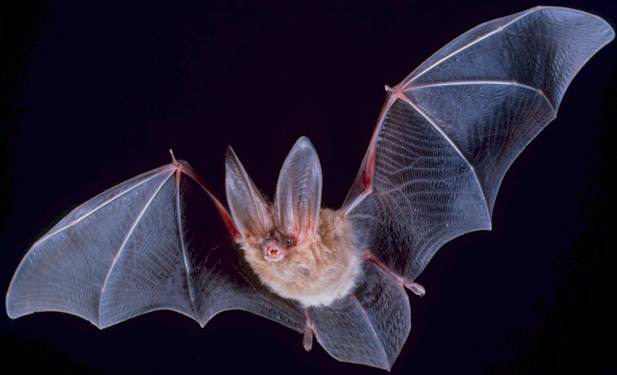
What’s it like being a bat?  ‘Seeing’ the world through your ears, or at least a sophisticated echo-location system. Or, what’s it like being an octopus?  With eight semi-autonomous arms that I wrote about a couple of weeks ago [see ‘Intelligent aliens?’ on January 16th, 2019]. For most of us, it’s unimaginable. Perhaps, because we are not bats or octopuses, but that seems to be dodging the issue.  Is it a consequence of our education and how we have been taught to think about science?  Most scientists have been taught to express their knowledge from a third person perspective that omits the personal point of view, i.e. our experience of science.  The philosopher, Julian Baggini has questioned the reason for this mode of expression: is it that we haven’t devised a framework for understanding the world scientifically that captures the first and third person points of view; is it that the mind will always elude scientific explanation; or is that the mind simply isn’t part of the physical world?

Our minds have as many neurons as there are stars in the galaxy, i.e. about a hundred billion, which is sufficient to create complex processes within us that we are never likely to understand or predict.  In this context, Carlo Rovelli has suggested that the ideas and images that we have of ourselves are much cruder and sketchier than the detailed complexity of what is happening within us.  So, if we struggle to describe our own consciousness, then perhaps it is not surprising that we cannot express what it is like to be a bat or an octopus.  Instead we resort to third person descriptions and justify it as being in the interests of objectivity.  But, does your imagination stretch to how much greater our understanding would be if we did know what is like to be a bat or an octopus?  And, how that might change our attitude to the ecosystem?

BTW:  I would answer yes, yes and maybe to Baggini’s three questions, although I remain open-minded on all of them.

Sources:

Baggini J, The pig that wants to be eaten and 99 other thought experiments, London: Granta Publications, 2008.

Rovelli C, Seven brief lessons on physics, London, Penguin Books. 2016.

Image: https://www.nps.gov/chis/learn/nature/townsends-bats.htm