Tag Archives: Engineering

And then we discovered thermodynamics

sunEnergy, matter, space and time came into existence in the Big Bang 13.5 billion years ago. 10 billion years later biological organisms started to appear. 70,000 years ago one of those organisms, man started to organise in structures, called cultures and history began. For most of history if you wanted something moved then you had to do it yourself or persuade someone else to do it. The agricultural revolution began 12,000 years ago and shortly afterwards we realised that if you fed fuel to an animal then it would ‘burn’ it and do work for you. And that’s how it remained for thousands of years – we didn’t know how to convert heat into work or work into heat. The average energy consumption per capita was about 20GJ per year. Then, 200 years ago we discovered how to imitate nature by burning fuel and producing power in the steam engine. We had discovered thermodynamics and our average energy consumption started rising towards 80GJ per year today.

As a consequence, ‘we have now all but destroyed this once salubrious planet as a life-support system in fewer than two hundred years, mainly by making thermodynamic whoopee with fossil fuels’ as Kurt Vonnegut wrote. And that’s because nature starts from solar energy and recycles everything and we haven’t learnt how to do either very effectively. But energy or power engineering has been around for less than a blink of eye relatively speaking and we are just learning how to perform a trick nature has been using for billions of years: convert solar radiation into other energy forms. The sun delivers about 340 Watts per square metre to the Earth so we have plenty energy available.

If you would like to know more about energy engineering or thermodynamics and its potential then join the 5000 people who have signed up for the MOOC that I am teaching for five weeks from next Monday.  Listen to me interview Ken Durose, Director of the Stephenson Institute for Renewable Energy on the prospects for renewable energy.

Sources:

http://ourfiniteworld.com/2012/03/12/world-energy-consumption-since-1820-in-charts/

Yuval Noah Harari, Sapiens: A brief history of mankind. London: Vintage (Penguin, Random House), 2014.

Kurt Vonnegut, A Man without a Country, New York: Seven Stories Press, 2005.

Running away from tigers

rsph graphicToday, the probability that you will have to run away from a tiger is very small, no matter where you live.  Tigers have lost 93% of their historical range that used to stretch from Turkey across Asia to Eastern China and southwards to Indonesia.  Tigers have no problem with the first law of thermodynamics – they instinctively know that if they take in more energy than they expend then the excess energy will be stored as fat and when they become overweight they won’t be able to catch you or whatever else they decided to chase for their next meal.

As a species we seem to have lost that understanding of energy balances.   Obesity is increasing in many parts of the world.  The situation is so serious in the UK, where more than two-thirds of the adult population are overweight or obese, that the Royal Society for Public Health has proposed that food should be labelled with the amount of exercise required to burn-off the calories it contains and they have suggested using the infographic in the thumbnail.  Of course, the Royal Society’s position paper does not mention explicitly thermodynamics (or tigers!) though it does effectively cite the first law by stating ‘the cause of obesity is excess energy consumption relative to energy expenditure‘.  By coincidence, this week I interviewed Professor Graham Kemp, in the Institute of Ageing and Chronic Disease in Liverpool, about energy flows through our bodies for a MOOC on Energy: Thermodynamics in Everyday Life.

If you wathermolectures posternt to listen to that interview or learn more about the thermodynamics underpinning the energy balances controlling our weight, climate change and your electricity charges, then you need to join the more than 4,500 people who have already enrolled on the MOOC that will run for five weeks from February 8th, 2016.  I will also be giving an accompanying series of lectures in London.

I was astonished to discover that there are fewer tigers in the world than people signed up for our MOOC.  Less than 3,200 tigers exist in the wild mainly because our growing population and prolifigate use of the world’s resources has destroyed their habitat and those of the other species with which we share this planet.


Connecting robotic touch and vision

katherine kuchenbeckerSome months ago I wrote about soft robots that could delicately pick up fragile objects [see my post entitled ‘Robots with a delicate touch’ on June 3rd, 2015]. These robots, developed by George Whiteside’s research group, went some way towards mimicking the function of our hands.  However, these robots are numb because they have no sense of touch.  Think about how hard it would be to strike a match or pick up an egg without your sense of touch. Katherine Kuchenbecker from the University of Pennsylvania is working on robots with tactile sensors that detect pressure and vibrations.  This sensitivity transforms their ability to perform delicate tasks such as picking up an egg, or perhaps more significantly perform surgery.  I listened to Professor Kuchenberger speak at a meeting at the Royal Society on ‘Robotics and Autonomous Systems’ where she put us off our lunch with some gory videos on robot-assisted surgery. You can watch them at her website. Her vision is of robots that connect vision and touch, which is of course what we do effortlessly most of the time.

Insidious damage

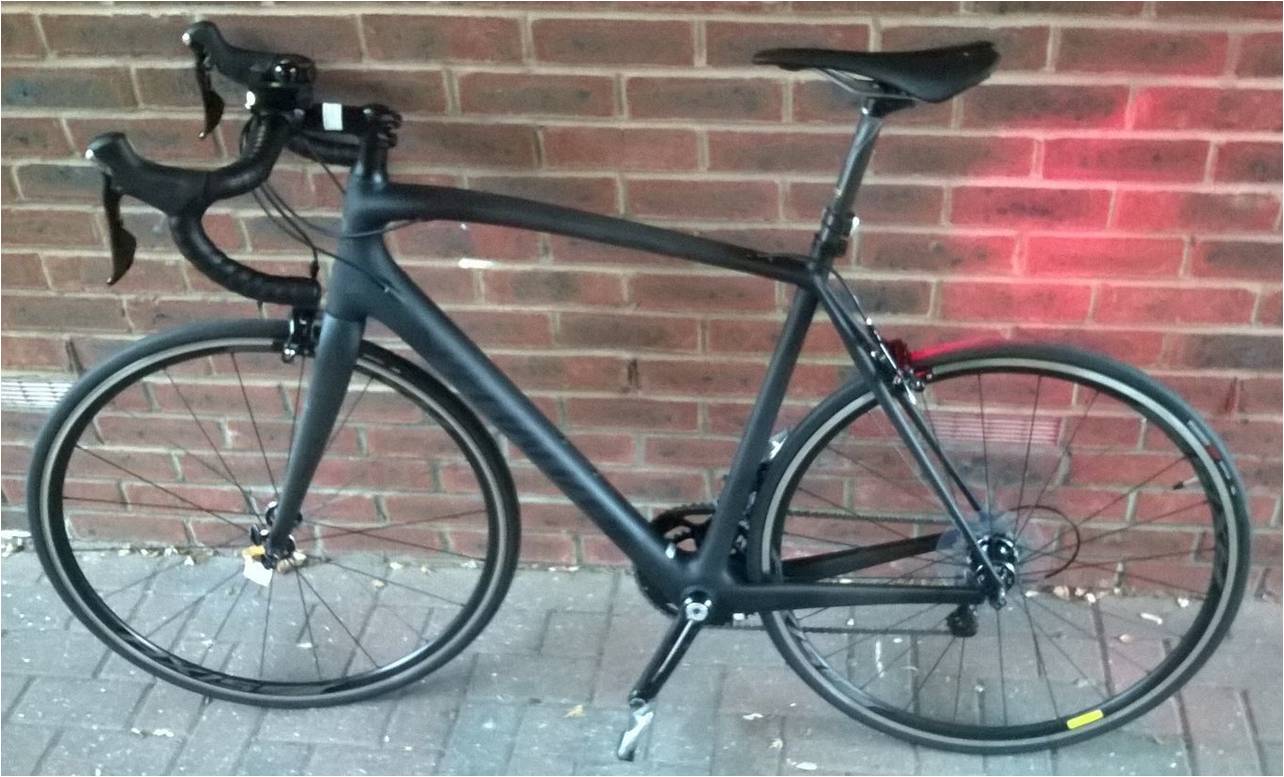
bikeRecently, my son bought a carbon-fibre framed bike for his commute to work. He talked to me about it before he made the decision to go ahead because he was worried about the susceptibility of carbon-fibre to impact damage. The aircraft industry worries about barely visible impact damage (BVID) because while the damage might be barely visible on the accessible face that received the impact, within the carbon-fibre component there can be substantial life-shortening damage. I reassured my son that it is unlikely a road bike would receive impacts of sufficient energy to induce life-shortening damage, at least in ordinary use. However, such impacts are not unusual in aircraft structures which means that they have to be inspected for hidden, insidious damage. The most common method of inspection is based on ultrasound that is reflected preferentially by the damaged areas so that the shape and extent of damage can be mapped. It is difficult to predict the effect on the structural performance of the component from this morphology information so that, when damage is found, the component is usually repaired or replaced immediately. In my research group we have been exploring the use of strain measurements to locate and assess damage by comparing the strain distributions in as-manufactured and in-service components. We can measure the strain fields in components using a number of techniques including digital image correlation (see my post entitled ‘256 shades of grey’) and thermoelastic stress analysis (see my post entitled ‘Counting photons to measure stress‘). The comparison is performed using feature vectors that represent the strain fields, see my post of a few weeks ago entitled ‘Recognising strain’. The guiding principle is that if damage is present but does not change the strain field then the structural performance of the component is unchanged; however when the strain field is changed then it is easier to predict remanent life from strain data than from morphology data. We have demonstrated that these new concepts work in glass-fibre reinforced laminates and are in the process of reproducing the results in carbon-fibre composites.

Sources

Patterson, E.A., Feligiotti, M., Hack, E., 2013, On the integration of validation, quality assurance and non-destructive evaluation, J. Strain Analysis, 48(1):48-59.

Patki, A.S., Patterson, E.A., 2012, Damage assessment of fibre reinforced composites using shape descriptors, J. Strain Analysis, 47(4):244-253.