Tag Archives: design

Engineering is all about ingenuity

Painting from Okemos High School Art Collection at MSU

Painting from Okemos High School Art Collection at MSU

Who was the first engineer?  It’s a tricky question to answer.  Some sources cite Ailnolth, who lived in the second half of the twelfth century and worked on the Tower of London, as one of the first to be called an ‘ingeniator’.  The word comes from the Latin and the Roman writer, Vitruvius, describes master builders as being ingenious or possessing ‘ingenium’.  Leonardo da Vinci (1452 – 1519) was perhaps the first person to be appointed as an engineer.  The Duke of Milan appointed him ‘Ingenarius Ducalis’ or Master of Ingenious Devices.

So it would appear that an engineer is ‘a skilful contriver or originator of something’,  which is the third definition in the on-line Oxford Dictionary after ‘a person who designs, builds, or maintains engines, machines or structures’ and ‘a person who controls an engine especially on an aircraft or ship’.  This type of engine, which uses heat to do work, is a relatively recent invention probably by Thomas Savery and Thomas Newcomen in the early eighteenth century.  Engineers have been contriving, designing and inventing ‘works of public utility’ [quote from my older hard copy Oxford English Dictionary] for many centuries before the heat engine hijacked the terminology.

Why does this matter?  Well, many people have a misconception that engineering is all about engines, the heat kind; and yes, some of us do design, build and maintain engines but very many more engineers contrive, design and invent works of public utility – in the broadest sense of the words, i.e. just about everything ‘invented’ in the world. In other words, engineering is using human ingenuity to produce something useful; preferably something that improves the quality of life – oh, but now we are moving into ethics and I will leave that for another day!

Sources:

Blockley D, Engineering: A Very Short Introduction, Oxford: Oxford University Press, 2012.

Auyang SY, Engineering – an endless frontier, Cambridge MA: Harvard University Press, 2004.

Little W, Fowler HW & Coulson J, The Shorter Oxford English Dictionary, C.T. Onions (editor), London: Guild Publishing, 1983.

 

A liberal engineering education

115-1547_IMGFredrik Sjoberg points out how the lives of Darwin and Linnaeus have become models for generations of natural scientists.  Youthful travels followed by years of patient, narrowly focussed research and finally the revolutionary ideas and great books.  Very many scientists have followed the first two steps but missed out on the last one, leaving them trapped in ‘the tunnel vision of specialised research’.  As our society and its accompanying technology has become more complex, more and more tunnels or silos of specialised knowledge and research have been created.  This has led specialists to focus on solving issues that they understand best and communicating little or not at all with others in related fields.  At the same time, our society and technologies are becoming more interconnected, making it more appropriate to cross the cultural divides between specialisms.

One of the pleasures of teaching my current MOOC is the diversity of learners in terms of gender, geography and educational background who are willing to cross the cultural divides.  We have people following the MOOC in places as diverse as Iceland, Mexico, Nigeria and Syria.  We have coffee bean growers, retired humanities academics, physical chemists and social historians.  In most of the western world, engineering is taught to male-dominated classes and this has remained a stubborn constant despite strenous efforts to bring about change.  So it is a pleasure to interact with such a diverse cohort of people seeking to liberate their minds from habit and convention.

The original meaning of the term ‘liberal studies’ was studies that liberated students’ minds from habit and convention.  Recently, Vinod Khosla has suggested that we should focus on teaching our students ‘liberal sciences’.     This seems to connect with the ’emotive traits’ that David Brooks has proposed will be required for success in the future, when machines can do most of what humans do now (see my post entitled ‘Smart Machines‘ on February 26th, 2014).  These emotive traits are a voracious lust of understanding, an enthusiasm for work, the ability to grasp the gist and an empathetic sensitivity for what will attract attention.   We don’t teach much of any of these in traditional engineering degrees which is perhaps why we can’t recruit a more diverse student population.  We need to incorporate them into our degree programmes, reduce much of the esoteric brain-twisting analysis and encourage our students to grapple with concepts and their broader implications.  This would become a liberal engineering education.

Sources:

Fredrik Sjoberg, The Fly Trap, Penguin Books, 2015

Asish Ghosh, Dynamic Systems for Everyone: Understanding How Our World Works, Springer, 2015

Vinod Khosla, Is majoring in liberal arts a mistake for students? Medium, February 10th, 2016

David Brooks, What machines can’t do, New York Times, February 3rd, 2014


Connecting robotic touch and vision

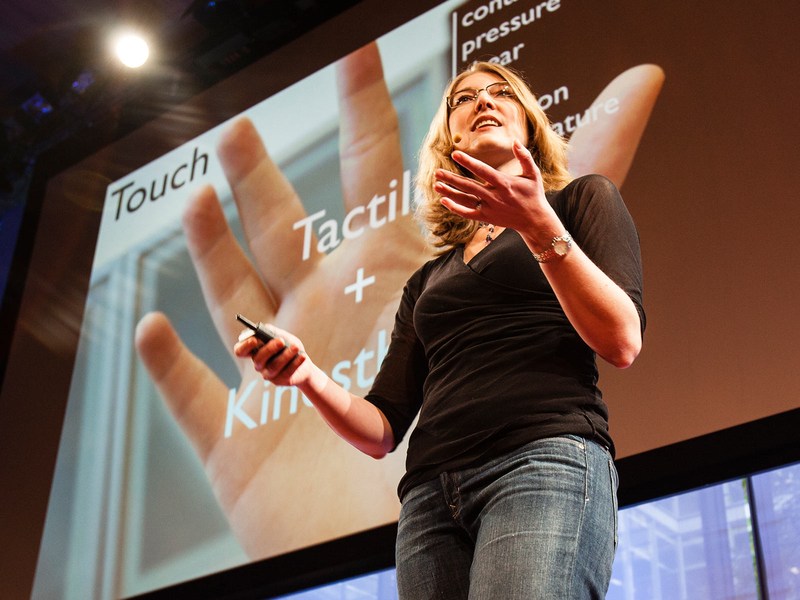
katherine kuchenbeckerSome months ago I wrote about soft robots that could delicately pick up fragile objects [see my post entitled ‘Robots with a delicate touch’ on June 3rd, 2015]. These robots, developed by George Whiteside’s research group, went some way towards mimicking the function of our hands.  However, these robots are numb because they have no sense of touch.  Think about how hard it would be to strike a match or pick up an egg without your sense of touch. Katherine Kuchenbecker from the University of Pennsylvania is working on robots with tactile sensors that detect pressure and vibrations.  This sensitivity transforms their ability to perform delicate tasks such as picking up an egg, or perhaps more significantly perform surgery.  I listened to Professor Kuchenberger speak at a meeting at the Royal Society on ‘Robotics and Autonomous Systems’ where she put us off our lunch with some gory videos on robot-assisted surgery. You can watch them at her website. Her vision is of robots that connect vision and touch, which is of course what we do effortlessly most of the time.

Insidious damage

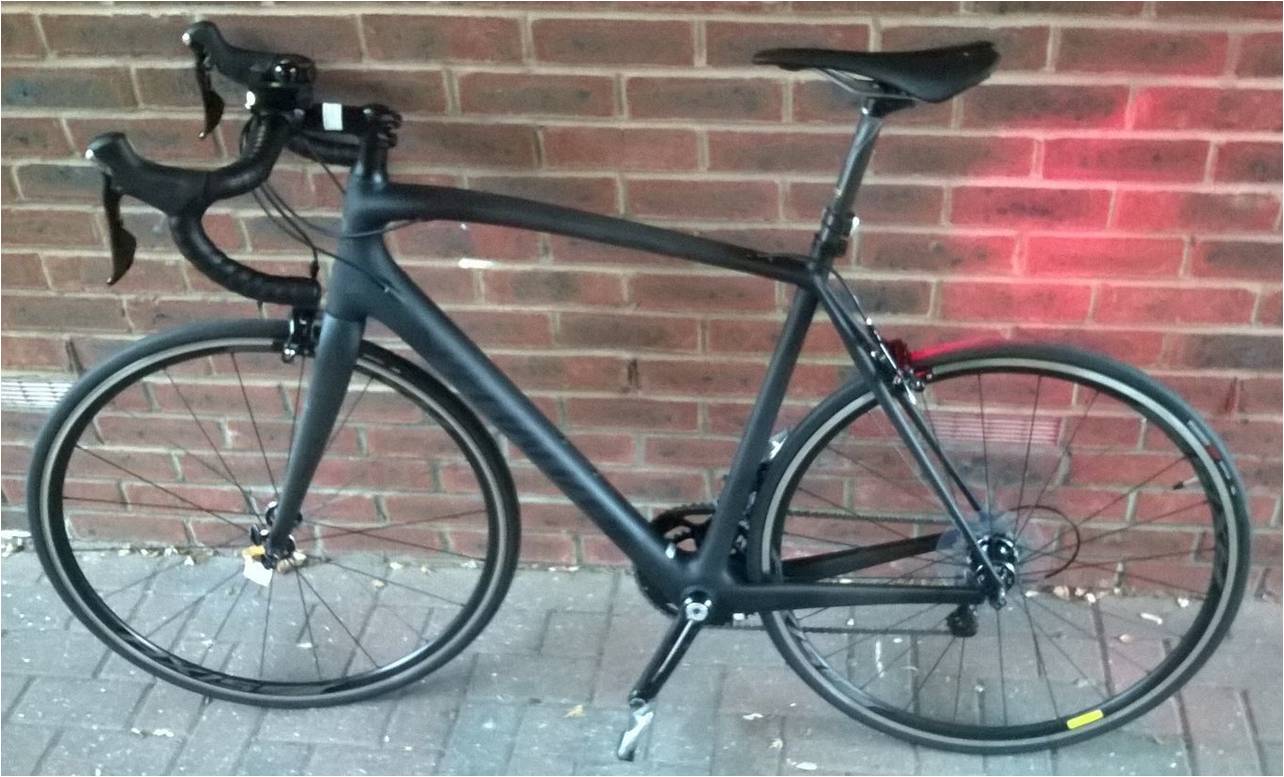
bikeRecently, my son bought a carbon-fibre framed bike for his commute to work. He talked to me about it before he made the decision to go ahead because he was worried about the susceptibility of carbon-fibre to impact damage. The aircraft industry worries about barely visible impact damage (BVID) because while the damage might be barely visible on the accessible face that received the impact, within the carbon-fibre component there can be substantial life-shortening damage. I reassured my son that it is unlikely a road bike would receive impacts of sufficient energy to induce life-shortening damage, at least in ordinary use. However, such impacts are not unusual in aircraft structures which means that they have to be inspected for hidden, insidious damage. The most common method of inspection is based on ultrasound that is reflected preferentially by the damaged areas so that the shape and extent of damage can be mapped. It is difficult to predict the effect on the structural performance of the component from this morphology information so that, when damage is found, the component is usually repaired or replaced immediately. In my research group we have been exploring the use of strain measurements to locate and assess damage by comparing the strain distributions in as-manufactured and in-service components. We can measure the strain fields in components using a number of techniques including digital image correlation (see my post entitled ‘256 shades of grey’) and thermoelastic stress analysis (see my post entitled ‘Counting photons to measure stress‘). The comparison is performed using feature vectors that represent the strain fields, see my post of a few weeks ago entitled ‘Recognising strain’. The guiding principle is that if damage is present but does not change the strain field then the structural performance of the component is unchanged; however when the strain field is changed then it is easier to predict remanent life from strain data than from morphology data. We have demonstrated that these new concepts work in glass-fibre reinforced laminates and are in the process of reproducing the results in carbon-fibre composites.

Sources

Patterson, E.A., Feligiotti, M., Hack, E., 2013, On the integration of validation, quality assurance and non-destructive evaluation, J. Strain Analysis, 48(1):48-59.

Patki, A.S., Patterson, E.A., 2012, Damage assessment of fibre reinforced composites using shape descriptors, J. Strain Analysis, 47(4):244-253.