Category Archives: Learning & Teaching

Free: Energy! Thermodynamics in Everyday Life

sunTalking to camera is difficult…

For the last few weeks I have been spending a considerable proportion of my working hours in front of a camera shooting video clips for a MOOC, a Massive Online Open Course. The first results of this effort and those of my colleagues Matt O’Rourke and Rob Lindsay in the University’s Centre for Lifelong Learning are now available as a trailer. The initial reviews were ‘cool’ and ‘awesome’, so go ahead and watch it!

Innovation to support learning

Some people have commented on the lack of pedagogical foundation in many MOOCs. However, I think we are being quite innovative in the following ways:

  • we are using an established pedagogy, 5Es (see the next paragraph for more explanation),
  • we have designed three do-it-at-home laboratory exercises,
  • the five-week MOOC will run in parallel with the delivery of the traditional course to first year undergraduates in Liverpool and,
  • the traditional lectures will be repeated at the university’s campus in London two evenings each week.

The lectures in London will allow students living around London to meet each other and me, as well as, of course, experience the energy of the live delivery of the course.

For students worldwide (and in London)

If you are a student who has or is struggling with elementary Thermodynamics then register for the free MOOC which will start in February 2016. I will cover the curriculum content of most ‘A’ level modules and introductory undergraduate courses in Thermodynamics. If you are in London and would like to attend the lectures then contact me and I will send you more details.

For teachers/instructors anywhere

If you are a teacher, tutor or lecturer then consider bringing it to the attention of your students. I will be taking a different approach to the traditional way of teaching classical thermodynamics based on my experience teaching at the University of Liverpool using the Everyday Engineering examples featured on this blog together with the 5Es approach to lecture or lesson plans. If you would like to use it in parallel with your own lectures then get in touch with me so that we can talk about synchronization.

5Es

The 5Es are Engage (the students), Explore (the topic), Explain (the principles underpinning the topic), Elaborate (using the principles to analyse the topic) and Evaluate (ask the students to evaluate their learning by performing some analysis). The course has been well-received by students and nearly a thousand have taken it over last four years. This year we are making into a five-week MOOC so that thousands more can learn using it.

Sources:

Real life thermodynamics

Bybee RW, Taylor JA, Gardner A, van Scotter P, Powell JC, Westbrook A & Landes N, The BSCS 5E Instructional model: origins, effectiveness and applications, BSCS Colorado Srings, 2006.

Sian Bayne & Jen Ross, The pedagogy of the MOOC: the UK view,  Higher Education Academy, 2014

Paul Stacy, The pedagogy of MOOCs, http://edtechfrontier.com/2013/05/11/the-pedagogy-of-moocs/

Death knell for the lecture?

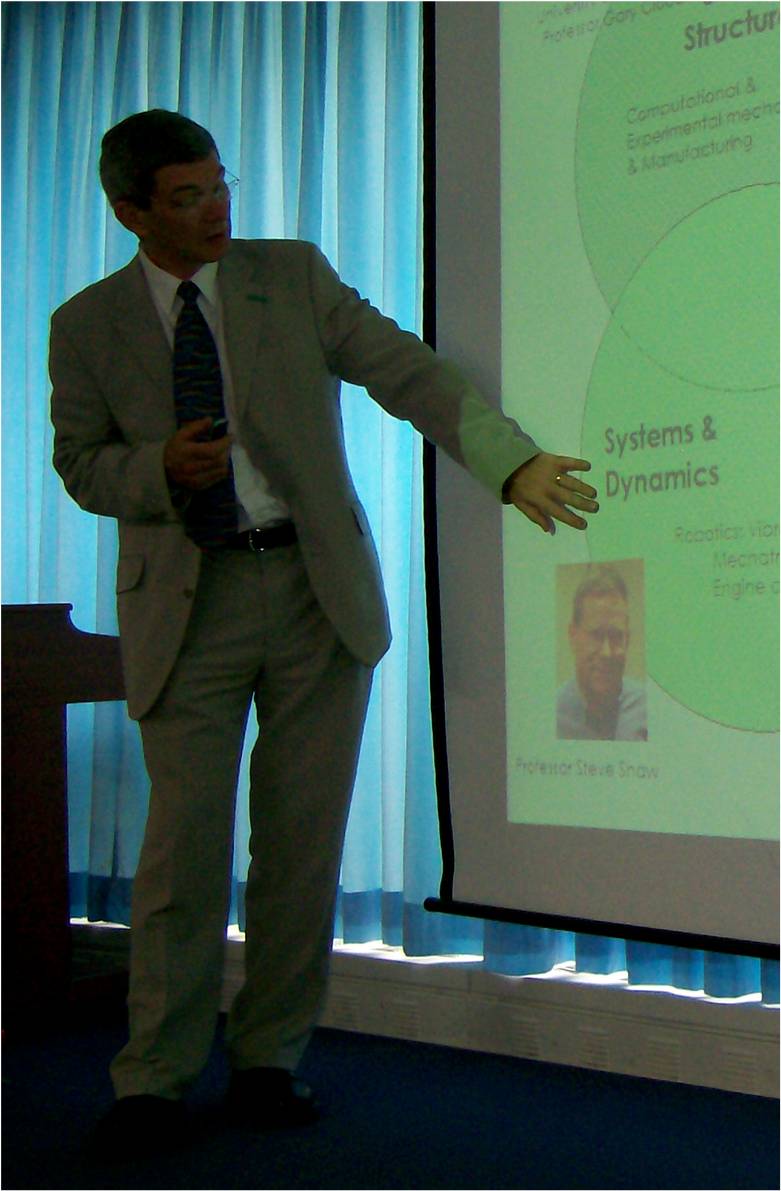
Author lecturing in Yonsei University, Korea

Author lecturing in Yonsei University, Korea

This week I have started filming short video clips for a MOOC that will be broadcast in February in parallel with my undergraduate course on Thermodynamics. The Massive Online Open Course (MOOC) is provisional titled: ‘Energy – Using it and Losing it: Real-World Thermodynamics for Beginners’ and will be offered through FutureLearn to a worldwide audience. The video clips, which essentially replace the traditional 50-minute lecture, will be about 3 minutes long recognising that this is the longest time period that many young people will focus uninterrupted on a single activity.

Last week was the start of a new academic year in which we have been instructed to use newly-installed software and hardware to record or, in the new terminology, video-stream all of our lectures. The ‘streamed’ lectures will be made available online for students to watch at anytime during the academic year. All of this is happening when attendance at lectures is falling, which leads me to wonder whether these events represent the death knell of the traditional university lecture?

We have known for sometime that people’s maximum attention span was typically fifteen to twenty minutes and yet lectures have remained stubbornly at 50 minutes duration with many double lectures timetabled. Considerable ingenuity, imagination and energy is needed to deliver lectures that engage students for these time periods (see Engage Engineering for tips on how to do this). So it should come as no surprise that many lectures are half empty when students have alternatives such as short video clips available online, streamed lectures that can be fast-forwarded over the boring bits or rewound to repeat important sections, as well as the old-fashioned approach of reading a good textbook and teaching yourself.

Lectures are in many ways a theatrical performance, though factual rather fictional. Theatre has had to evolve and adapt in order to survive the advent of cinema, television and most recently the internet. In the process, some theatres and drama companies have disappeared. I think the same is likely to happen with the university lecture – some will evolve and adapt, for instance by embracing new technology, but others will disappear as students choose more effective means of acquiring knowledge and understanding.

Ideal employee

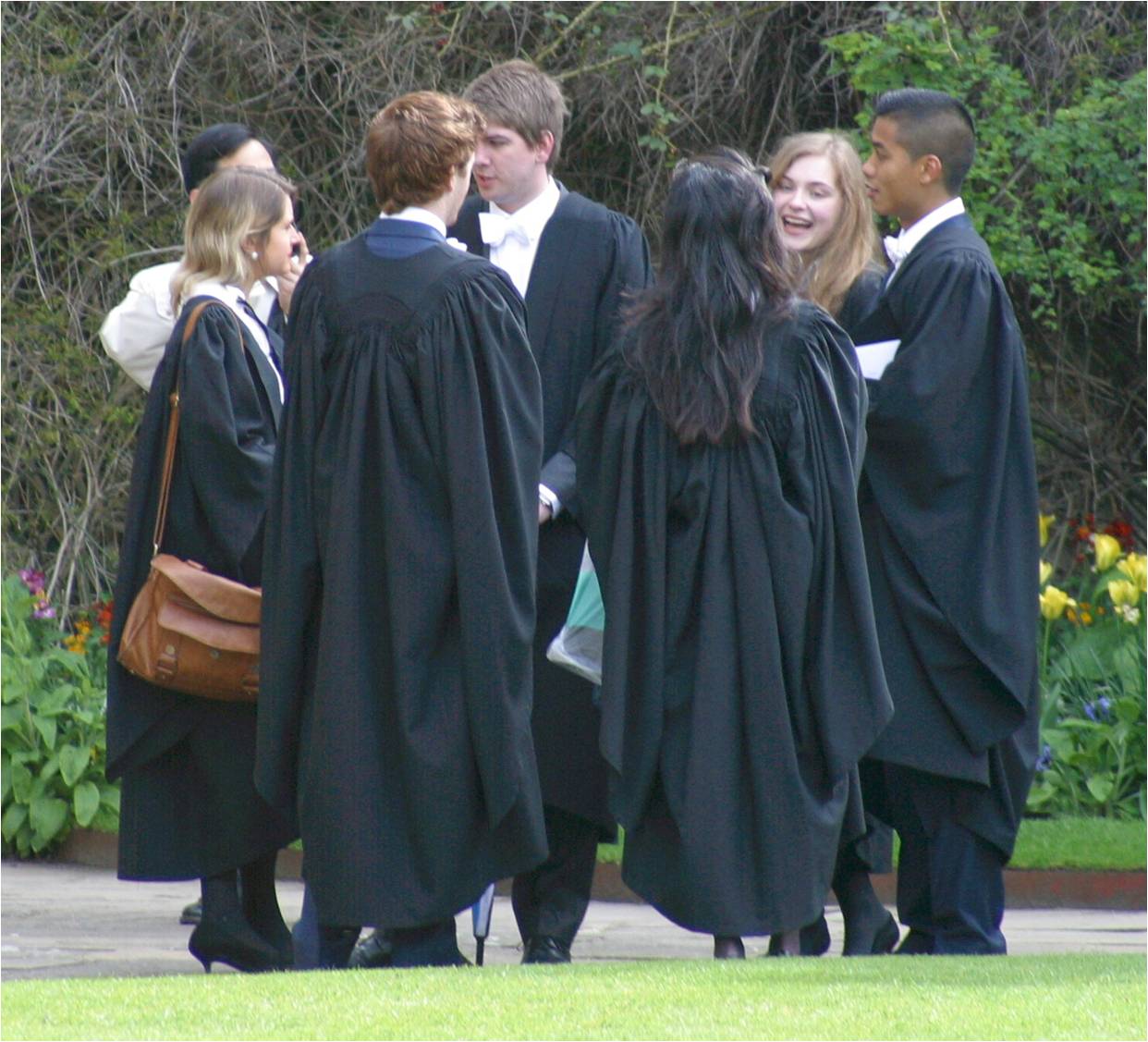
graduationSome years ago during a visit to South Korea, I listened to a speech by an Executive Vice-President of KEPCO, the Korea Electric Power Corporation.  He talked about the need to blend the desire of consumers who want to buy cheaper goods in a clean environment with the will of a company to make more money and to do this in the context of the world running in a ‘green race’ for survival.  He identified their employees as his company’s most valuable asset and went on to describe the ideal employee as having three key attributes:

A team player – cooperative and capable of growing together with their colleagues

A creativity-driven professional – flexible and globally competitive

A passionate executor – innovative and able to make things happen

He did not list these attributes in any order of importance but gave them equal weighting as nodes on a circle around which the ideal employee could move effortlessly.  Of course I am biased but this description sounds like an engineer!

If you are just starting a new course of education then perhaps these are the qualities that you should aim to acquire or cultivate.

If you are an employer and are lucky enough to hire one or even a group of these ‘ideal employees’ then your problems as a manager may only just be beginning.  They are likely to be what is known as ‘knowledge workers’ who will share certain characteristics, including being highly educated or experienced, hate being told what to do and reluctant to share knowledge with their managers.  So many employers resort to HSPALTA: Hire Smart People And Leave Them Alone.

Fields of flowers

It’s not often that someone presents you with a completely new way of looking at the world around us but that’s what Dr Gregory Sutton did a few weeks ago at a Royal Society Regional Networking Event in Bristol where he is a University Research Fellow funded by the Royal Society. He told us that every flower is a conductor sticking out of the ground which on a sunny day has an electric field around it of the order of 100 volts per metre. Bees can identify the type of flower that they are approaching based on the interaction between this field and the electrostatic field generated around them as they fly. Bees are covered in tiny hairs and he believes that they use these to sense the electric field around them. The next research question that he is tackling is how bees are affected by the anthropogenic electric fields from power lines, mobile phones etc.

The plots of the electric field around a flower really caught my attention. You can see one in the thumbnail photo. I walked across Brandon Hill in Bristol after the talk to meet a former PhD student for dinner. I kept stopping on the way to try to detect this field with the hairs on the back of my hand. It was a beautiful sunny day but I was not sensitive enough to feel anything. Or maybe I was sensing it but my brain is not programmed to recognise the sensation. We discussed it over dinner and marvelled at the bees’ ability to process the information from its multiple sensors in the light of our knowledge of the computing power required to handle what it is fashionable to call ‘Big Data’ from man-made sensors.

Once again Nature humbles us with its ingenuity and makes our efforts look clumsy if not feeble. Dr Sutton’s insights have given me a whole new way to attempt to connect with Nature while I am on deep vacation.

Sorry about the pun in the title. I couldn’t resist it.

Source:

Clarke D, Whitney H, Sutton G & Robert D, Detection and Learning of Floral Electric Fields by Bumblebee, Science, 5 April 2013: 66-69. [DOI:10.1126/science.1230883].