Category Archives: design

Small is beautiful and economic

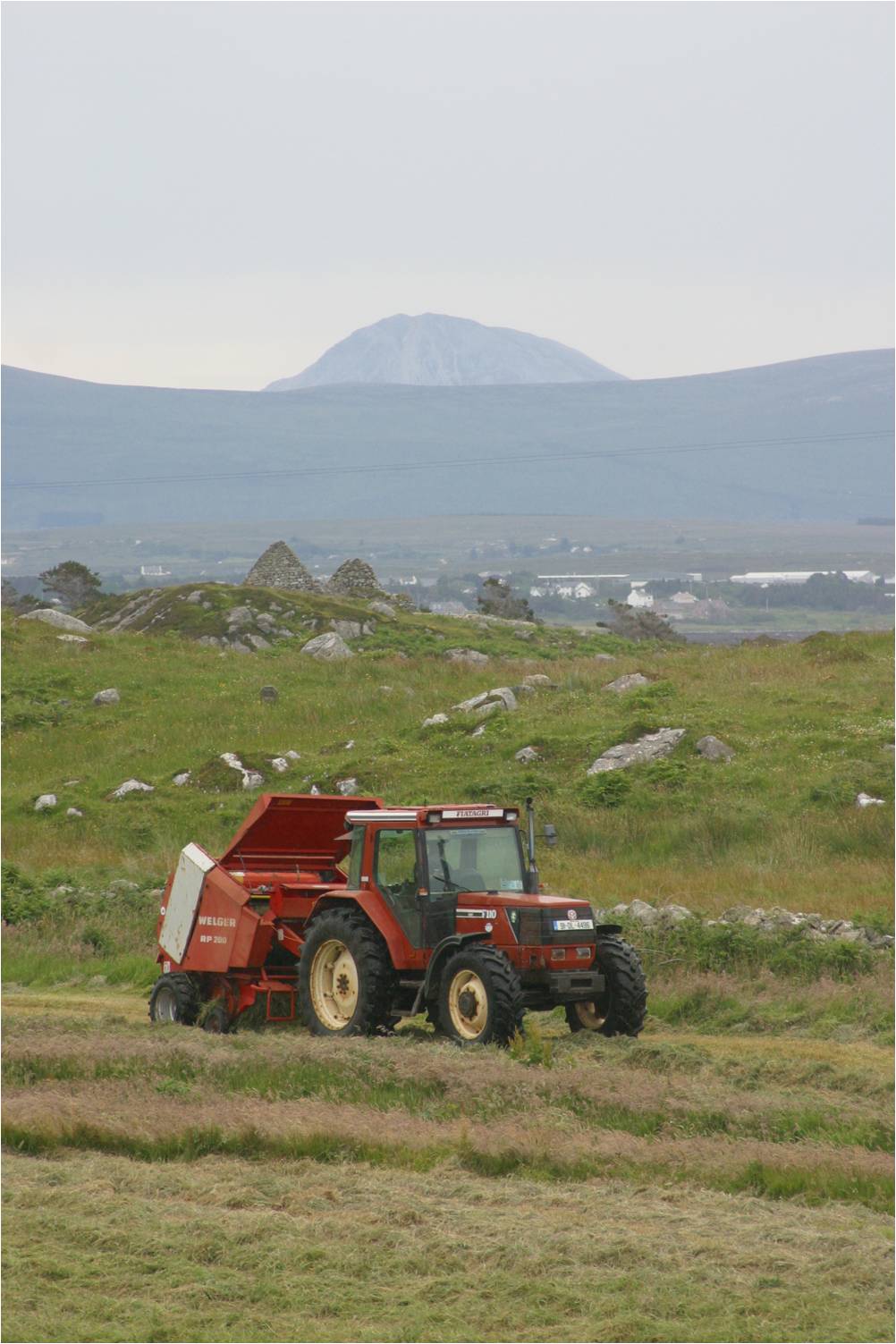
tractorFarm tractors have been growing bigger and bigger, though perhaps not everywhere – the photograph was taken in Donegal, Ireland earlier this year.  The size of tractors is driven by the economics of needing a driver in the cab. The labour costs are high in many places, so that the productivity per tractor driver has to be high too.  Hence, the tractors have to move fast and process a large amount of the field on each pass.  This leads to enormous tractors that weigh a lot and exert a large pressure on the soil, which in turn results in between 1 and 3% of the farm land becoming unproductive because crops won’t grow in the severely compressed soil. But what happens if we eliminate the need for the driver by using autonomous vehicles? Then, we can have smaller vehicles working 24/7 that do less damage and are cheaper, which means that a single machine breakdown doesn’t bring work to halt. We can also contemplate tailoring the farming of each field to the local environmental and soil conditions instead a mono-crop one-size fits all approach. These are not my ideas but were espoused by Peter Cooke of the Queensland University of Technology at a recent meeting at the Royal Society on ‘Robotics and Autonomous Systems’.

It is a similar argument for modular nuclear power stations. Most of the world is intent on building enormous reactors capable of generating several GigaWatts of power (that’s typically 3 with nine zeros after it) at a cost of around £8 billion (that’s 8 with nine zeros) so about 50 pence per Watt. Such a massive amount of power requires a massive infrastructure to deliver the power to where it is need and a shutdown for maintenance or a breakdown potentially cuts power to about a million people. The alternative is small modular reactors built, and later dismantled, in a factory that leave an uncontaminated site at a lower capital cost and which provide a more flexible power feed into the national grid. Some commentators (see for example Editor’s comment in Professsional Engineer, November 2015)believe that a factory could be established and rolling modular reactors off its production line on the same timescale as building a GigaWatt station.

Regular readers will recognise a familiar theme found in Small is beautiful and affordable in nuclear powerstations on January 14th, 2015, Enabling or disruptive technology for nuclear engineering on January 28th, 2015 and Small is beautiful on October 10th, 2012; as well as the agricultural theme in Knowledge-economy on January 1st, 2014.
Connecting robotic touch and vision

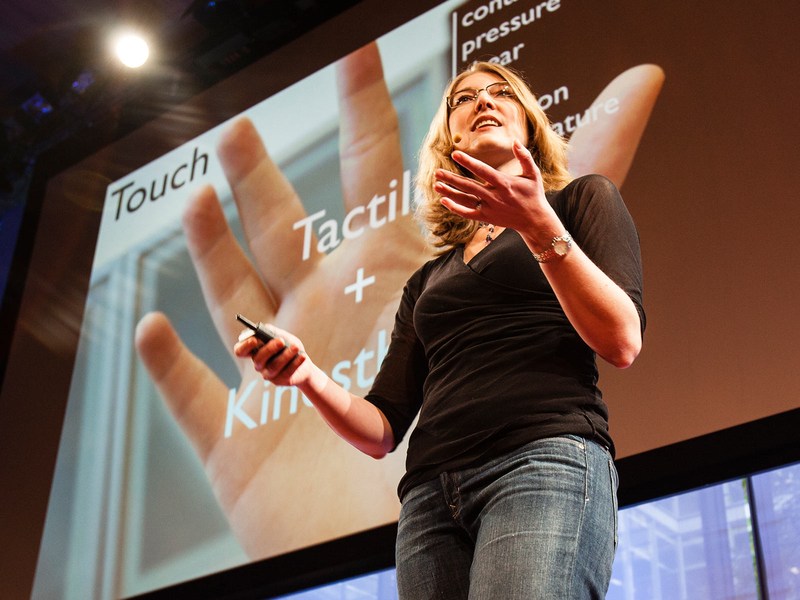
katherine kuchenbeckerSome months ago I wrote about soft robots that could delicately pick up fragile objects [see my post entitled ‘Robots with a delicate touch’ on June 3rd, 2015]. These robots, developed by George Whiteside’s research group, went some way towards mimicking the function of our hands.  However, these robots are numb because they have no sense of touch.  Think about how hard it would be to strike a match or pick up an egg without your sense of touch. Katherine Kuchenbecker from the University of Pennsylvania is working on robots with tactile sensors that detect pressure and vibrations.  This sensitivity transforms their ability to perform delicate tasks such as picking up an egg, or perhaps more significantly perform surgery.  I listened to Professor Kuchenberger speak at a meeting at the Royal Society on ‘Robotics and Autonomous Systems’ where she put us off our lunch with some gory videos on robot-assisted surgery. You can watch them at her website. Her vision is of robots that connect vision and touch, which is of course what we do effortlessly most of the time.

Insidious damage

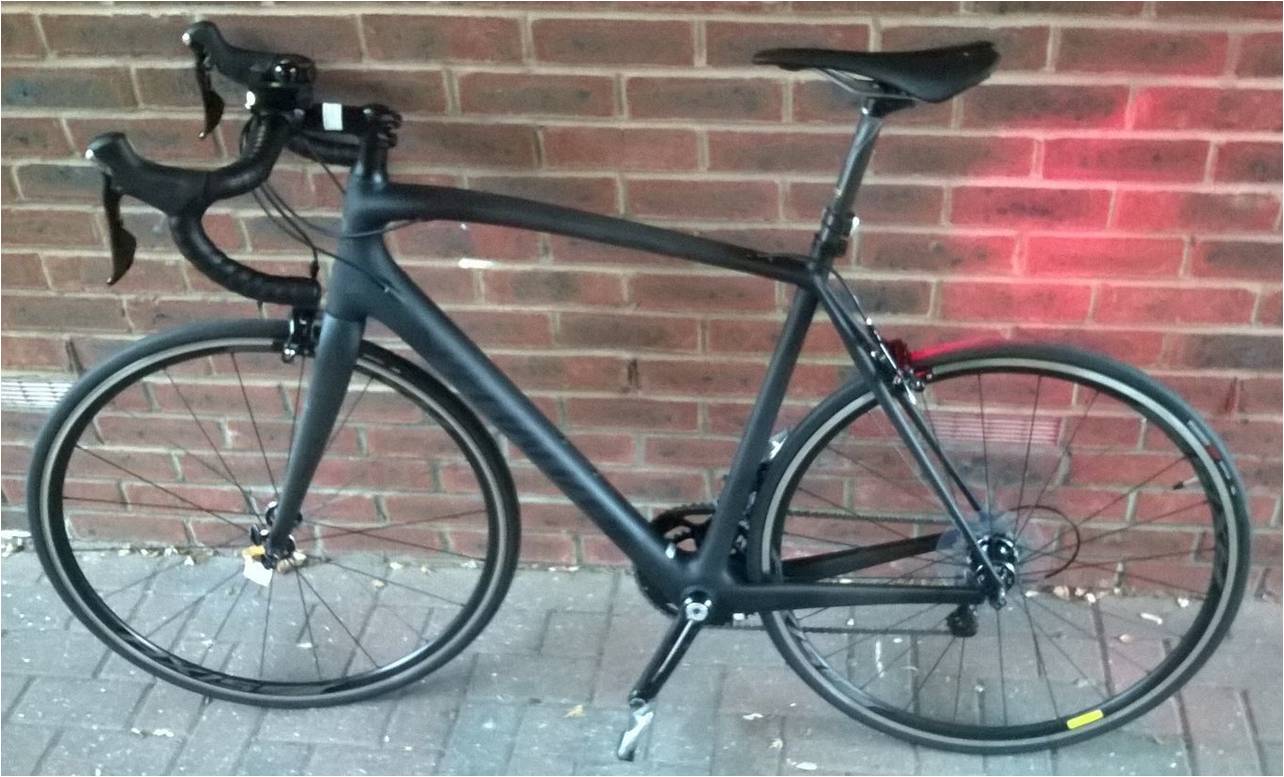
bikeRecently, my son bought a carbon-fibre framed bike for his commute to work. He talked to me about it before he made the decision to go ahead because he was worried about the susceptibility of carbon-fibre to impact damage. The aircraft industry worries about barely visible impact damage (BVID) because while the damage might be barely visible on the accessible face that received the impact, within the carbon-fibre component there can be substantial life-shortening damage. I reassured my son that it is unlikely a road bike would receive impacts of sufficient energy to induce life-shortening damage, at least in ordinary use. However, such impacts are not unusual in aircraft structures which means that they have to be inspected for hidden, insidious damage. The most common method of inspection is based on ultrasound that is reflected preferentially by the damaged areas so that the shape and extent of damage can be mapped. It is difficult to predict the effect on the structural performance of the component from this morphology information so that, when damage is found, the component is usually repaired or replaced immediately. In my research group we have been exploring the use of strain measurements to locate and assess damage by comparing the strain distributions in as-manufactured and in-service components. We can measure the strain fields in components using a number of techniques including digital image correlation (see my post entitled ‘256 shades of grey’) and thermoelastic stress analysis (see my post entitled ‘Counting photons to measure stress‘). The comparison is performed using feature vectors that represent the strain fields, see my post of a few weeks ago entitled ‘Recognising strain’. The guiding principle is that if damage is present but does not change the strain field then the structural performance of the component is unchanged; however when the strain field is changed then it is easier to predict remanent life from strain data than from morphology data. We have demonstrated that these new concepts work in glass-fibre reinforced laminates and are in the process of reproducing the results in carbon-fibre composites.

Sources

Patterson, E.A., Feligiotti, M., Hack, E., 2013, On the integration of validation, quality assurance and non-destructive evaluation, J. Strain Analysis, 48(1):48-59.

Patki, A.S., Patterson, E.A., 2012, Damage assessment of fibre reinforced composites using shape descriptors, J. Strain Analysis, 47(4):244-253.

Unexpected bad news for turkeys

http://www.penguin.co.uk/books/the-black-swan/9780141034591/Risk is defined as the probability of something happening multiplied by consequences of its occurrence.  Engineers expend considerable time and effort in reducing the consequences of the quite probable such as ensuring the passenger compartment of a car will remain largely intact during a crash.  The installation of automatic breaking systems on some cars is also an attempt to reduce the probability of an impact, i.e. the occurrence of a crash.  It is difficult to anticipate the very low probability event with catastrophic consequences and so cars are not designed to deal with meteors dropping out the sky or even elevated highways collapsing in an earthquake.   These are what Nassim Taleb, labels Black Swan events but would perhaps be better named after another bird, the more humble turkey.  An American turkey is fed daily by a friendly human and has no idea in November that Thanksgiving is about happen with fatal consequences, or substitute December and Christmas for a British turkey.  From the turkey’s perspective everything is fine down on the farm until it isn’t; in other words, the very low probability event with catastrophic consequences occurs.  From the farmer’s perspective, turkey for dinner at Thanksgiving is close to a certainty, i.e. a probability of one.  The problem for engineers designing machines is to have the perspective of the farmer and not the turkey.

Happy Thanksgiving to my American readers!

Source:

Nassim Nicholas Taleb, The Black Swan – the impact of the highly probable, London: Penguin Books, 2008.