Author Archives: Eann Patterson

A short scramble in the Hindu Kush

I have been resolving an extreme case of Tsundoku [see ‘Tsundoki‘ on May 24th, 2017] over the last few weeks by reading ‘A short walk in the Hindu Kush‘ by Eric Newby which I bought nearly forty years ago but never read, despite taking it on holiday a couple of years ago.  Although it was first published in 1958, it is still in print and on its 50th edition; so, it has become something of classic piece of travel writing.  It is funny, understated and very English, or least early to mid 20th century English.

It felt quite nostalgic for me because about thirty years ago I took a short walk in Gilgit Baltistan. Gilgit Baltistan is in northern Pakistan on the border with China and to the west of Nuristan in Afghanistan where Eric Newby and Hugh Carless took their not-so short walk.  I went for a scramble up a small peak to get a better view of the mountains in the Hindu Kush after a drive of several days up the Karakorum Highway.  We were driven from Islamabad to about a mile short of the border with China on the Khunjerab pass at 4730 m [compared to Mont Blanc at 4810 m].

I was there because the Pakistani Government supplied a small group of lecturers with a mini-bus and driver to take us up the Karakorum Highway [and back!] in exchange for a course of CPD [Continuing Professional Development] lectures on structural integrity.  This we delivered in Islamabad to an audience of academics and industrialists during the week before the trip up the Karakoram Highway.  So, Eric Newby’s description of whole villages turning out to greet them and of seeing apricots drying in the sun on the flat roofs of the houses brought back memories for me.
Everyday examples contribute to successful learning

Some weeks ago I quoted Adams and Felder [2008] who said that the ‘educational role of faculty [academic staff] is not to impart knowledge; but to design learning environments that support…knowledge acquisition’ [see ‘Creating an evolving learning environment’ on February 21st, 2018].  A correspondent asked how I create a learning environment and, in response, this is the first in a series of posts on the topic that will appear every third week.  The material is taken from a one-day workshop that Pat Campbell [of Campbell-Kibler Associates] and I have given periodically in the USA [supported by NSF ] and UK [supported by HEA] for engineering academics.

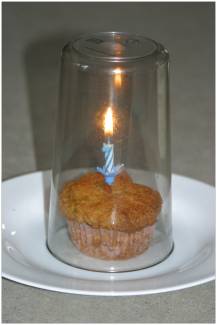
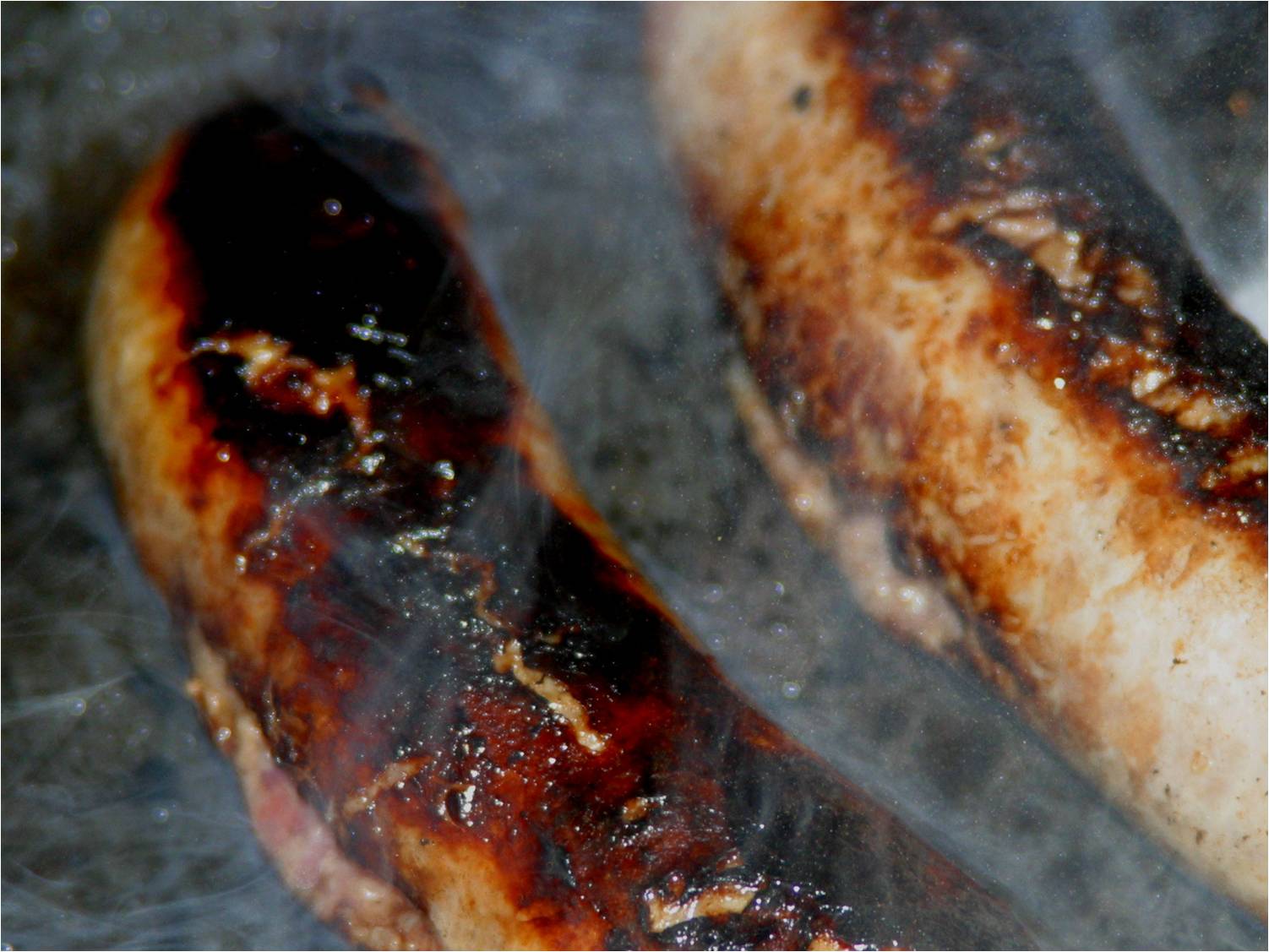
Albert Einstein is reputed to have said that ‘knowledge is experience, everything else is just information’.  I believe that a key task for a university teacher of engineering is to find the common experiences of their students and use them to illustrate engineering principles.  This is relatively straightforward for senior students because they will have taken courses or modules delivered by your colleagues; however, it is more of a challenge for students entering the first year of an engineering programme.  Everyone is unique and a product of their formative conditions, which makes it tricky to identify common experiences that can be used to explain engineering concepts.  The Everyday Engineering Examples, which feature on a page of this blog [https://realizeengineering.blog/everyday-engineering-examples/], were developed to address the need for illustrative situations that would fall into the experience of most, if not all, students.  Two popular examples are using the splits in sausages when you cook them to illustrate two-dimensional stress systems in pressure vessels [see lesson plan S11] and using a glass to extinguish a birthday candle on a cup cake to explain combustion processes [see lesson plan T11].

Everyday Engineering Examples were developed as part of an educational research project, which was funded by the US National Science Foundation [see ENGAGE] and demonstrated that this approach to teaching works.  The project found that significantly more students rated their learning with Everyday Engineering Examples as high or significant than in the control classes independent of the level of difficult involved [Campbell et al. 2008].  So, this is one way in which I create a learning environment that supports knowledge acquisition.  More in future posts…

References

Adams RS & Felder RM, Reframing professional development: A systems approach to preparing engineering educators to educate tomorrow’s engineers. J. Engineering Education, 97(3):230-240, 2008

Campbell PB, Patterson EA, Busch Vishniac I & Kibler T, Integrating Applications in the Teaching of Fundamental Concepts, Proc. 2008 ASEE Annual Conference and Exposition, (AC 2008-499), 2008


CALE #1 [Creating A Learning Environment: a series of posts based on a workshop given periodically by Pat Campbell and Eann Patterson in the USA supported by NSF and the UK supported by HEA]

Thinking more clearly by writing weekly

In an echo of Henry Thoreau’s retreat to the woods around Walden pond, Sylvain Tesson escaped the ugliness of modern life and spent six months in a log cabin on the shore of Lake Baikal in Siberia.  He wanted to surround himself with silence in the wilderness.  He kept a diary ‘as a supplement to memory, to stave off forgetting’.  He describes how the act of writing ‘makes life fruitful’; how ‘the daily appointment with the blank page forces one … to listen harder, to think more clearly, to see more intently’.  I have similar feelings about writing a weekly post for this blog and being faced with a blank screen each week.  Sometimes it is a joy to order my thoughts and commit some of them to writing; other times it is a chore and a challenge to dream up something vaguely interesting to tell you.

BTW Teeson’s book was a pleasure to read and easier than Thoreau’s in my view.

References:

Sylvain Tesson, Consolations of the forest: alone in a cabin in the middle Taiga, London: Penguin Books, 2014.

Henry David Thoreau, Walden, London: Penguin Classics, 2016.

INSTRUCTIVE research relevance

The Southwest airplane accident last week has been initially attributed to a fatigue crack in a fan blade in the engine.  One of the reasons that this an extremely rare event is the enormous research effort that has been expended on the design, testing and maintenance of the engines and the airframe.  It’s an ongoing research effort to address the trilemma of aircraft that are safe, sustainable and low cost to build and operate.  In collaboration with Strain Solutions Limited, we are in the last year of a three-year project called INSTRUCTIVE which is funded by the Clean Sky 2 programme of the European Commission [see ‘Instructive report and Brexit‘ on March 29th, 2017].   The focus of the research is the development of techniques for use in the aerospace industry to detect the initiation of cracks in the airframe before the crack is visible to the naked eye [see ‘Instructive update‘ on October 4th, 2017].  Laboratory-based techniques exist with this capability and the objective is to transfer the technology to the industrial scale and environment – initially in structural tests performed as part of the design and certification process and perhaps later as part of inspections of aircraft in service.  So far, we have moved from the small components reported in the update posted in October, to a chunk of aircraft fuselage in our lab and we are preparing to participate in a test being conducted by Airbus later this year.

We are also planning a knowledge exchange workshop on ‘Real-time damage tracking in engineering structures’ on November 21st, 2018 at the University of Liverpool’s London campus.  The one-day workshop is being organised in collaboration with the British Society for Strain Measurement.  More details to follow – it will be free!

Image Credit: Powering the 737: CFM56-7 series | by Frans Zwart at https://www.flickr.com/photos/15545136@N06/9719995154  [CC BY-NC-ND 2.0]