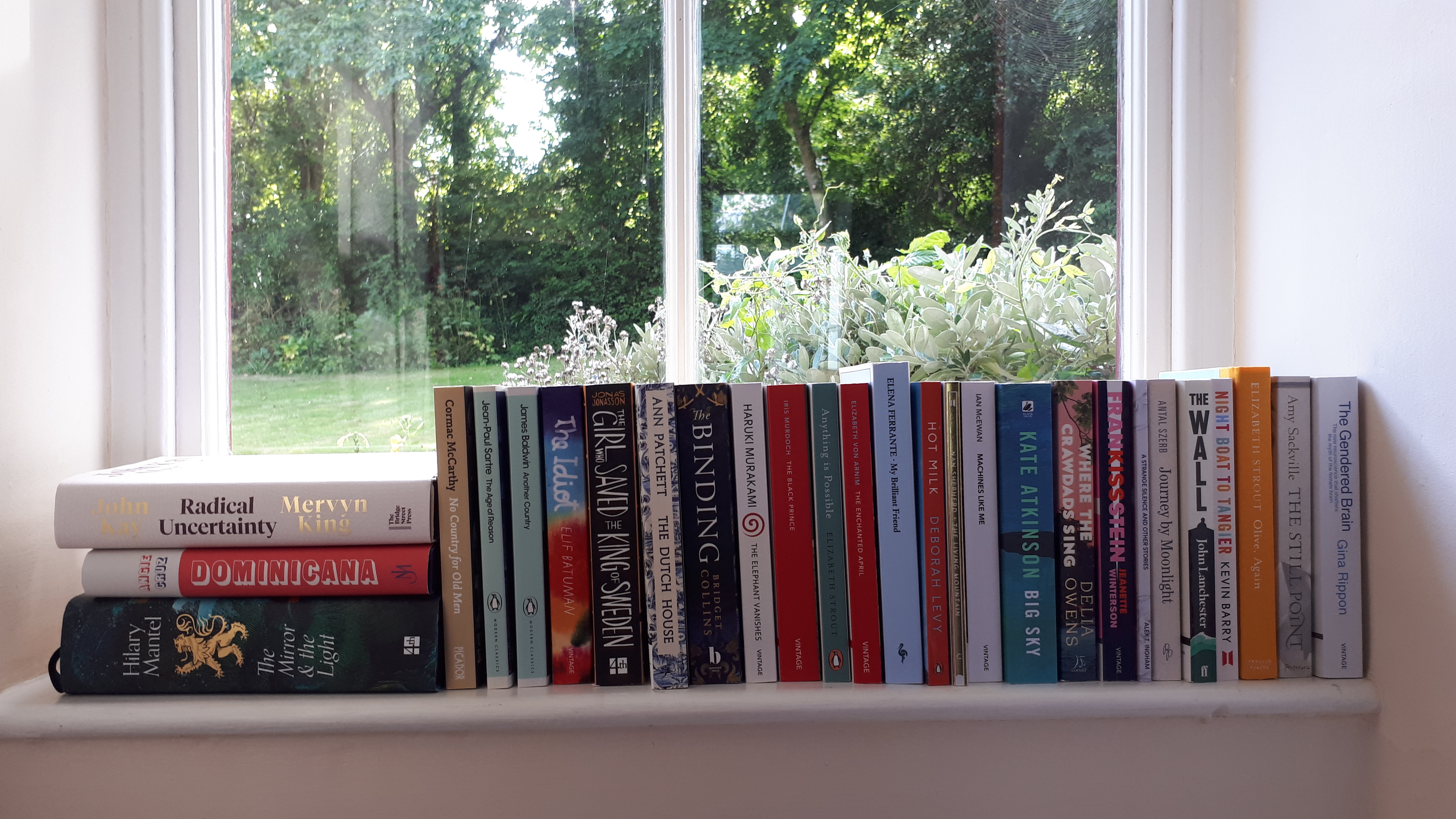
 Society consists of a series of bubbles. A century or so ago, your bubble was largely defined by where you lived, your village or neighbourhood, because few people travelled any significant distance and you probably knew everyone living around you. A decade or so ago, your bubble was probably defined by the newspaper you read or the radio/TV channels you preferred [see ‘You’re all weird!’ on February 8th, 2017]. Today social media defines bubbles that are geographically widely-dispersed. This both fractures local communities and gives a global reach to influencers on social media. Some social media ‘dictates what you shall think, it creates an ideology for you, it tries to govern your emotional life’. The quote is from George Orwell’s 1941 essay, Literature and Totalitarianism. He goes on ‘And as far as possible it isolates you from the outside world, it shuts you up in an artificial universe in which you have no standards of comparison.’ Of course, he is writing about totalitarianism not social media but his words seem sinisterly appropriate to the apparent intention of some social media influencers and platforms that promote alternative narratives which are not consistent with reality. Orwell suggested that if totalitarianism becomes world-wide and permanent then literature, the truthful expression of what one person thinks and feels, could not survive. Despite Orwell’s fear that he was living ‘in an age in which the autonomous individual is ceasing to exist’, totalitarianism did not abolish freedom of thought in the 1940s. Now in the 2020s, we have to ensure that social media does not become a modern instrument of totalitarianism, suffocating freedom of thought, isolating large sections of society from reality, dictating ideology and governing emotional life. We need to think for ourselves and encourage others to do the same. In their book, ‘Radical Uncertainty – Decision-making for an Unknowable Future‘, John Kay and Mervyn King repeatedly ask ‘What is going on here?’ as a device for thinking about and reviewing the evidence before reaching a conclusion. It is a simple device that we could all usefully deploy in 2025. Happy New Year!
Sources:
George Orwell, Literature and Totalitarianism, 1941 available at https://hackneybooks.co.uk/books/64/1006/LiteratureAndTotalitarianism.html
Nazanin Zaghari-Ratcliffe, The feeling of freedom, FT Weekend, 7th & 8th December 2024.
John Kay and Mervyn King, Radical Uncertainty – Decision-making for an Unknowable Future, Little Brown Book Group, 2020.

 Realize Engineering