Category Archives: everyday engineering examples

Writing backwards

honey&mumfordschematicMy regular readers will know that I am a fan of the 5E instructional method and in particular combining it with Everyday Engineering Examples when teaching introductory engineering courses to undergraduate students. Elsewhere in this blog, there is a catalogue of lesson plans and examples originally published in a series of booklets produced during a couple of projects funded by the US National Science Foundation. Now, I have gone a step further and embedded this pedagogy in a Massive Open Online Course (MOOC) on Energy! Thermodynamics in Everyday Life. If you follow the MOOC, you’ll find some new worked examples that I explain while writing ‘backwards’ on a glass board. My film unit are very proud of the ‘backwards’ writing in these examples, which they tell me is an innovation in education filming-making. Our other major innovation is laboratory exercises that MOOC participants can perform in their kitchens. Two of these are based on everyday experiences for most participants: boiling water and waiting for a hot drink to cool down; the third is less everyday because it involves a plumber’s manometer. In each case, I am attempting to move people around Honey and Mumford’s learning cycle, which is illustrated schematically in the figure, i.e. having an experience, reviewing the experience, concluding from the experience and the planning the next steps. The intention is that students progress around the cycle in the taught component, then again in the experiments.

If you want to have a go at the one of experiments, then the instructions for the first one are available here. Alternatively you could sign up for the MOOC – its not too late!  But if you don’t want to follow the course then you can stil watch some excerpts on the University of Liverpool’s Stream website, including the backwards written examples.

Sources:

Atkin, J.M. and Karplus, R., 1962. Discovery of invention? Science Instructor, 29 (5), 45–47.

Honey P, Mumford A. The Manual of Learning Styles 3rd Ed. Peter Honey Publications Limited, Maidenhead, 1992.
Insidious damage

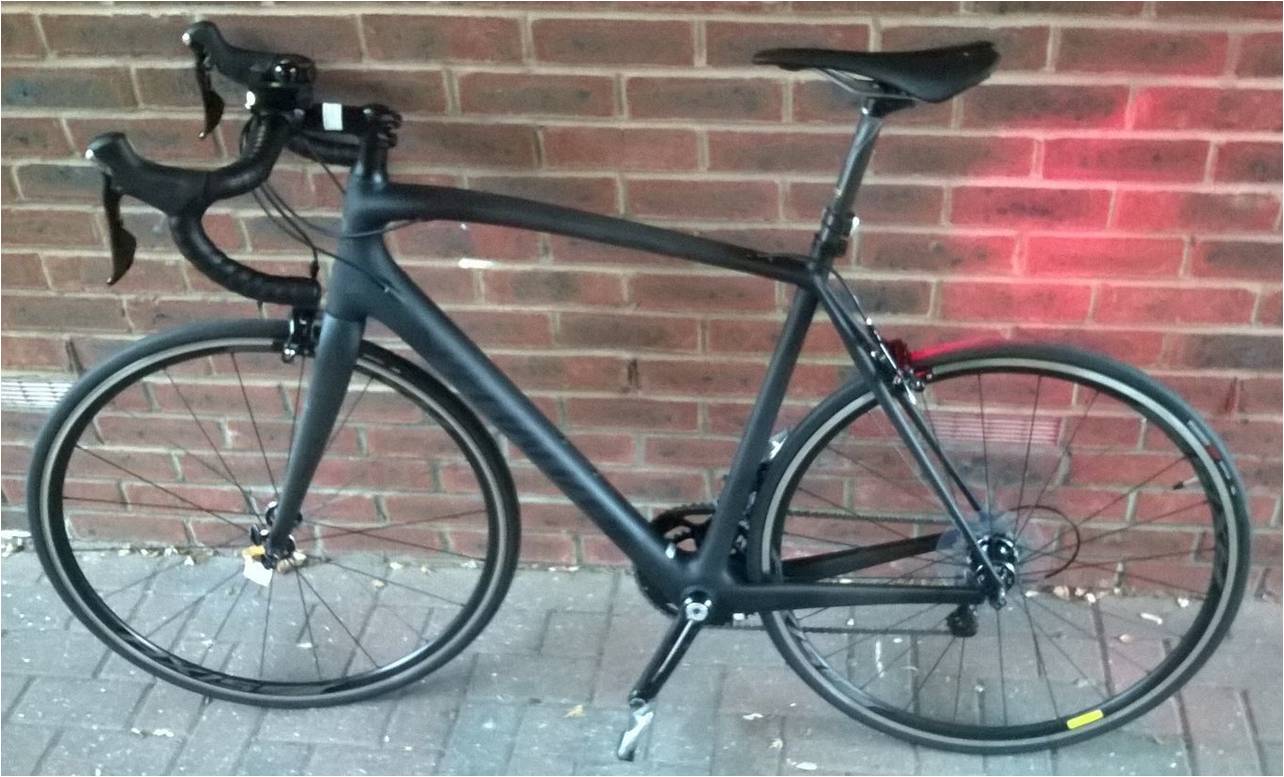
bikeRecently, my son bought a carbon-fibre framed bike for his commute to work. He talked to me about it before he made the decision to go ahead because he was worried about the susceptibility of carbon-fibre to impact damage. The aircraft industry worries about barely visible impact damage (BVID) because while the damage might be barely visible on the accessible face that received the impact, within the carbon-fibre component there can be substantial life-shortening damage. I reassured my son that it is unlikely a road bike would receive impacts of sufficient energy to induce life-shortening damage, at least in ordinary use. However, such impacts are not unusual in aircraft structures which means that they have to be inspected for hidden, insidious damage. The most common method of inspection is based on ultrasound that is reflected preferentially by the damaged areas so that the shape and extent of damage can be mapped. It is difficult to predict the effect on the structural performance of the component from this morphology information so that, when damage is found, the component is usually repaired or replaced immediately. In my research group we have been exploring the use of strain measurements to locate and assess damage by comparing the strain distributions in as-manufactured and in-service components. We can measure the strain fields in components using a number of techniques including digital image correlation (see my post entitled ‘256 shades of grey’) and thermoelastic stress analysis (see my post entitled ‘Counting photons to measure stress‘). The comparison is performed using feature vectors that represent the strain fields, see my post of a few weeks ago entitled ‘Recognising strain’. The guiding principle is that if damage is present but does not change the strain field then the structural performance of the component is unchanged; however when the strain field is changed then it is easier to predict remanent life from strain data than from morphology data. We have demonstrated that these new concepts work in glass-fibre reinforced laminates and are in the process of reproducing the results in carbon-fibre composites.

Sources

Patterson, E.A., Feligiotti, M., Hack, E., 2013, On the integration of validation, quality assurance and non-destructive evaluation, J. Strain Analysis, 48(1):48-59.

Patki, A.S., Patterson, E.A., 2012, Damage assessment of fibre reinforced composites using shape descriptors, J. Strain Analysis, 47(4):244-253.

Free: Energy! Thermodynamics in Everyday Life

sunTalking to camera is difficult…

For the last few weeks I have been spending a considerable proportion of my working hours in front of a camera shooting video clips for a MOOC, a Massive Online Open Course. The first results of this effort and those of my colleagues Matt O’Rourke and Rob Lindsay in the University’s Centre for Lifelong Learning are now available as a trailer. The initial reviews were ‘cool’ and ‘awesome’, so go ahead and watch it!

Innovation to support learning

Some people have commented on the lack of pedagogical foundation in many MOOCs. However, I think we are being quite innovative in the following ways:

  • we are using an established pedagogy, 5Es (see the next paragraph for more explanation),
  • we have designed three do-it-at-home laboratory exercises,
  • the five-week MOOC will run in parallel with the delivery of the traditional course to first year undergraduates in Liverpool and,
  • the traditional lectures will be repeated at the university’s campus in London two evenings each week.

The lectures in London will allow students living around London to meet each other and me, as well as, of course, experience the energy of the live delivery of the course.

For students worldwide (and in London)

If you are a student who has or is struggling with elementary Thermodynamics then register for the free MOOC which will start in February 2016. I will cover the curriculum content of most ‘A’ level modules and introductory undergraduate courses in Thermodynamics. If you are in London and would like to attend the lectures then contact me and I will send you more details.

For teachers/instructors anywhere

If you are a teacher, tutor or lecturer then consider bringing it to the attention of your students. I will be taking a different approach to the traditional way of teaching classical thermodynamics based on my experience teaching at the University of Liverpool using the Everyday Engineering examples featured on this blog together with the 5Es approach to lecture or lesson plans. If you would like to use it in parallel with your own lectures then get in touch with me so that we can talk about synchronization.

5Es

The 5Es are Engage (the students), Explore (the topic), Explain (the principles underpinning the topic), Elaborate (using the principles to analyse the topic) and Evaluate (ask the students to evaluate their learning by performing some analysis). The course has been well-received by students and nearly a thousand have taken it over last four years. This year we are making into a five-week MOOC so that thousands more can learn using it.

Sources:

Real life thermodynamics

Bybee RW, Taylor JA, Gardner A, van Scotter P, Powell JC, Westbrook A & Landes N, The BSCS 5E Instructional model: origins, effectiveness and applications, BSCS Colorado Srings, 2006.

Sian Bayne & Jen Ross, The pedagogy of the MOOC: the UK view,  Higher Education Academy, 2014

Paul Stacy, The pedagogy of MOOCs, http://edtechfrontier.com/2013/05/11/the-pedagogy-of-moocs/

Death knell for the lecture?

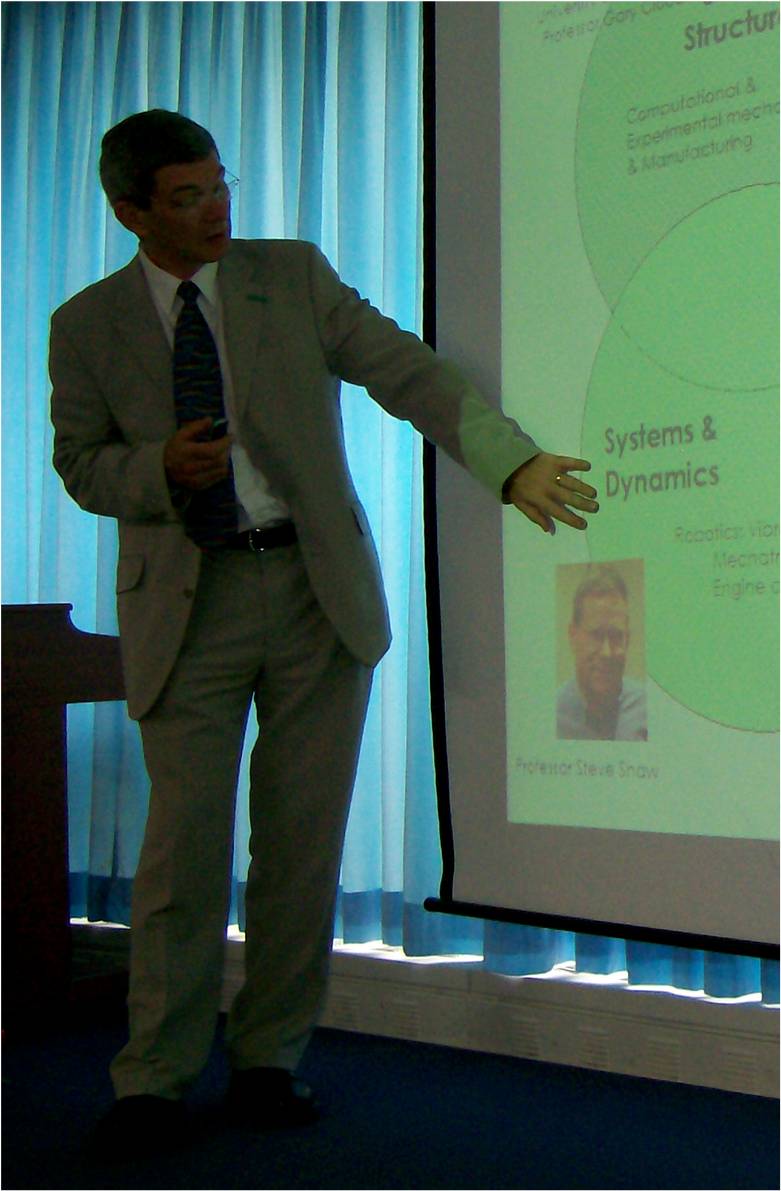
Author lecturing in Yonsei University, Korea

Author lecturing in Yonsei University, Korea

This week I have started filming short video clips for a MOOC that will be broadcast in February in parallel with my undergraduate course on Thermodynamics. The Massive Online Open Course (MOOC) is provisional titled: ‘Energy – Using it and Losing it: Real-World Thermodynamics for Beginners’ and will be offered through FutureLearn to a worldwide audience. The video clips, which essentially replace the traditional 50-minute lecture, will be about 3 minutes long recognising that this is the longest time period that many young people will focus uninterrupted on a single activity.

Last week was the start of a new academic year in which we have been instructed to use newly-installed software and hardware to record or, in the new terminology, video-stream all of our lectures. The ‘streamed’ lectures will be made available online for students to watch at anytime during the academic year. All of this is happening when attendance at lectures is falling, which leads me to wonder whether these events represent the death knell of the traditional university lecture?

We have known for sometime that people’s maximum attention span was typically fifteen to twenty minutes and yet lectures have remained stubbornly at 50 minutes duration with many double lectures timetabled. Considerable ingenuity, imagination and energy is needed to deliver lectures that engage students for these time periods (see Engage Engineering for tips on how to do this). So it should come as no surprise that many lectures are half empty when students have alternatives such as short video clips available online, streamed lectures that can be fast-forwarded over the boring bits or rewound to repeat important sections, as well as the old-fashioned approach of reading a good textbook and teaching yourself.

Lectures are in many ways a theatrical performance, though factual rather fictional. Theatre has had to evolve and adapt in order to survive the advent of cinema, television and most recently the internet. In the process, some theatres and drama companies have disappeared. I think the same is likely to happen with the university lecture – some will evolve and adapt, for instance by embracing new technology, but others will disappear as students choose more effective means of acquiring knowledge and understanding.