At the start of last month, I wrote about the need for national plans to ween us from our addiction to fossil fuels [see ‘Bringing an end to thermodynamic whoopee‘ on December 8th, 2021]. If we are to reduce carbon emissions to the levels agreed in Paris at COP 21 then the majority of the population as well as organisations in a country will need to engage with and support the national plan which implies that it must transcend party politics. This level of engagement will likely require us to have a well-informed public debate in which we listen to diverse perspectives and consider multifarious solutions that address all of the issues, including the interests of a fossil fuel industry that employs tens of millions of people worldwide [see EU JRC Science for Policy report on Employment in the Energy Sector] and makes annual profits measured in hundreds of billions of dollars [see article in Guardian newspaper about $174 billion profit of 24 largest oil companies]. Perhaps, learned societies nationally and universities regionally could collate and corroborate evidence, host public debates, and develop plans. This process is starting to happen organically [for example, see Climate Futures: Developing Net Zero Solutions Using Research and Innovation]; however, the urgency is such that a larger, more focussed and coordinated effort is required if we are to bring about the changes required to avoid the existential threat [see ‘Disruptive change required to avoid existential threats‘ on December 1st, 2021].
Author Archives: Eann Patterson
On flatness and roughness
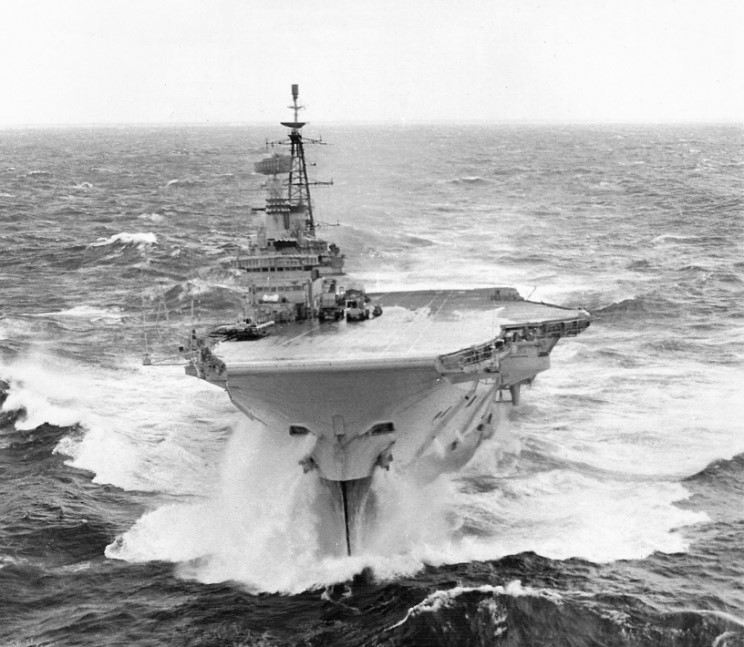
Flatness is a tricky term to define. Technically, it is the deviation, or lack of deviation, from a plane. However, something that appears flat to human eye often turns out not to be at all flat when looked at closely and measured with a high resolution instrument. It’s a bit like how the ocean might appear flat and smooth to a passenger sitting comfortably in a window seat of an aeroplane and looking down at the surface of the water below but feels like a roller-coaster to a sailor in a small yacht. Of course, if the passenger looks at the horizon instead of down at the yacht below then they will realise the surface of the ocean is curved but this is unlikely to be apparent to the sailor who can only see the next line of waves advancing towards them. Of course, the Earth is not flat and the waves are better described as surface roughness. Some months ago I wrote about our struggles to build a thin flat metallic plate using additive manufacturing [see ‘If you don’t succeed, try and try again…’ on September 29th, 2021]. At the time, we were building our rectangular plates in landscape orientation and using buttresses to support them during the manufacturing process; however, when we removed the plates from the machine and detached the buttresses they deformed into a dome-shape. I am pleased to say that our perseverance has paid off and recently we have been much more successful by building our plates orientated in portrait mode, i.e., with the short side of the rectangle horizontal, and using a more sophisticated design of buttresses. Viewed from the right perspective our recent plates could be considered flat though in reality they deviate from a plane by less than 3% of their in-plane dimensions and also have a surface roughness of several tens of micrometres (that’s the average deviation from the surface). The funding organisations for our research expect us to publish our results in a peer-reviewed journal that will only accept novel unpublished results so I am not going to say anything more about our flat plates. Instead let me return to the ocean analogy and try to make you seasick by recalling an earlier career in which I was on duty on the bridge of an aircraft carrier ploughing through seas so rough, or not flat, that waves were breaking over the flight deck and the ship felt like it was still rolling and pitching when we sailed serenely into port some days later.
The current research is funded jointly by the National Science Foundation (NSF) in the USA and the Engineering and Physical Sciences Research Council (EPSRC) in the UK (see Grants on the Web).
Ice bores and what they can tell us
About forty years ago, I was lucky enough to be involved in organising a scientific expedition to North-East Greenland. Our basecamp was on the Bersaerkerbrae Glacier in Scoresby Land, which at 72 degrees North is well within the Arctic Circle and forty years ago was only accessible in summer when the snow receded. We measured ablation rates on the glacier [1], counted muskoxen in the surrounding landscape [2] [see ‘Reasons for publishing scientific papers‘ on April 21st 2021] and drilled boreholes in the ice of the glacier. We performed mechanical tests on the ice cores obtained from different depths in the glacier and in various locations in order to assess the spatial distribution of the material properties of the ice in the glacier. This is important information for producing accurate simulations of the flow of the glacier, although our research did not extend to modelling the glacier. We could also have used our ice cores to investigate the climatic history of the region. The Greenland ice sheet contains an archive record of the climate on Earth for about the last half million years, stored in the snow and trapped air bubbles accumulated over that time period. If the ice sheet melts then that unique record will be lost forever.
The thumbnail image is a map of the depth of ice in the Greenland ice sheet. The map is about five years old and has a wide green fringe along the east coast. Scoresby Land is the penisula to the north of the large fiord in the middle of the east coast. In 1982, the edge of the ice sheet was about 80 miles from the Bersaerkerbrae Glacier, whereas today it is at least twice that distance because the ice sheet is receding.
References:
[1] Patterson EA, 1984, A mathematical model for perched block formation. Journal of Glaciology. 30(106):296-301.
[2] Patterson EA, 1984, ‘Sightings of Muskoxen in Northern Scoresby Land, Greenland’, Arctic, 37(1): 61-63.
Saving ourselves
I thought the photograph with last week’s blog [see ‘Happy New Year‘ on December 29th, 2021] might cause some comments. It was taken during a road trip in the USA as we were heading west on the Interstate 90, just west of Murdo in South Dakota, on our way to Yellowstone National Park from Michigan where we lived for nearly a decade. It shows a skeleton dinosaur being led on a leash by a skeleton human. As a genus, non-avian dinosaurs existed for about 150 million years and the last one died about 66 million years ago. Our genus, Homo, has only been around for about 2.5 million years so there was never an overlap with dinosaurs. Our species, Homo Sapiens have only been around for about the last 200,000 years. These time-spans are not long relative to the age of the oldest rocks on the planet, which have been estimated to be 4.6 billion years old, and implies that the Earth survived perfectly well without dinosaurs and humans for billions years. We have thrived during an epoch, the Holocene, during which the climate has been relatively stable compared to the previous epoch, the Pleistocene. However, if we cannot resolve the existential threats facing our species then it is likely that, like non-avian dinosaurs, we will only exist as skeletons in the future and the planet will adapt to existence without us. Perhaps the emphasis of many campaigns associated with climate change should shift from saving the planet to saving ourselves – we might be more focussed on coming together to address the selfish challenge.
Reference:
Helen Gordon, Notes from Deep Time, London: Profile Books, 2021.