Category Archives: Uncategorized

No beginning or end

milkywayNASAIn the quantum theory of gravity, time becomes the fourth dimension to add to the three dimensions of space (x, y, z or length, width and height), and Stephen Hawking has suggested that we consider it analogous to a sphere. Developing this analogy, we imagine time to be like a flea running around on the surface of a ping-pong ball. A continuous journey, without a beginning or an end. The ‘big bang’, frequently discussed as the beginning of everything, and the ‘big crunch’, proposed by physicists as how things will end, would be the north and south poles of the sphere. The Universe would simply exist. The radius of circles of constant distance from the poles (what we might call lines of latitude) would represent the size of the Universe. Quantum theory also requires the existence of many possible time histories of which we inhabit one. Different lines of longitude can represent these histories.

If you are not already lost (the analogy does not include a useful compass) then physicists would give you a final spin by dropping in the concept of imaginary time! Maybe it is time for the flea to jump off the ping-pong ball, but before it does, we can appreciate that it might move in one direction and then retrace its steps (or its hops if you wish to be pedantic). The flea can travel backwards because in this concept of the Universe, time has the same properties as the other dimensions of length, height and width and so it has backwards as well as forwards directions.”

This is an extract from a book called ‘The Entropy Vector: Connecting Science and Business‘ that I wrote sometime ago with Bob Handscombe.  I have reproduced it here in response to questions from a number of learners in my current MOOC.  The questions were initially about whether the first law of thermodynamics has implications for the universe as a closed system (i.e. one that can exchange energy but not matter with its surroundings) or as an isolated system (i.e. one that can exchange neither energy not matter with its surroundings).  These questions revolve around our understanding of the universe, which I have taken to be everything in the time and space domain, and the first law implies that the energy content of the universe is constant.  The expansion of the universe implies that the average energy density of the universe is getting lower, though it is not uniformly otherwise we would have reached the ‘cosmic heat death’ that I have discussed before.  However, this discussion in the MOOC led to questions about what happened to the first law of thermodynamics prior to the Big Bang, which I deflected as being beyond the scope of a MOOC on Energy! Thermodynamics in Everyday Life.  However, I think it deserves an answer, which is why reproduced the extract above.

Writing backwards

honey&mumfordschematicMy regular readers will know that I am a fan of the 5E instructional method and in particular combining it with Everyday Engineering Examples when teaching introductory engineering courses to undergraduate students. Elsewhere in this blog, there is a catalogue of lesson plans and examples originally published in a series of booklets produced during a couple of projects funded by the US National Science Foundation. Now, I have gone a step further and embedded this pedagogy in a Massive Open Online Course (MOOC) on Energy! Thermodynamics in Everyday Life. If you follow the MOOC, you’ll find some new worked examples that I explain while writing ‘backwards’ on a glass board. My film unit are very proud of the ‘backwards’ writing in these examples, which they tell me is an innovation in education filming-making. Our other major innovation is laboratory exercises that MOOC participants can perform in their kitchens. Two of these are based on everyday experiences for most participants: boiling water and waiting for a hot drink to cool down; the third is less everyday because it involves a plumber’s manometer. In each case, I am attempting to move people around Honey and Mumford’s learning cycle, which is illustrated schematically in the figure, i.e. having an experience, reviewing the experience, concluding from the experience and the planning the next steps. The intention is that students progress around the cycle in the taught component, then again in the experiments.

If you want to have a go at the one of experiments, then the instructions for the first one are available here. Alternatively you could sign up for the MOOC – its not too late!  But if you don’t want to follow the course then you can stil watch some excerpts on the University of Liverpool’s Stream website, including the backwards written examples.

Sources:

Atkin, J.M. and Karplus, R., 1962. Discovery of invention? Science Instructor, 29 (5), 45–47.

Honey P, Mumford A. The Manual of Learning Styles 3rd Ed. Peter Honey Publications Limited, Maidenhead, 1992.

Laws of biology?

daisyMany people are familiar with Newton’s Laws of Motion and, perhaps aware of the existence of the laws of thermodynamics. These are fundamental laws of physics upon which much of our engineered world is built. But, are there corresponding fundamental laws of biology? The question is important because we need to understand the interaction of engineered products and services with the biological world (including us) because, as John Caputo has suggested, a post-humanist world is coming into existence as the boundary between humans and technology is eroded.

So, back to laws of biology.  It is challenging to identify predictive statements about the biological world that are generally applicable. Elliott Sober argued that there are no exceptionless laws in biology. However, others would point to Dollo’s law that states evolution is irreversible, which sounds like a form of the second law of thermodynamics: entropy increases in all real processes. Indeed, McShea and Brandon have written a book entitled ‘Biology’s First Law: the tendency for diversity and complexity to increase in evolutionary systems’ which sounds even more like the second law of thermodynamics.

There are other candidates such as the Hardy-Weinberg law that allele and genotype frequencies in a population will remain constant from generation to generation in the absence of other evolutionary influences; maybe this is corollary of Dollo’s law?   Or, the Michaelis-Menten rate law that governs enzymatic reactions. But, are there any biological laws that are sufficiently general to apply beyond the context of life on Earth?  Answers via comments, please!

Sources:

Caputo JD. Truth: philosophy in transit. London: Penguin, 2013.

Sober, E., Philosophy of biology, Boulder CO: Westview Press, 1993.

Sober, E., Philosophy in biology, in the Blackwell Companion to Philosophy, 2nd edition, edited by Nicholas Bunnin & E.P. Tsui-James, Blackwell Publishers Ltd, 2006.

McShea, D.W. & Brandon, R., Biology’s first law: the tendency for diversity and complexity to increase in evolutionary systems, Chicago: Chicago University Press, 2010.

Insidious damage

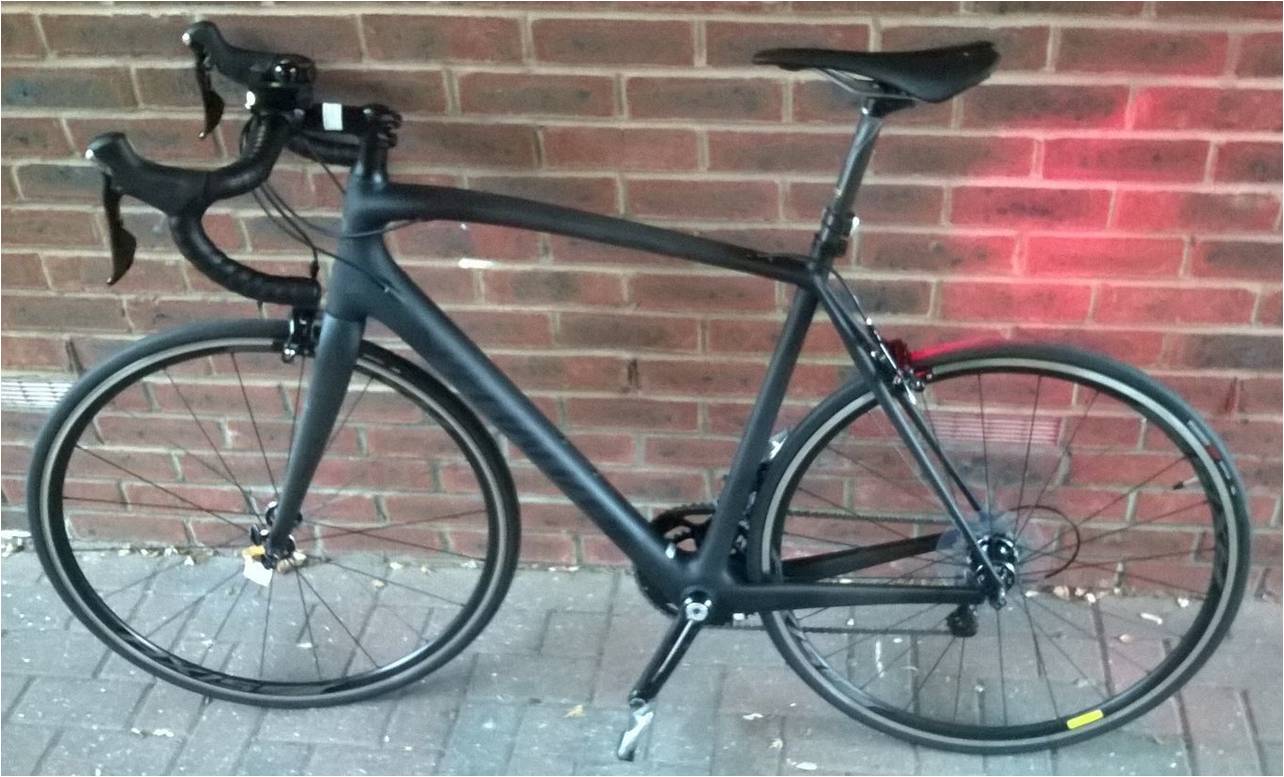
bikeRecently, my son bought a carbon-fibre framed bike for his commute to work. He talked to me about it before he made the decision to go ahead because he was worried about the susceptibility of carbon-fibre to impact damage. The aircraft industry worries about barely visible impact damage (BVID) because while the damage might be barely visible on the accessible face that received the impact, within the carbon-fibre component there can be substantial life-shortening damage. I reassured my son that it is unlikely a road bike would receive impacts of sufficient energy to induce life-shortening damage, at least in ordinary use. However, such impacts are not unusual in aircraft structures which means that they have to be inspected for hidden, insidious damage. The most common method of inspection is based on ultrasound that is reflected preferentially by the damaged areas so that the shape and extent of damage can be mapped. It is difficult to predict the effect on the structural performance of the component from this morphology information so that, when damage is found, the component is usually repaired or replaced immediately. In my research group we have been exploring the use of strain measurements to locate and assess damage by comparing the strain distributions in as-manufactured and in-service components. We can measure the strain fields in components using a number of techniques including digital image correlation (see my post entitled ‘256 shades of grey’) and thermoelastic stress analysis (see my post entitled ‘Counting photons to measure stress‘). The comparison is performed using feature vectors that represent the strain fields, see my post of a few weeks ago entitled ‘Recognising strain’. The guiding principle is that if damage is present but does not change the strain field then the structural performance of the component is unchanged; however when the strain field is changed then it is easier to predict remanent life from strain data than from morphology data. We have demonstrated that these new concepts work in glass-fibre reinforced laminates and are in the process of reproducing the results in carbon-fibre composites.

Sources

Patterson, E.A., Feligiotti, M., Hack, E., 2013, On the integration of validation, quality assurance and non-destructive evaluation, J. Strain Analysis, 48(1):48-59.

Patki, A.S., Patterson, E.A., 2012, Damage assessment of fibre reinforced composites using shape descriptors, J. Strain Analysis, 47(4):244-253.