
Teachers, students and the parents gather outside their high school one Saturday at the beginning of August. They chatter anxiously as they wait for everyone to arrive and while bags are loaded into the school mini-bus. Four teachers and eight students are wearing specially-made name badges with a small silicon chip in one corner. There are lots of hugs and kisses as these twelve people climb into the mini-bus for the journey to Charles de Gaulle airport. At Charles de Gaulle airport they go through the usual security procedures, taking off their jackets and coats, which then go through the scanner, before boarding the 12-hour flight to Tokyo. They arrive tired and bedraggled early on Sunday afternoon. The following day they visit the French embassy in Toyko and are given a guided tour after passing through a security scanner in the entrance. On Tuesday they are driven from Tokyo, northwards along the Pacific coast, through Iwaki City to the railway station at Tomioka, which was completely swept away by the tsunami in March 2011. They have all seen the pictures of the wave overwhelming everthing in its path; but it’s difficult to imagine it as they are shown around. The next stop is the Miyakoji district of Tamura City whose residents were the first to be allowed to return in April 2014 after being evacuated following the incident at the Fukushima Daiichi nuclear power plant. The students and teachers stay for two nights in the homes of students from Fukishima high school. Their hosts are wearing matching name-badges with little silicon chip on them. On Wednesday they visited Aizu and then a peach farm in northern Fukushima Prefecture on Thursday; before starting their journey home on Friday.
As they leave Fukushima Prefecture, their name badges were collected, and the silicon chips sent off for analysis. The chips were sensors that detect gamma rays with a sensitivity of 0.1 uSv/hr [micro Sieverts per hour] which record hourly dose rates with a date stamp. The results for the French school party are shown in the graphic – my account above describes an actual visit mage in August 2015. The name badges with an onboard sensor are known as D-shuttles and the students were participating in a study that has been published recently by Professor Hayano of the University of Tokyo. The events described above are highlighted in the D-shuttle data in the figure on-line here. The highest reading from the D-shuttle, on August 2nd, is due to cosmic radiation received during the 12-hour flight from Paris to Tokyo.
There has been extensive monitoring of Fukushima residents. In 2012, more than 30,000 people were given full-body scans at Hirata Central Hospital and 100% of children and 99% of adults were below the scanner’s detection limit of 100 Bq per body, which compares with the average body burden of an adult male in Japan of 535 Bq per body found in 1964. For more on types of radioactivity see my post ‘Hiding in the basement’ on December 18th, 2013.
Source:
Hayano R, Measurement and communication: what worked and what did not in Fukushima, Annals of the ICRP, (45):14-22, 2016.
Hayano RS, Tsubokura M, Miyazaki M et al, Internal radiocesium contamination of adults and children in Fukushima 7 to 20 monts after the Fukushima NPP accident as measured by extensive whole-body-counter survey. Proc. Japan Acad. Ser. B 89:157-163, 2013.
Uchiyama M, Nakamura Y, Kobayashi S, Analysis of bidy-burden measurements of 137Cs and 40K in a Japanese group over a period of 5 years following the Chernobyl accident, Health Phys., 71:320-325, 1996.
Footnotes:
A Sievert is the ionising effect of 1 Joule of energy on 1 kilogram of biological tissue.
A Becquerel is a measure of radioactivity equivalent to the quantity of radioactive material in which one nucleus decays per second.
Image: http://www.fukushima-dialogues.com/wp-content/uploads/2016/02/schema-D-shuttle-porte.png
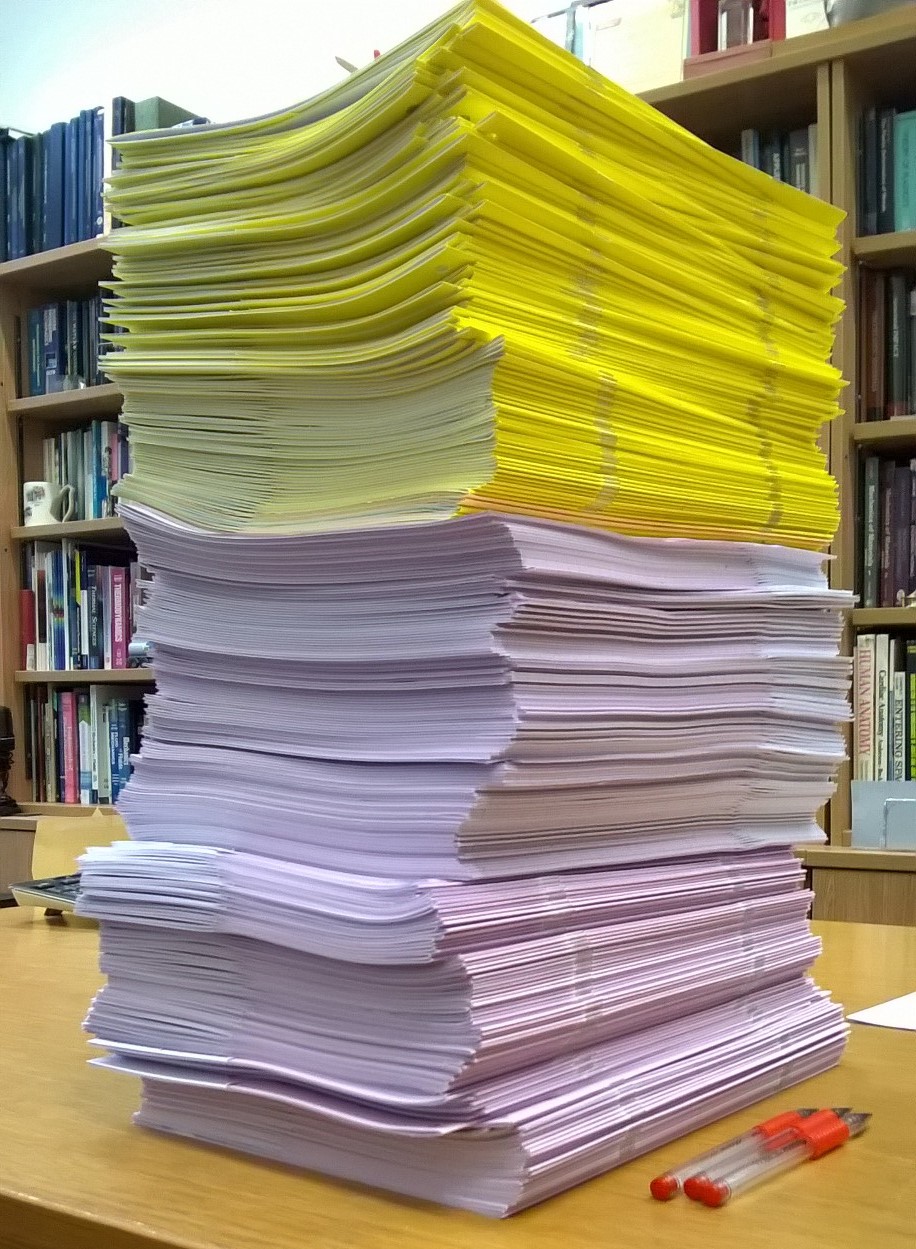 I am not feeling very creative this week, because I am in middle of marking examination scripts; so, this post is going to be short. I have 20 days to grade at least 1100 questions and award a maximum of 28,400 marks – that’s a lot of decisions for my neurons to handle without being asked to find new ways to network and generate original thoughts for this blog [see my post on ‘Digital hive mind‘ on November 30th, 2016].
 Term has started, and our students are preparing for end-of-semester examinations; so, I suspect that they would welcome the opportunity to deploy the sleeping-learning that Aldous Huxley envisaged in his ‘Brave New World’ of 2540. In the brave new world of digital engineering, some engineers are attempting to conceive of a world in which experiments have become obsolete because we can rely on computational modelling to simulate engineering systems. This ambitious goal is a driver for the MOTIVATE project [see my post entitled ‘
 Realize Engineering

