Category Archives: Thermodynamics

Counting photons to measure stress

TSA pattern around a crack propagating from the left with its tip in the centre.

TSA pattern around a crack propagating from the left with its tip in the centre.

Some might find it strange that I am teaching thermodynamics when my research expertise is in structural materials and mechanics. However, the behaviour of structures is largely controlled by energy and how they absorb, store and release it; while thermodynamics is the study of energy flows and transformations, so there is a connection. In my research group, we exploit this connection in a technique for measuring stress fields in components by monitoring the temperature changes that occur when a component is loaded. In Thermoelastic Stress Analysis (TSA) as it is known, we use very sensitive infrared cameras to monitor the cyclic variations of temperature that occur when cyclic load is applied to a material. The temperature changes are of the order of milli-Kelvin, that’s thousandths of a degree, and are positive with negative, or compressive stress and negative with tensile stress. What we are actually measuring is the rate of change in the release of photons by atoms as they are pushed closer together in compression or pulled further apart in tension; but that’s another story and takes us into physics.

An exciting feature of this technique is that as a crack evolves new surfaces are formed which releases energy as heat. We can detect not only the stress field around the crack but also the heat released during the formation of the crack prior it being visible and its subsequent growth.

Sources:

Greene, R.J., Patterson, E.A., Rowlands, R.E., 2008, ‘Thermoelastic stress analysis’, in Handbook of Experimental Mechanics edited by W.N. Sharpe Jr., Springer, New York.

Yang, Y., Crimp, M., Tomlinson, R.A., Patterson, E.A., 2012, Quantitative measurement of plastic strain field at a fatigue crack tip, Proc. R. Soc. A., 468(2144):2399-2415.

Patki, A.S., Patterson, E.A., 2010, ‘Thermoelastic stress analysis of fatigue cracks subject to overloads’, Fatigue and Fracture of Engineering Materials and Structures, 33(12):809-821.


Free: Energy! Thermodynamics in Everyday Life

sunTalking to camera is difficult…

For the last few weeks I have been spending a considerable proportion of my working hours in front of a camera shooting video clips for a MOOC, a Massive Online Open Course. The first results of this effort and those of my colleagues Matt O’Rourke and Rob Lindsay in the University’s Centre for Lifelong Learning are now available as a trailer. The initial reviews were ‘cool’ and ‘awesome’, so go ahead and watch it!

Innovation to support learning

Some people have commented on the lack of pedagogical foundation in many MOOCs. However, I think we are being quite innovative in the following ways:

  • we are using an established pedagogy, 5Es (see the next paragraph for more explanation),
  • we have designed three do-it-at-home laboratory exercises,
  • the five-week MOOC will run in parallel with the delivery of the traditional course to first year undergraduates in Liverpool and,
  • the traditional lectures will be repeated at the university’s campus in London two evenings each week.

The lectures in London will allow students living around London to meet each other and me, as well as, of course, experience the energy of the live delivery of the course.

For students worldwide (and in London)

If you are a student who has or is struggling with elementary Thermodynamics then register for the free MOOC which will start in February 2016. I will cover the curriculum content of most ‘A’ level modules and introductory undergraduate courses in Thermodynamics. If you are in London and would like to attend the lectures then contact me and I will send you more details.

For teachers/instructors anywhere

If you are a teacher, tutor or lecturer then consider bringing it to the attention of your students. I will be taking a different approach to the traditional way of teaching classical thermodynamics based on my experience teaching at the University of Liverpool using the Everyday Engineering examples featured on this blog together with the 5Es approach to lecture or lesson plans. If you would like to use it in parallel with your own lectures then get in touch with me so that we can talk about synchronization.

5Es

The 5Es are Engage (the students), Explore (the topic), Explain (the principles underpinning the topic), Elaborate (using the principles to analyse the topic) and Evaluate (ask the students to evaluate their learning by performing some analysis). The course has been well-received by students and nearly a thousand have taken it over last four years. This year we are making into a five-week MOOC so that thousands more can learn using it.

Sources:

Real life thermodynamics

Bybee RW, Taylor JA, Gardner A, van Scotter P, Powell JC, Westbrook A & Landes N, The BSCS 5E Instructional model: origins, effectiveness and applications, BSCS Colorado Srings, 2006.

Sian Bayne & Jen Ross, The pedagogy of the MOOC: the UK view,  Higher Education Academy, 2014

Paul Stacy, The pedagogy of MOOCs, http://edtechfrontier.com/2013/05/11/the-pedagogy-of-moocs/

Recognizing strain

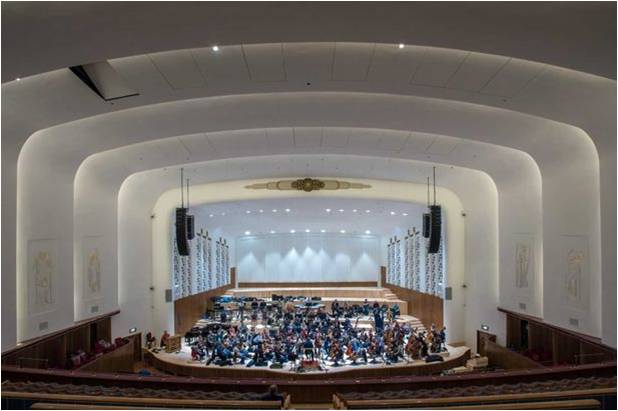
rlpoYou can step off an express train but you can’t speed up a donkey. This is paraphrased from ‘The Fly Trap’ by Fredrik Sjöberg in the context of our adoption of faster and faster technology and the associated life style. Last week we stepped briefly off the ‘express train’ and lowered our strain levels by going to a concert given by the Royal Liverpool Philharmonic Orchestra, including pieces by Dvorak, Chopin and Tchaikovsky. I am not musical at all and so I am unable to tell you much about the performances or compositions, except to say that I enjoyed the performances as did the rest of the audience to judge from the enthusiastic applause. A good deal of my enjoyment arose from the energy of the orchestra and my ability to recognise the musical themes or acoustic features in the pieces. The previous sentence was not intended as a critic’s perspective on the concert but a tenuous link…

Recognising features is one aspect of my recent research, though in strain data rather than music. Modern digital technology allows us to acquire information-rich data maps with tens of thousands of individual data values arranged in arrays or matrices, in which it can be difficult to spot patterns or features. We treat our strain data as images and use image decomposition to compress a data matrix into a feature vector. The diagram shows the process of image decomposition, in which a colour image is converted to a map of intensity in the image. The intensity values can be stored in a matrix and we can fit sets of polynomials to them by ‘tuning’ the coefficients in the polynomials. The coefficients are gathered together in a feature vector. The original data can be reconstructed from the feature vector if you know the set of polynomials used in the decomposition process, so decomposition is also a form of data compression. It is easier to recognise features in the small number of coefficients than in the original data map, which is why we use the process and why it was developed to allow computers to perform pattern recognition tasks such as facial recognition.

decompositionSources:

Wang W, Mottershead JE, Patki A, Patterson EA, Construction of shape features for the representation of full-field displacement/strain data, Applied Mechanics and Materials, 24-25:365-370, 2010.

Patki, A.S., Patterson, E.A, Decomposing strain maps using Fourier-Zernike shape descriptors, Exptl. Mech., 52(8):1137-1149, 2012.

Nabatchian A., Abdel-Raheem E., and Ahmadi M., 2008, Human face recognition using different moment invariants: a comparative review. Congress on Image and Signal Processing, 661-666.


Emergent properties

storm over canyonPerhaps my strongest memory of being taught at school is that of the head of chemistry combining hydrogen and oxygen using an old glass drinks bottle and a burning taper.  The result was explosive, exciting and memorable.  It certainly engaged the attention of everyone in the class.  As far as I am aware, the demonstration was performed at least once per year for decades; but modern health and safety regulations would probably prevent such a demonstration today.

One of the interesting things about combining these two gases at room temperature is that the result is a liquid: water.  This could be construed as an emergent property because an examination of the properties of water would not lead you to predict that it was formed from two gases.  The philosopher C.D. Broad (1887-1971) coined the term ’emergent properties’ for those properties that emerge at a certain level of complexity but do not exist at lower levels.

Perhaps a better example of emergent properties is the pressure and temperature of steam.  We know that water molecules in a cloud of steam are whizzing around randomly,bouncing into one another and the walls of the container – this is the kinetic theory of gases.  If we add energy to the steam, for instance by heating it, then the molecules will gain kinetic energy and move around more quickly.  The properties of pressure and temperature emerge when we zoom out from the molecules and consider the system of the steam in a container.  The temperature of the steam is a measure of the average kinetic energy of the molecules and the pressure is the average force with which the molecules hit the walls of the container.

Manuel Delanda takes these ideas further in a brilliant description of modelling a thunderstorm in his book Philosophy and Simulation: The Emergence of Synthetic Reason.  There are no equations and it is written for the layman so don’t be put off by the title.  He explains that emergent properties can be established by elucidating the mechanisms that produce them at one scale and then these emergent properties become the components of a phenomenon at a much larger scale. This allows engineers to construct models that take for granted the existence of emergent properties at one scale to explain behaviour at another, so for example we don’t need to model molecular movement to predict heat transfer. This is termed ‘mechanism-independence’.

Ok, that’s deep enough for one post!  Except to mention that Capri & Luisi have proposed that life is an emergent property that is not present in the constituent parts of living things and which only appears when the parts are assembled.  Of course, it also disappears when you disassemble a living system, i.e. dissect it.

Sources:

Chapter 1 ‘The Storm in the Computer’ in Philosophy and Simulation: The Emergence of Synthetic Reason by Manuel Delanda, published by Continuum, London, 2011 (pages 7-21).

Fritjof Capra and Luigi Luisi, The Systems View of Life: A Unifying Vision, Cambridge University Press, 2014.