Category Archives: sustainability

Conflicted about cost-benefit analysis of international conferences

Decorative image of an aircraftLast week I wrote about my stimulating experience of attending a conference in Orlando, Florida and presenting our recent research to the experimental mechanics community for the first time in four years.  Whilst there, I was conscious of the ecological footprint of my trip – the venue was making extensive use of single use plastics on a scale that surprised me.  However, my trans-Atlantic flight had an order of magnitude larger impact.  It is difficult to find a reliable estimate of the carbon emissions for a return flight between the UK and Florida but 1,267 kg CO2 from the Guardian newspaper website lies between a lower bound estimate of 856 kg CO2 from iata.org and and an upper bound of 2,200 kg CO2 from myclimate.org.  This is equivalent to about one-sixth of my annual domestic carbon footprint of 9,000 kg CO2 using the calculator on the World Wildlife Fund website.  The UK average footprint is 9,300 kg CO2/capita and the global average is 6,300 kg CO2/capita.  The question is whether it is justifiable to generate additional emissions to attend a research conference?  The prime motivation of the research that I presented is to support the development of aircraft which are lighter with less embedded carbon and use less energy while also having a longer useful life.  Ultimately, supporting the aviation industry to achieve its target of zero-net emissions by 2050.  The carbon emissions of the global aviation industry in 2021 were 720 Mt CO2 [see IEA report]; hence, if my research contributes towards one hundredth of a percent reduction in these emissions then this would be 72,000 kg CO2/year.  It seems reasonable to cause a tenth of this annual saving each year (7,200 kg CO2/year) for the next ten years in order to deliver the required technology, i.e., committing one year’s savings to achieve an annual saving in perpetuity.  The problem is that I do not have a reliable estimate of the carbon footprint of my research activities.  I supervised an MSc student a couple of years ago who conducted a carbon audit of the School of Engineering and estimated the carbon emissions due to research alone to be 61,531 kg CO2 excluding heating, lighting and travel.  My group might be responsible for 10% of these emissions, i.e., about 6000 kg CO2; hence, adding about 1,200 kg CO2 to interact with other researchers at a conference seems reasonable and within a budget of 7,200 kg CO2. However, it is difficult to find reliable data to use in estimating carbon emissions for these activities and so perhaps the key conclusion is that we need more and better carbon audits to allow more informed decision-making.  In the meantime, perhaps attendence at an international conference once every four years is sufficient.

Image: Tayeb Mezahdia
Slicing the cake equally or engineering justice

Decorative photograph of sliced chocolate cakeIn support of the research being performed by one of the PhD students that I am supervising, I have been reading about ‘energy justice’.  Energy justice involves the equitable sharing of the benefits and burdens of the production and consumption of energy, including the fair treatment of individuals and communities when making decisions about energy.  At the moment our research is focussed on the sharing of the burdens associated with energy production and ways in which digital technology might improve decision-making processes.  Justice incorporates the distribution of rights, liberties, power, opportunities, and money – sometimes known as ‘primary goods’.  The theory of justice proposed by the American philosopher, John Rawls in the 1970’s is a recurring theme: that these primary goods should be distributed in a manner a hypothetical person would choose, if, at the time, they were ignorant of their own status in society.  In my family, this is the principle we use to divide cakes and other goodies equally between us, i.e., the person slicing the cake is the last person to take a slice.  While many in society overlook the inequalities and injustices that sustain their privileged positions, I believe that engineers have a professional responsibility to work towards the equitable distribution of the benefits and burdens of engineering on the individuals and communities, i.e., ‘engineering justice’ [see ‘Where science meets society‘ on September 2nd, 2015].  This likely involves creating a more diverse engineering profession which is better equipped to generate engineering solutions that address the needs of the whole of our global society [see ‘Re-engineering engineering‘ on August 30th, 2017].  However, it also requires us to rethink our decision-making processes to achieve  ‘engineering justice’.  There is a clear and close link to ‘procedure justice’ and ‘fair process’ [see ‘Advice to abbots and other leaders‘ November 13th, 2019] which involves listening to people, making a decision, then explaining the decision to everyone concerned.  In our research, we are interested in how digital environments, including digital twins and industrial metaverses, might enable wider and more informed involvement in decision-making about major engineering infrastructure projects, with energy as our starting point.

Sources:

Derbyshire J, Justice, fairness and why Rawls still matters today, FT Weekend, April 20th, 2023.

MacGregor N, How to transcend the culture wars, FT Weekend, April 29/30th, 2023.

Rawls J, A Theory of Justice, Cambridge MA: Belknap Press, 1971

Sovacool BK & Dworkin MH, Global Energy Justice: Problems, Principles and Practices, Cambridge: Cambridge University Press, 2014.

Image: https://www.alsothecrumbsplease.com/air-fryer-chocolate-cake/

Worrying about ecology on the fells

Let me take you fell-walking.  Don’t worrying if you have never been fell-walking.  I am familiar with the fells where we are going so we won’t get lost, I move quite slowly these days so you will be able to keep up, and I was taught mountain leadership by the Royal Marines so you are in safe hands.  It is a bright morning though still chilly as we set off through the village.  The village car park, at the foot of the path onto the fell, is packed with vehicles belonging to a film crew who are setting up for a scene in a remake of a James Herriot TV series.  The little car he drives from his veterinary practice over the fells to visit farms is sat waiting for the actor. Perhaps by now the music from the original TV series is echoing in your head and you have a mental image of the Yorkshire Dales where we are walking.  We leave the film crew behind as we climb up the steep path out of the valley towards the upper slopes.  Initially, the path is rock and gravel so it is reasonably solid underfoot but, as we breakout onto the first of a series of high broad terraces, the ground becomes waterlogged and we tread carefully trying to avoid sinking into the squelchy turf.  A herd of Galloway cattle, small black cows with white waistbands, are grazing across the path and barely give us a glance as we walk around them.  Their calmness is infectious.  There is no one else in sight and there are long views across the valley to the fells beyond.  There are white fluffy clouds scattered across the blue sky and a smudge of off-white on the horizon, perhaps a shower of rain or a pall of smoke – it is difficult to tell.  We walk diagonally and slightly upwards across the broad terrace, through a gate, and then the path heads up another steep incline before breaking out onto a higher terrace.  Here, the path snakes across the terrace around sink holes before heading steeply upwards again.  This pattern repeats itself with the view getting bigger, the wind stronger and the temperature colder with each repetition until, after about an hour’s climbing, we suddenly arrive at the summit which is hidden from view until the last moment by the convex curvature of the fell.  Actually, its not really a summit because it is a vast flat-topped fell with a trig point creating rather than marking the highest point.  Nevertheless, the view is spectacular with a blue sky and occasional high clouds.  After a summit photo we set off northwards on a paved path alongside a drystone wall marking the boundary between two parishes.  It is amazing that someone has gone to the trouble of transporting huge slabs of stone, typically 1 sq.m., 700 m up a mountain to lay a footpath for walkers.  Actually, the drystone wall is pretty amazing too, because its about 1.5 m high, in good condition, and part of more than 5000 miles of wall in the Yorkshire Dales that were built without any of today’s civil engineering equipment, some of them 600 years ago.  Eventually, after walking about a kilometre, the summit ends and we start to walk down hill, cross the wall on a ladder stile and then cross back through a gate and turn west.  We stop for lunch sheltering behind the wall from the wind with the sun in our faces and a magnificent view down a valley formed by a beck heading towards the dale from which we started this morning.  All food tastes infinitely better sitting on a hill that you have just climbed and the singing of skylarks and curlews adds to our feeling of well-being.  Our picnic spot is still quite high and we can see line upon line of fells disappearing into the distance.  Some have smudges of off-white above them and we realise, when one drifts towards us from the fell directly across the valley from us, that it is smoke from heather being burned to encourage new growth and improve conditions for gamebirds.  Recent research has shown that unmanaged heather lands absorb more carbon than those managed by burning or mowing; while research published in 2014 showed that burning of moorland has significant negative impacts on peat hydrology, chemistry and physical properties, as well as river water chemistry and river ecology.  So it is disappointing to find that a negative contribution to achieving net zero by 2050 is being made so that a tiny proportion of the population can enjoy shooting birds for sport.  These thoughts and the smoke drifting towards us rather spoil our otherwise idyllic lunch and we head off down the hill in the sunshine planning this post.  But this blemish on an otherwise perfect day on the fells is almost forgotten by the time we have descended into the dale and followed the river upstream to our starting point next to the village pub where we enjoy a couple of pints of real ale.

If you want to follow this walk for real then the details are here: https://www.yorkshire.com/walkshire/buckden-pike-circular/

We are ecosystem engineers

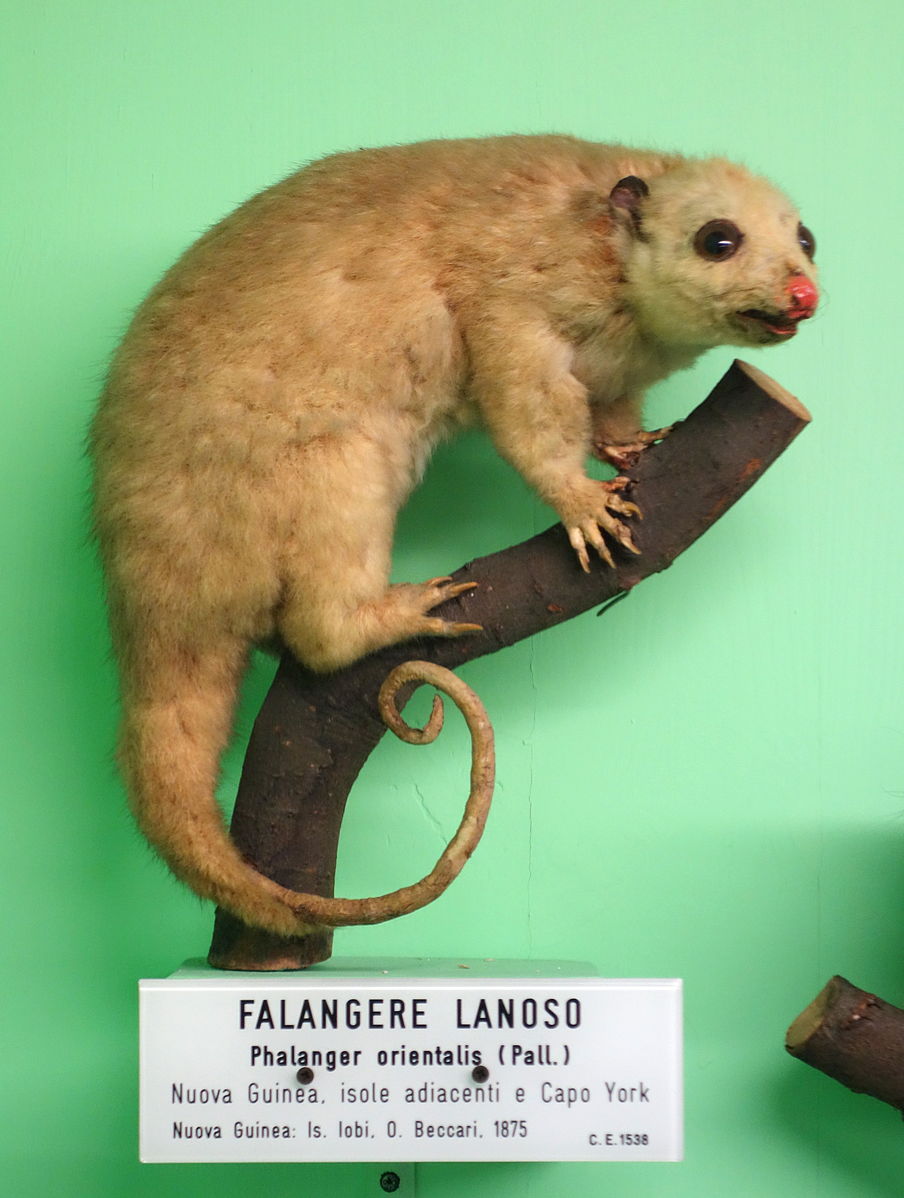
Decorative photograph of common cuscusHumans have been ecosystem engineers since the Pleistocene, more than 12,000 years ago.  There is evidence of a tree-dwelling possum, the common cuscus, being introduced to the Solomon Islands from New Guinea more than 20,000 years ago as a game species [1].  The ecosystem is a complex system and there are unintended consequences of our engineering.  For instance, the burning forests and grasslands about 8,000 years ago changed reflectivity and absorption of heat in parts of Eurasia which altered the pattern of monsoons in India and parts of South East Asia.  The palaeobiologist, Thomas Halliday has suggested that we are such effective ecosystem engineers that is impossible to think about a pristine Earth unaffected by human biology and culture [2].  The challenge now is to re-engineer the ecosystem so that it remains habitable.  This involves handling the complexities of  the ecosystem, human society and their interactions.  The philosopher, Nabil Ahmed has written, in the context of his native Bangladesh, that it is impossible to differentiate between land and rivers, human population, grains and forests, politics and markets because they all coalesce as a single entity resulting from the legacy of interaction between politics and natural actors [3].  Everything is interconnected – more than we realise.

References

[1] Abate RS & Kronk EA, Climate change and indigenous peoples: the search for legal remedies Cheltenham UK: Edward Elgar, 2012.

[2] Halliday T, Otherlands: A world in the making, London: Allen Lane, 2022.

[3] Ahmed N, Entangled Earth, Third Text, 27:44-53, 2013.

Image: Exhibit in the Museo Civico di Storia Naturale di Genova, Via Brigata Liguria, 9, 16121, Genoa, Italy; by Daderot, CCO 1.0 licence