Tag Archives: education

Greed overwhelms ethics

My car but not my house!

My car but not my house!

The scandal about Volkswagen emissions has already caused journalists and others to wring their hands or to preach sermons, or both, about the ethical standards of the engineering profession, see for example the Editor’s blog in Professional Engineer where he reminds us that professional engineers should conduct their professional work and relationships with “integrity and objectivity and with due regard for the welfare of the people, the organisations and the environment with which they interact”. The quotation is from the Royal Charter of the Institution of Mechanical Engineers. Fine words written to induce good intentions that rarely survive in the face of greed or simply the need to keep your job so that you can feed and house your family.

In my view, the emissions scandal seems to have parallels with the banking scandals of the past decade, in which corporate greed has trampled over ethics and morals in the pursuit of ever larger profits while government regulators through incompetence or acquiescence have allowed it to continue. Volkswagen were wrong to design a device to cheat the Government emission tests, but Government regulators were naive to design a test in which it was so easy to cheat. Senior executives at Volkswagen have blamed their employees following other recent examples.  These company leaders were paid gigantic salaries to provide both leadership and management and, in my opinion, they have failed in both by blaming the people they are supposed to be leading and by allowing the scandals to happen in the first place.

The evidence would suggest that we can trust neither corporations nor governments to take care of the environment. One solution is for all vehicles to provide real-time information on the dashboard about NOX and Carbon emissions as well fuel consumption then we can make our own choices. When I moved to the US more than a decade ago, I was surprised to find that fuel consumption data was not available on the dashboard of most cars as it was already commonplace in Europe. Perhaps its presence was a factor in the development of fuel efficient cars in Europe although clearly higher fuel prices play a large role.  However, in the absence of a tax on emissions, real-time emission data on the dashboard would motivate engineering ingenuity to compete to produce lower emission designs instead of wasting creativity on cheating in useless Government tests.

Here are some of facts to support my statements above about large profits and gigantic salaries:

Volkswagen profits rose 21% in 2014 to more than $12billion on an annual turnover of $230 billion which is comparable to the GDP of Portugal.

The CEO of Volkswagen was paid almost $18million per year which is about 250 times the average salary of a Volkswagen engineer.

Sources:

Hibbert, L., Editor’s comment: October 2015 The Volkswagen emissions testing scandal has put the issue of professional ethics in the spotlight, Professional Engineer, October 07, 2015.

Wall Street Journal, Feb 27th, 2015

Volkswagen AG Annual Report 2014
World Bank Data Bank

Reuters, March 12th, 2012

glassdoor.com


Death knell for the lecture?

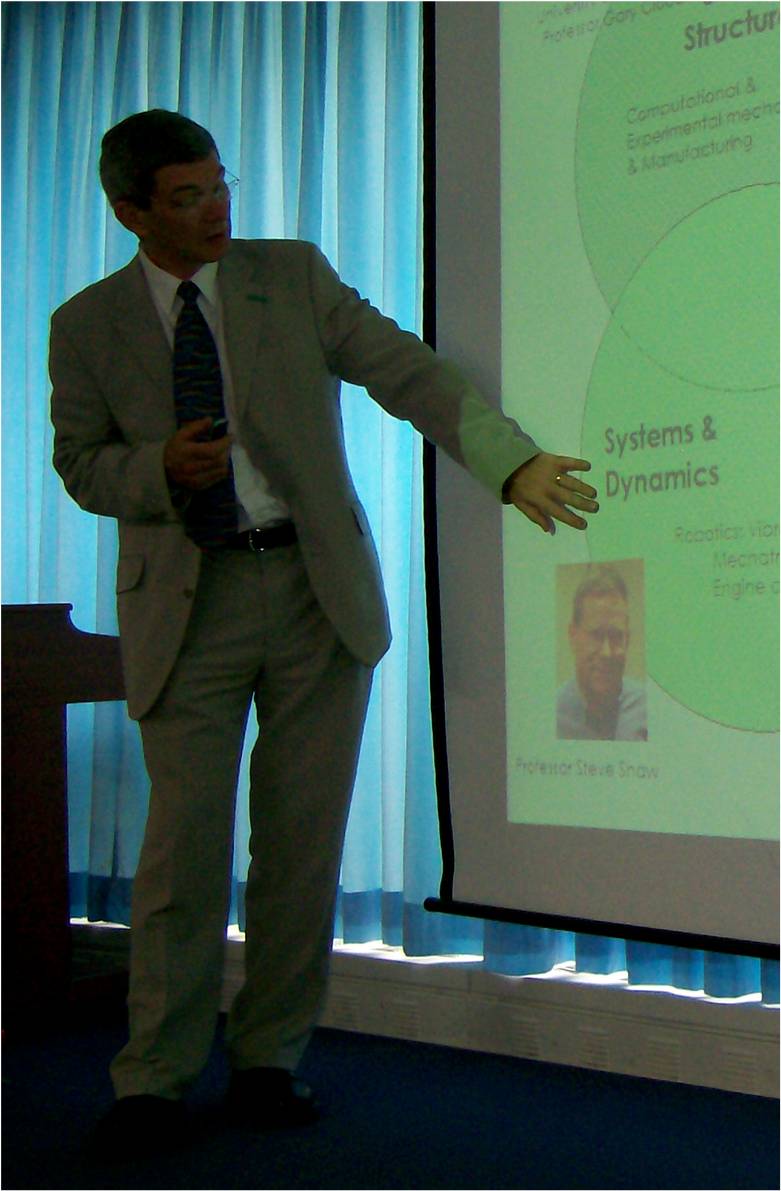
Author lecturing in Yonsei University, Korea

Author lecturing in Yonsei University, Korea

This week I have started filming short video clips for a MOOC that will be broadcast in February in parallel with my undergraduate course on Thermodynamics. The Massive Online Open Course (MOOC) is provisional titled: ‘Energy – Using it and Losing it: Real-World Thermodynamics for Beginners’ and will be offered through FutureLearn to a worldwide audience. The video clips, which essentially replace the traditional 50-minute lecture, will be about 3 minutes long recognising that this is the longest time period that many young people will focus uninterrupted on a single activity.

Last week was the start of a new academic year in which we have been instructed to use newly-installed software and hardware to record or, in the new terminology, video-stream all of our lectures. The ‘streamed’ lectures will be made available online for students to watch at anytime during the academic year. All of this is happening when attendance at lectures is falling, which leads me to wonder whether these events represent the death knell of the traditional university lecture?

We have known for sometime that people’s maximum attention span was typically fifteen to twenty minutes and yet lectures have remained stubbornly at 50 minutes duration with many double lectures timetabled. Considerable ingenuity, imagination and energy is needed to deliver lectures that engage students for these time periods (see Engage Engineering for tips on how to do this). So it should come as no surprise that many lectures are half empty when students have alternatives such as short video clips available online, streamed lectures that can be fast-forwarded over the boring bits or rewound to repeat important sections, as well as the old-fashioned approach of reading a good textbook and teaching yourself.

Lectures are in many ways a theatrical performance, though factual rather fictional. Theatre has had to evolve and adapt in order to survive the advent of cinema, television and most recently the internet. In the process, some theatres and drama companies have disappeared. I think the same is likely to happen with the university lecture – some will evolve and adapt, for instance by embracing new technology, but others will disappear as students choose more effective means of acquiring knowledge and understanding.

Ideal employee

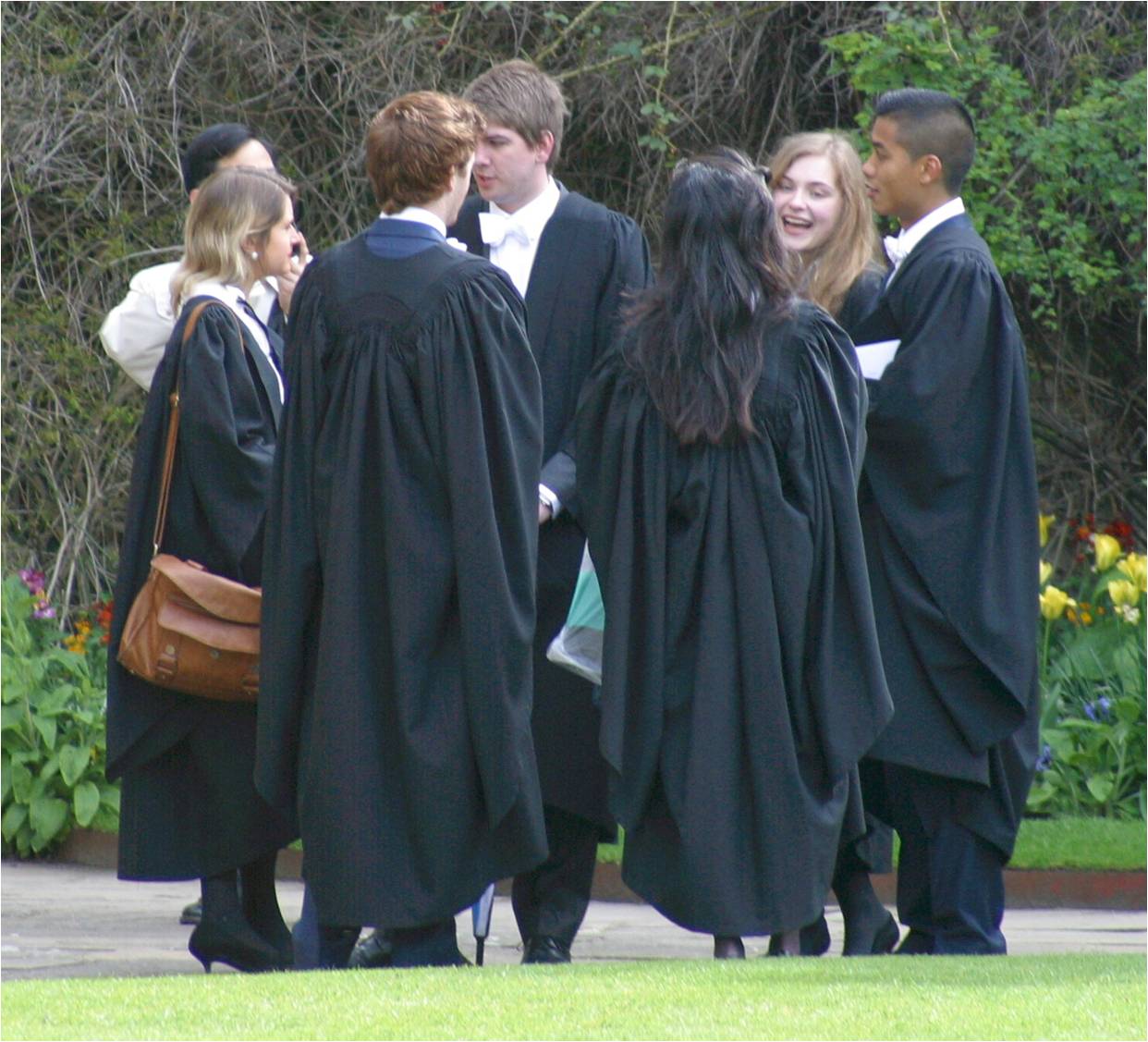
graduationSome years ago during a visit to South Korea, I listened to a speech by an Executive Vice-President of KEPCO, the Korea Electric Power Corporation.  He talked about the need to blend the desire of consumers who want to buy cheaper goods in a clean environment with the will of a company to make more money and to do this in the context of the world running in a ‘green race’ for survival.  He identified their employees as his company’s most valuable asset and went on to describe the ideal employee as having three key attributes:

A team player – cooperative and capable of growing together with their colleagues

A creativity-driven professional – flexible and globally competitive

A passionate executor – innovative and able to make things happen

He did not list these attributes in any order of importance but gave them equal weighting as nodes on a circle around which the ideal employee could move effortlessly.  Of course I am biased but this description sounds like an engineer!

If you are just starting a new course of education then perhaps these are the qualities that you should aim to acquire or cultivate.

If you are an employer and are lucky enough to hire one or even a group of these ‘ideal employees’ then your problems as a manager may only just be beginning.  They are likely to be what is known as ‘knowledge workers’ who will share certain characteristics, including being highly educated or experienced, hate being told what to do and reluctant to share knowledge with their managers.  So many employers resort to HSPALTA: Hire Smart People And Leave Them Alone.

Emergent properties

storm over canyonPerhaps my strongest memory of being taught at school is that of the head of chemistry combining hydrogen and oxygen using an old glass drinks bottle and a burning taper.  The result was explosive, exciting and memorable.  It certainly engaged the attention of everyone in the class.  As far as I am aware, the demonstration was performed at least once per year for decades; but modern health and safety regulations would probably prevent such a demonstration today.

One of the interesting things about combining these two gases at room temperature is that the result is a liquid: water.  This could be construed as an emergent property because an examination of the properties of water would not lead you to predict that it was formed from two gases.  The philosopher C.D. Broad (1887-1971) coined the term ’emergent properties’ for those properties that emerge at a certain level of complexity but do not exist at lower levels.

Perhaps a better example of emergent properties is the pressure and temperature of steam.  We know that water molecules in a cloud of steam are whizzing around randomly,bouncing into one another and the walls of the container – this is the kinetic theory of gases.  If we add energy to the steam, for instance by heating it, then the molecules will gain kinetic energy and move around more quickly.  The properties of pressure and temperature emerge when we zoom out from the molecules and consider the system of the steam in a container.  The temperature of the steam is a measure of the average kinetic energy of the molecules and the pressure is the average force with which the molecules hit the walls of the container.

Manuel Delanda takes these ideas further in a brilliant description of modelling a thunderstorm in his book Philosophy and Simulation: The Emergence of Synthetic Reason.  There are no equations and it is written for the layman so don’t be put off by the title.  He explains that emergent properties can be established by elucidating the mechanisms that produce them at one scale and then these emergent properties become the components of a phenomenon at a much larger scale. This allows engineers to construct models that take for granted the existence of emergent properties at one scale to explain behaviour at another, so for example we don’t need to model molecular movement to predict heat transfer. This is termed ‘mechanism-independence’.

Ok, that’s deep enough for one post!  Except to mention that Capri & Luisi have proposed that life is an emergent property that is not present in the constituent parts of living things and which only appears when the parts are assembled.  Of course, it also disappears when you disassemble a living system, i.e. dissect it.

Sources:

Chapter 1 ‘The Storm in the Computer’ in Philosophy and Simulation: The Emergence of Synthetic Reason by Manuel Delanda, published by Continuum, London, 2011 (pages 7-21).

Fritjof Capra and Luigi Luisi, The Systems View of Life: A Unifying Vision, Cambridge University Press, 2014.