 While I was away on vacation last month, WordPress sent an email congratulating me on the third anniversary of the start of this blog. This stimulated me to look at the statistics on the most frequently read, or at least viewed, of the approximately 160 postings that I have written. Top of the list is an early posting which asks the question ‘Are there any closed systems in nature?’ (see post entitled ‘Closed systems in Nature?’ on December 21st, 2012). Since this question has generated more interest than any of my subsequent postings, it seems appropriate, after 30 months, to attempt an answer.
Alexander Bogdanov (1873-1928), and independently Karl Ludwig von Bertalanffy (1901-1972), recognized that all living systems are open systems in the thermodynamic sense, which operate far-from equilibrium and require a continual flux of matter and energy to sustain life. By contrast, closed thermodynamic systems tend to settle into a state of equilibrium, i.e. with no differences in energy, no chemical reactions in progress and no unbalanced forces.
The cybernetist, William Ross Ashby (1903-1972) suggested that living systems are energetically open but operationally closed, i.e. closed to information and control. In other words, a cell, or any other living organism, needs no information from the environment to be itself. All the information for a bee to be a bee is contained inside a bee (for more on the bee theme see ‘Entropy management for bees and flights‘ on November 5th, 2014 and ‘Fields of flowers’ on July 8th, 2015). These concepts, of being energetically open and operationally closed, form the essence of the characteristics of biological life as described by Capra and Luisi, whom I have loosely quoted in the previous sentence.
So, to answer my original question, there are no closed living systems in nature. We can take this a step further: in 1927 Charles Elton defined an ecosystem in terms of the flow of energy and matter from one organism to another. Consequently, the only waste generated by an ecosystem as a whole is the entropy associated with respiration, which allows the system to satisfy the second law of thermodynamics, and the waste is replaced with energy from the sun through photosynthesis. The sum of all ecosystems is the biosphere. So, it can be construed that everything on Earth is part of one giant open system – this is essentially the Gaia hypothesis.
Sources:
Gorelik, G., Principal ideas of Bogdanov’s tektology: the universal science of organisation, General Systems, 20:3-13, 1975.
Bertalanffy, L. von, General Systems Theory, New York: Braziller, 1968.
Ashby, W.R., Design for a Brain, New York: Wiley, 1952.
Capra, F., Luisi, P.L., The Systems View of Life – A unifying vision, Cambridge: Cambridge University Press, 2014.
Elton, C.S, Animal Ecology, London: Sidgwick & Jackson, 1927 (reprinted 2001, University of Chicago Press).
Lovelock, J., Gaia, Oxford: Oxford University Press, 1979.
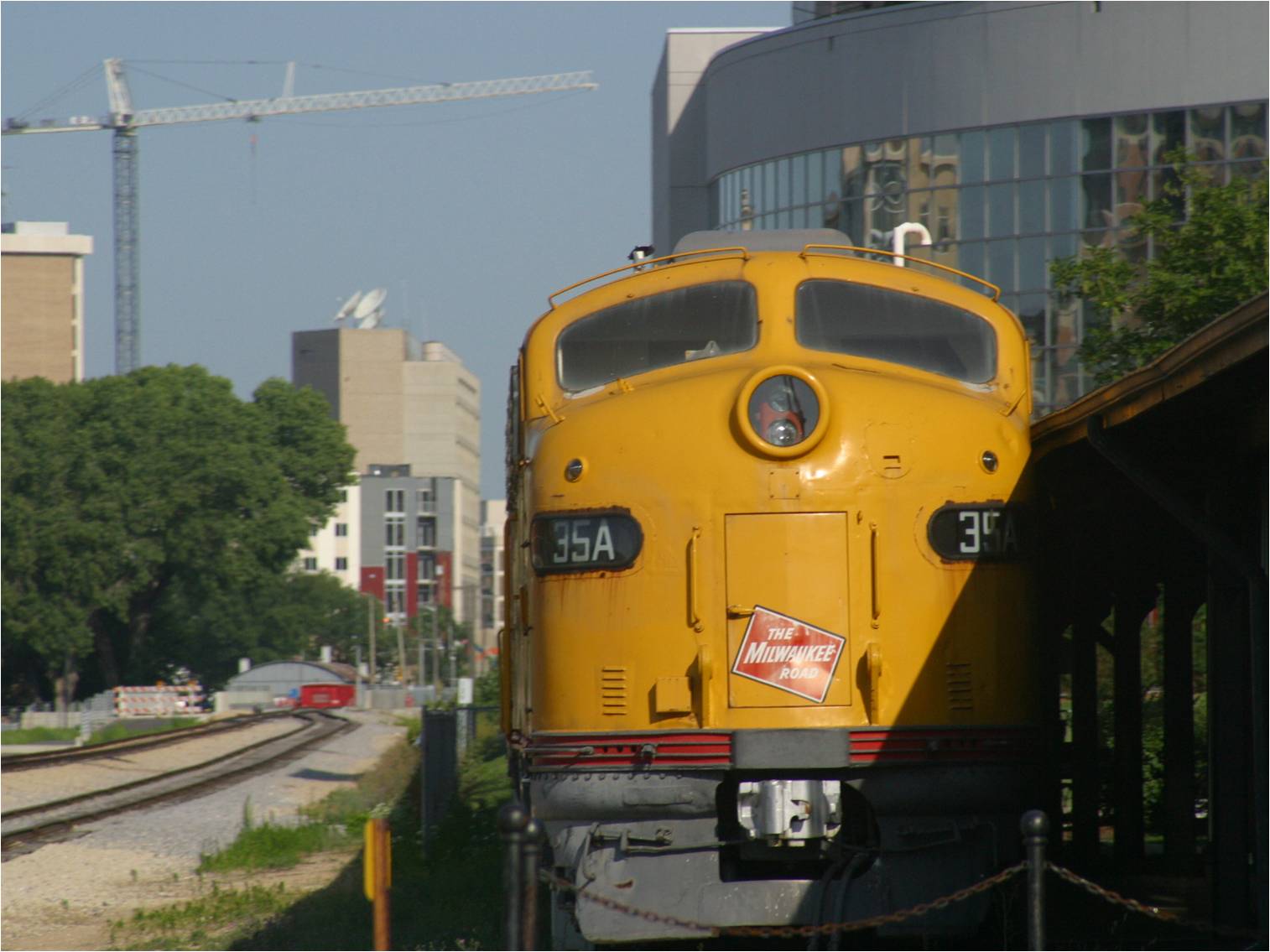 If you look up the word engineering in the dictionary then the first few definitions will probably refer to engines, structures and such like, but the third or fourth definition might describe it as ‘the action of working artfully to bring something about‘. The origins of the word ‘engineering’ lie in the Latin word ‘ingeniare’, which means to contrive or devise. Unfortunately, engines have been a phenomenal success and are now synonymous with our profession. I say unfortunately, because it hides from the general public that we do far more that contrive and devise engines as sources of power. The vast majority of engineers have nothing to do with engines and instead work artfully to bring about all of the other things in our man-made world.

 Realize Engineering