Free: Energy! Thermodynamics in Everyday Life

sunTalking to camera is difficult…

For the last few weeks I have been spending a considerable proportion of my working hours in front of a camera shooting video clips for a MOOC, a Massive Online Open Course. The first results of this effort and those of my colleagues Matt O’Rourke and Rob Lindsay in the University’s Centre for Lifelong Learning are now available as a trailer. The initial reviews were ‘cool’ and ‘awesome’, so go ahead and watch it!

Innovation to support learning

Some people have commented on the lack of pedagogical foundation in many MOOCs. However, I think we are being quite innovative in the following ways:

  • we are using an established pedagogy, 5Es (see the next paragraph for more explanation),
  • we have designed three do-it-at-home laboratory exercises,
  • the five-week MOOC will run in parallel with the delivery of the traditional course to first year undergraduates in Liverpool and,
  • the traditional lectures will be repeated at the university’s campus in London two evenings each week.

The lectures in London will allow students living around London to meet each other and me, as well as, of course, experience the energy of the live delivery of the course.

For students worldwide (and in London)

If you are a student who has or is struggling with elementary Thermodynamics then register for the free MOOC which will start in February 2016. I will cover the curriculum content of most ‘A’ level modules and introductory undergraduate courses in Thermodynamics. If you are in London and would like to attend the lectures then contact me and I will send you more details.

For teachers/instructors anywhere

If you are a teacher, tutor or lecturer then consider bringing it to the attention of your students. I will be taking a different approach to the traditional way of teaching classical thermodynamics based on my experience teaching at the University of Liverpool using the Everyday Engineering examples featured on this blog together with the 5Es approach to lecture or lesson plans. If you would like to use it in parallel with your own lectures then get in touch with me so that we can talk about synchronization.

5Es

The 5Es are Engage (the students), Explore (the topic), Explain (the principles underpinning the topic), Elaborate (using the principles to analyse the topic) and Evaluate (ask the students to evaluate their learning by performing some analysis). The course has been well-received by students and nearly a thousand have taken it over last four years. This year we are making into a five-week MOOC so that thousands more can learn using it.

Sources:

Real life thermodynamics

Bybee RW, Taylor JA, Gardner A, van Scotter P, Powell JC, Westbrook A & Landes N, The BSCS 5E Instructional model: origins, effectiveness and applications, BSCS Colorado Srings, 2006.

Sian Bayne & Jen Ross, The pedagogy of the MOOC: the UK view,  Higher Education Academy, 2014

Paul Stacy, The pedagogy of MOOCs, http://edtechfrontier.com/2013/05/11/the-pedagogy-of-moocs/

Talk to people not computers

liverpoolplayhouseRecently, we went to see the Glass Menagerie by Tennessee Williams at the Liverpool Playhouse.  There is a wonderful line in it ‘People go to the movies instead of moving’ when Tom Wingfield comments on everyone living life vicariously through the action-packed life of Hollywood stars.  The play was written in the 1940s long before the advent of smart phones.  Nowadays people interact with their smart phones rather than with the people around them but still live vicariously through the lives of celebrities.  Recent research has found that many people today would actually prefer to deal with computers that appear to understand them rather than with other people, according to Richard Waters.  This is a shame because one of the things that makes humans different to computers is our ‘inbuilt propensity for social interaction’.  Computers are unlikely ever to replicate our emotions, curiosity, irrationality or creativity (See my post entitled ‘Engineers are slow, error-prone…‘ on April 29th, 2015).  So put down your phone or switch off your computer and interact with your fellow human beings.

Sources:

Richard Waters, Jobs for droids, Essay in Financial Times, Weekend 17/18 October 2015

Recognizing strain

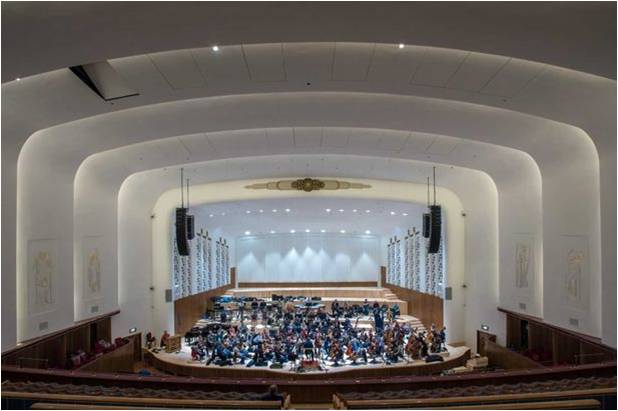
rlpoYou can step off an express train but you can’t speed up a donkey. This is paraphrased from ‘The Fly Trap’ by Fredrik Sjöberg in the context of our adoption of faster and faster technology and the associated life style. Last week we stepped briefly off the ‘express train’ and lowered our strain levels by going to a concert given by the Royal Liverpool Philharmonic Orchestra, including pieces by Dvorak, Chopin and Tchaikovsky. I am not musical at all and so I am unable to tell you much about the performances or compositions, except to say that I enjoyed the performances as did the rest of the audience to judge from the enthusiastic applause. A good deal of my enjoyment arose from the energy of the orchestra and my ability to recognise the musical themes or acoustic features in the pieces. The previous sentence was not intended as a critic’s perspective on the concert but a tenuous link…

Recognising features is one aspect of my recent research, though in strain data rather than music. Modern digital technology allows us to acquire information-rich data maps with tens of thousands of individual data values arranged in arrays or matrices, in which it can be difficult to spot patterns or features. We treat our strain data as images and use image decomposition to compress a data matrix into a feature vector. The diagram shows the process of image decomposition, in which a colour image is converted to a map of intensity in the image. The intensity values can be stored in a matrix and we can fit sets of polynomials to them by ‘tuning’ the coefficients in the polynomials. The coefficients are gathered together in a feature vector. The original data can be reconstructed from the feature vector if you know the set of polynomials used in the decomposition process, so decomposition is also a form of data compression. It is easier to recognise features in the small number of coefficients than in the original data map, which is why we use the process and why it was developed to allow computers to perform pattern recognition tasks such as facial recognition.

decompositionSources:

Wang W, Mottershead JE, Patki A, Patterson EA, Construction of shape features for the representation of full-field displacement/strain data, Applied Mechanics and Materials, 24-25:365-370, 2010.

Patki, A.S., Patterson, E.A, Decomposing strain maps using Fourier-Zernike shape descriptors, Exptl. Mech., 52(8):1137-1149, 2012.

Nabatchian A., Abdel-Raheem E., and Ahmadi M., 2008, Human face recognition using different moment invariants: a comparative review. Congress on Image and Signal Processing, 661-666.


Engineers, moral compasses and society

Picture1One of my regular correspondents has commented last week about teaching ethics to engineering undergraduate students in order to reduce the probability of repetition of events similar to the Volkswagen emissions scandal (see my post on October 14th, 2015 on ‘Greed overwhelms ethics‘). My experience of talking to professional engineers is that there is nothing wrong with their ethical values but that they feel helpless in the face of corporate intransigence or worse. Many engineers feel unable to shift the moral compass of the organisation in which they work. Ethics is concerned with one’s personal values whereas morality is about what is permissible and forbidden in particular realms of behaviour, according to AC Grayling. The frequent revelations of scandals across a range of industries would suggest that we have a crisis of morality in our society. I don’t know how to resolve it but perhaps a first step would be for everyone, including the rich and powerful, to admit we have a problem.