Category Archives: education

Experiencing success vicariously

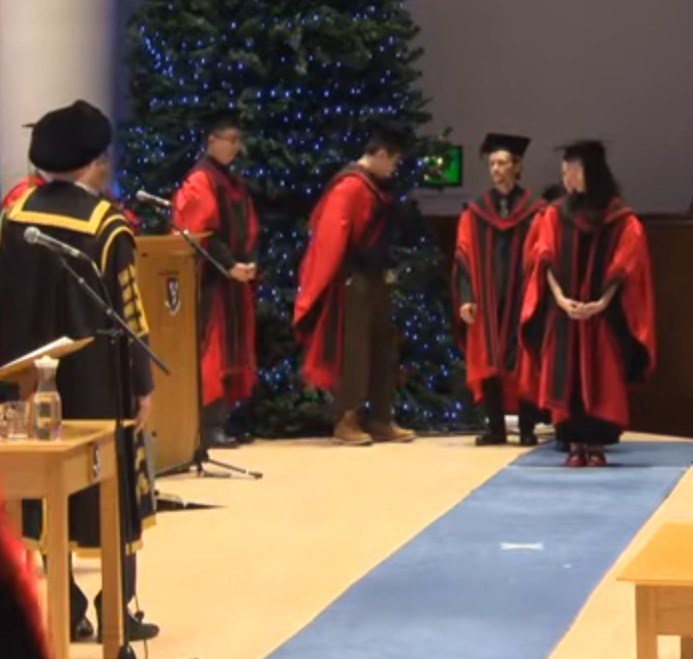
Decorative image of a graduation ceremonyThe final PhD student for whom I will act as lead supervisor is scheduled to finish this month.  I have graduated forty PhD students since I was appointed a lecturer in 1985.  I am still in touch with many of them – they are divided between industry and universities with a bias towards industry (about 60%).  For the first twenty years, I was a sole academic supervisor often with an industrial supervisor providing support.  Then I moved to the US where a PhD committee provides supervisory guidance to the student and supervisor.  By the time I returned to the UK, about fifteen years ago, it had become accepted practice to appoint a second supervisor for each PhD student.  So, although I decided a couple of years ago not to accept any new PhD students as lead supervisor, I am acting as second supervisor for five students.  This is a great role since you have less responsibility, but you are engaged with the exciting research.  The topics vary from understanding the nanoscale mechanics of particles interacting with cells (see, for example, ‘Label-free real-time tracking of individual bacterium‘ on January 25, 2023 through to ‘Structural damage assessment using infrared detectors in fusion environments‘ on March 15, 2023), and just starting this year, innovative methods for communicating confidence in computational models.  Although the research is exciting, at a training session for supervisors during the CDT Winter School that I attended in January (see ‘Experiencing success vicariously‘ on January 7, 2026), we discussed our roles as supervisors and in particular that the research project is not the principal outcome of the PhD.  Instead, the development of the PhD student is the principal outcome.  It’s all about nurturing and mentoring people and the reward is experiencing their success vicariously.

Image: still from a video of a graduation ceremony at the University of Liverpool on December 9, 2025.  As Dean of the School of Engineering, I am at the lectern presenting PhD graduates, but I am hidden behind the Vice-Chancellor who has his back to the camera on the extreme left of the image.  You can watch the video at https://www.liverpool.ac.uk/graduation/the-ceremony/watch-graduation/catch-up/school-of-engineering/9-december-2025-10am/ .

Going around in circles

I spent a day last month marking essays that were part of the assessment for a postgraduate module I have been teaching about engineering leadership. I use Boyatzis’s theory of self-directed learning to talk about how students can develop their leadership competences. Then, we ask the students to reflect on the leadership and ethical issues associated with one or two incidents they had experienced or observed vicariously. Most of the time we teach engineering students to make rational technical decisions based on data; so, they find it difficult to reflect on their feelings and emotions when faced with ethical and leadership dilemmas. We show them Gibbs’s cycle for reflective thinking and encourage them to use it to structure their thoughts and as a framework for their essay.  There are obvious and natural similarities between the theories of Boyatzis and Gibbs.  Of course, some students use them and some don’t. However, so far, this is an assignment for which they cannot use an essay mill or a large language model, because we ask them to write about their personal experiences and feelings; and LLMs do not understand anything, let alone feelings.

Goleman D, Boyatzis R & McKee A, The new leaders: transforming the art of leadership into the science of results, London: Sphere, 2002, p.139.

I have written previously on teaching leadership, see for example ‘Inspirational Leadership‘ on March 22nd 2017, ‘Leadership is like shepherding‘ on May 10th 2017, ‘Clueless on leadership style’ on June 14th 2017.

Storm in a computer

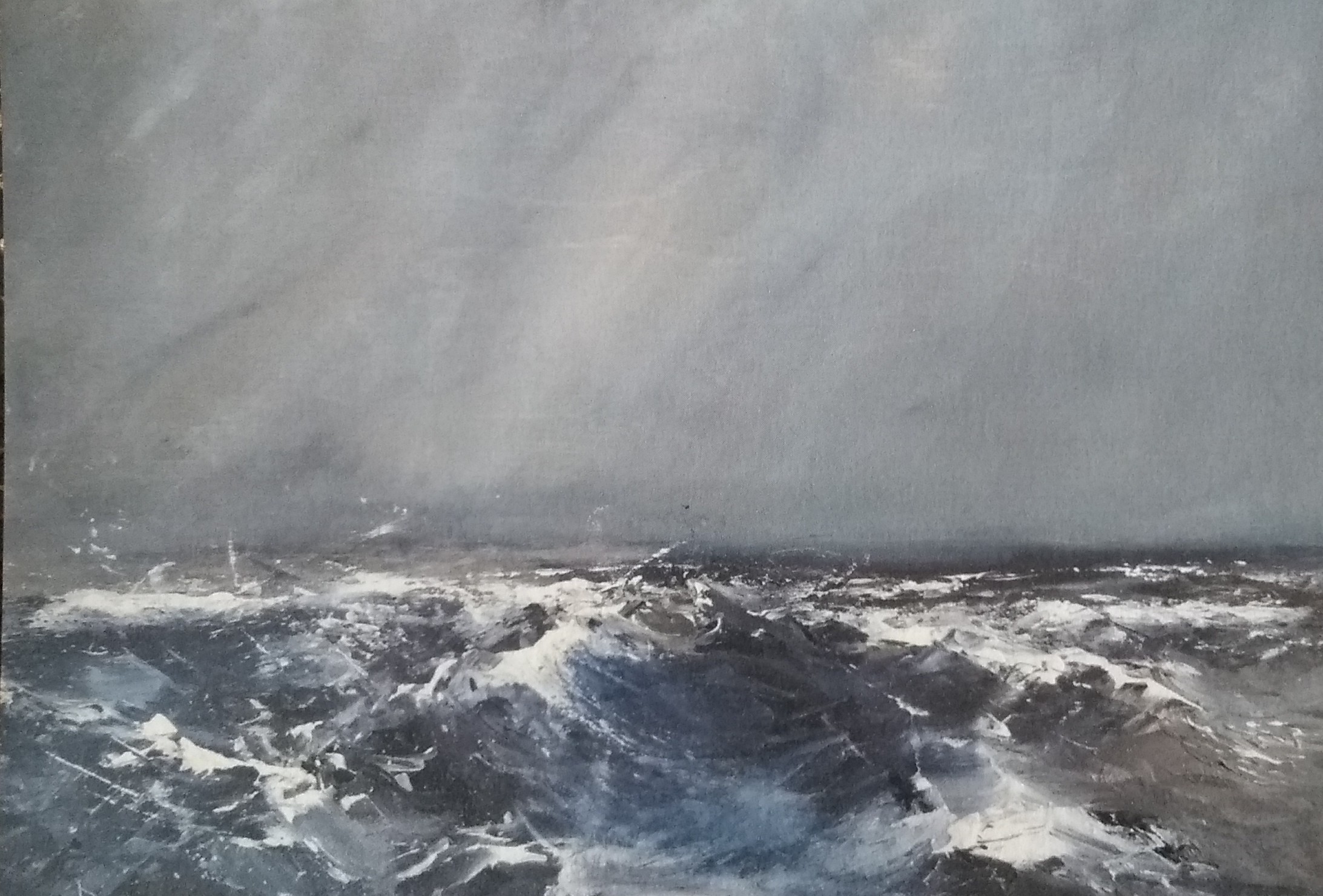
Decorative painting of a stormy seascapeAs part of my undergraduate course on thermodynamics [see ‘Change in focus’ on October 5th, 2022) and in my MOOC on Thermodynamics in Everyday Life [See ‘Engaging learners on-line‘ on May 25th, 2016], I used to ask students to read Chapter 1 ‘The Storm in the Computer’ from Philosophy and Simulation: The Emergence of Synthetic Reason by Manuel Delanda.  It is a mind-stretching read and I recommended that students read it at least twice in order to appreciate its messages.  To support their learning, I provided them with a précis of the chapter that is reproduced below in a slightly modified form.

At the start of the chapter, the simplest emergent properties, such as the temperature and pressure of a body of water in a container, are discussed [see ‘Emergent properties’ on September 16th, 2015].  These properties are described as emergent because they are not the property of a single component of the system, that is individual water molecules but are features of the system as a whole.  They arise from an objective averaging process for the billions of molecules of water in the container.  The discussion is extended to two bodies of water, one hot and one cold brought into contact within one another.  An average temperature will emerge with a redistribution of molecules to create a less ordered state.  The spontaneous flow of energy, as temperature differences cancel themselves, is identified as an important driver or capability, especially when the hot body is continually refreshed by a fire, for instance.  Engineers harness energy gradients or differences and the resultant energy flow to do useful work, for instance in turbines.

However, Delanda does not deviate to discuss how engineers exploit energy gradients.  Instead he identifies the spontaneous flow of molecules, as they self-organise across an energy gradient, as the driver of circulatory flows in the oceans and atmosphere, known as convection cells.  Five to eight convections cells can merge in the atmosphere to form a thunderstorm.  In thunderstorms, when the rising water vapour becomes rain, the phase transition from vapour to liquid releases latent heat or energy that helps sustain the storm system.  At the same time, gradients in electrical charge between the upper and lower sections of the storm generate lightening.

Delanda highlights that emergent properties can be established by elucidating the mechanisms that produce them at one scale and these emergent properties can become the components of a phenomenon at a much larger scale.  This allows scientists and engineers to construct models that take for granted the existence of emergent properties at one scale to explain behaviour at another, which is called ‘mechanism-independence’.  For example, it is unnecessary to model molecular movement to predict heat transfer.  These ideas allow simulations to replicate behaviour at the system level without the need for high-fidelity representations at all scales.  The art of modelling is the ability to decide what changes do, and what changes do not, make a difference, i.e., what to include and exclude.

Source:

Manuel Delanda Philosophy and Simulation: The Emergence of Synthetic Reason, Continuum, London, 2011.

Image: Painting by Sarah Evans owned by the author.

Celebrating engineering success

Today is National Engineering Day [see ‘My Engineering Day’ on November 4th, 2021] whose purpose is to highlight to society how engineers improve lives.  I would like to celebrate the success of two engineers who are amongst the seventy-two engineers elected to the fellowship of the Royal Academy of Engineering this year.  Chris Waldon is leading the design and delivery of a prototype fusion energy plant, targeting 2040, and a path to the commercial viability of fusion.  This is a hugely ambitious undertaking that has the potential to transform our energy supply.  He is the first chief engineer to move the delivery date to within twenty years rather than pushing it further into the future.  My other featured engineer is Elena Rodriguez-Falcon, a leading advocate of innovations in engineering education that focus on encouraging enterprising and socially-conscious approaches to designing and delivering engineering solutions.  These are important developments because we urgently need a more holistic, sustainable and liberal engineering education that produces engineers equipped to tackle the complex challenges facing society.  Of course I am biased having worked and published with both of them.  However, I am not alone in my regard for them and will be joining other Fellows of the Royal Academy of Engineering at a dinner in London next week to celebrate their achievements.