Tag Archives: creativity

WOW projects, TED talks, Cosmicomics and indirect reciprocity

33 finsbury squareWOW projects, TED talks, Cosmicomics and indirect reciprocity.  What do they have in common?  Well, each of them features in a new and rather different education programme that we are launching next month on the University of Liverpool’s campus at 33 Finsbury Square, London.  We are targetting mid-career engineers and scientists, working in research and development organisations, who want to develop their skills and advance their careers. I write ‘we’ because it is a joint effort by the School of Engineering at the University and the UK’s National Nuclear Laboratory.  It has been something of an adventure for me putting the modules together and we hope they will form a voyage of discovery and adventure for our delegates.

In case you are wondering about WOW projects, TED talks, Cosmicomics and indirect reciprocity – they will feature in modules on Science Leadership & Ethics, Technical Communication, Technical Writing, and Technical Reputation respectively.  These four five-credit modules plus a work-based project form the programme that leads to a Post-graduate Award.  Each module involves a day on campus in London supported by reading and assignments before and afterwards; and we are running a module per month between now and Christmas.

If you’re curious to find out more then visit our website or watch our Youtube video.

Ideas from a balanced mind

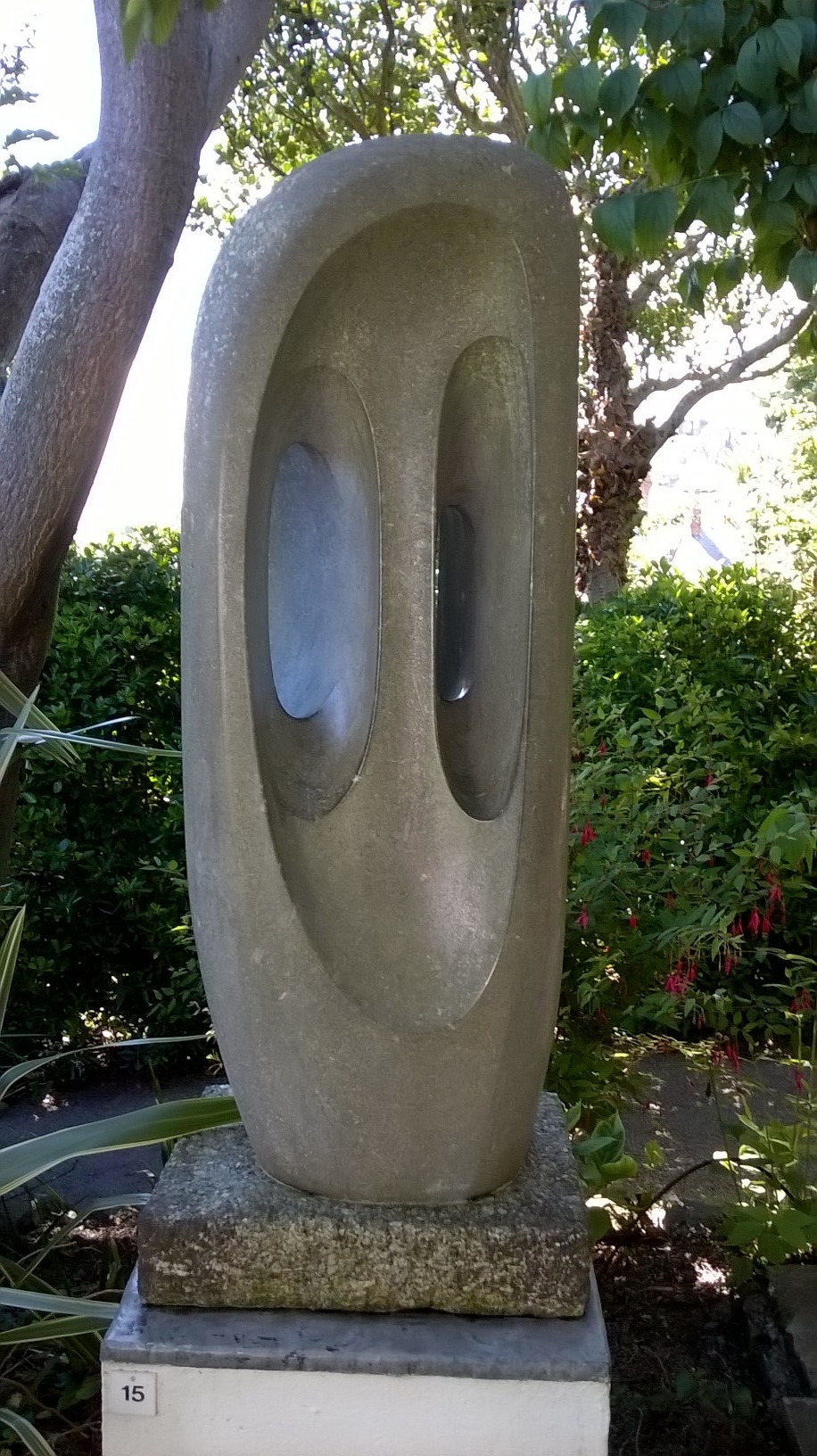
WP_20160714_014I have written about the virtues of mind-wandering on a number of occasions.  A recent article in the Harvard Gazette has stressed the importance of distinguishing between intentional and unintentional mind-wandering.  Unintentional mind-wandering or loss of concentration happens more frequently than we perhaps would like to admit. Some research has shown that office-workers are distracted every three minutes and that it takes about 20 minutes to achieve a high level of engagement in a task.  Obviously, I am not advocating unintentional mind-wandering but the intentional kind that occurs when we achieve the ‘Steadiness and placidity‘ that Michael Faraday found so productive [see my post on July 13th, 2016].  Perhaps this is important to our creativity because, to quote Barbara Hepworth, ‘Ideas are born through a perfect balance of our conscious and unconscious life and they are realized through this same fusion and equilibrium.’  And, creativity contributes to workplace success, healthy psychological functioning and the maintenance of loving relationships according to Oppezzo and Schwartz [see my post: ‘Love an engineer‘ on September 24th, 2014].

Sources:

Reuell, P., Minding the details of mind wandering, Harvard Gazette, July 20th, 2016 online at http://news.harvard.edu/gazette/story/2016/07/intentional-mind-wandering/

Hepworth, B., ‘Sculpture’, in Circle: International Survey of Constructive Art, JL Martin, B Nicholson & N Gabo (editors), London 1937 reproduced in Bowness, S., (editor), ‘Barbara Hepworth – Writing and Conversations’ London: Tate Publishing, 2015.

Oppezo, M., & Schwartz, D.L., 2014, ‘Give your ideas some legs: the positive effect of walking on creative thinking’, J. Experimental Psychology, Learning, Memory & Cognition, 40(3):1142-1152.

Image: photograph taken in the Barbara Hepworth Musuem and Garden in St Ives.

The very nature of art is affirmative

zennor headWP_20160714_009I have been away on vacation, disconnected from all sources of electronic communication and trying  not to think about engineering.  Hence, I don’t have much to write about except to enthuse about magnificent coastal walks in Devon and Cornwall that provided opportunities to achieve the kind of mental detachment described in last week’s post.  In St Ives, the beauty and tranquillity of the Barbara Hepworth Museum and Sculpture Garden impressed us so much that we went back for a second visit.  The title of this post is taken from a 1970 quote from Barbara Hepworth that was reproduced on the museum wall and reflects my reaction to her sculptures in their garden setting:  ‘I think the very nature of art is affirmative, and in being so it reflects the laws and evolution of the universe’.


Steadiness and placidity

Picture5Writing a weekly blog must be a little like being a newspaper columnist except that I am not part of team of writers and so there is no one to stand in for me when I go away.  Instead I have to get a few weeks ahead before I go away. So I will be on vacation when you read this post and I hope that I will have achieved a certain level of ‘steadiness and placidity’ to quote Michael Faraday.  Faraday used to escape to Hastings, on the south coast of England, for breaks away from the hustle and bustle of London.  He would take walks [see my post on August 26th, 2015 entitled ‘Take a walk on the wild side‘] and spend time on the seashore [see my post on May 4th, 2016 entitled ‘Horizon Therapy‘] to achieve ‘a kind of mental detachment, an ability to separate himself from things as they are and accept the given – certainties and uncertainties’ [from his biography by James Hamilton], which he described as ‘steadiness and placidity’.

Source:

Hamilton, J., A life of discovery: Michael Faraday, giant of the scientific revolution. New York: Random House, 2002.