Tag Archives: creativity

Innovation out of chaos

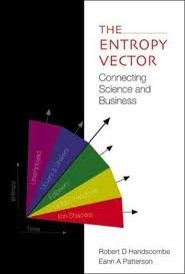
Picture1‘We are managing in chaos…our competition never knows what we are going to come up with next.  The fact is neither do we.’  This a quote from the 1996 UK Innovation Lecture given by William Coyne who was VP for Research at 3M at the time.  I used it a couple of months ago at a technical conference, where I was invited to be a panel member for discussion on innovation.  This state of chaos from which innovation arises is characteristic of ‘organic’ organizations that lack formal job definitions, encourage lateral interactions and greater responsibility for individuals.  Conversely, innovation is stifled in ‘mechanistic’ organizations that are characterized by specialisms, powerful functional roles, vertical management interactions, a command hierarchy and a complex organizational chart.

So, I suggested that innovation can be stimulated by removing or loosening organizational and intellectual constraints.  The latter means allowing people to think differently and not hiring people who look or think like you.  Of course, this is not easy – it requires a subtle balance of sustainable orderliness! However, as a member of the audience remarked ‘innovative organizations have fun!’.  And maybe this gets to the heart of the issue, too much order leads to boring predictability while too much disorder is scary but the right level of disorder or entropy is exciting and stimulates creativity.

Source:

Handscombe RD & Patterson EA, The Entropy Vector: Connecting Science and Business, Singapore: World Scientific Publishing, 2004.

entropy_vector

Entropy in poetry

WIN_20140716_190901 (2)Few weeks ago I mentioned about reading undergraduate dissertations [see my post entitled ‘A Startling Result‘ on May 18th, 2016] and about a year ago I wrote about the low quality of prose produced by engineers [see my post entitled ‘Reader, Reader, Reader‘ on April 15th, 2015 ].  Coleridge described prose as words in the best order and poetry as the best words in the best order. So today I’d like to direct you to a poem entitled ‘Entropy‘ by Neil Rollinson from his anthology ‘Spanish Fly’.  Here are a few lines from it:

“I open the window, the sky is dark
and the house is also cooling, the garden,
the summer lawn, all of it finding an equilibrium.”

I came across it while reading an anthology called ‘A Quark for Mister Mark: 101 Poems about Science‘ edited by Maurice Riordan and Jon Turney.  I was dipping into it while enjoying a pint in our backyard after a personal battle with entropy: painting rusting railings in our yard.

I was reviewing ‘A Quark for Mister Mark’ as potential reading material for a module on Technical Writing as part of our new CPD programme on Advanced Technical Skills.

Super channel system

polina bayvelPerhaps we can be characterized by whether or not we believe we have an acceptable speed of internet access.  At home and work, I’m in the category that’s never satisfied by the speed provided.  Well, now there is a completely new standard: 1.125 Tb/s.  That’s 50,000 times faster than anything commercially available at the moment.  You could download a boxed set of the entire Games of Thrones saga in a second; at least that’s how Professor Polina Bayvel described her latest research in a recent conference that I attended at the Royal Society.  Professor Bayvel is head of the Optical Networks Group at University College London.  I think the UK government should abandon attempting to extend the current internet technology to everyone in the country and instead leap-frog the rest of the world by working on rolling out Prof Bayvel’s new technology.

Sources:

Maher R, Xu T, Galdino L, Sato M, Alvarado A, Shi K, Savory SJ, Thomsen BC, Killey RI & Bayvel P, Spectrally shaped DP-16QAM super-channel transmission with multi-channel digital back propagation, Scientific Reports, 5:8214, 2015.

A liberal engineering education

115-1547_IMGFredrik Sjoberg points out how the lives of Darwin and Linnaeus have become models for generations of natural scientists.  Youthful travels followed by years of patient, narrowly focussed research and finally the revolutionary ideas and great books.  Very many scientists have followed the first two steps but missed out on the last one, leaving them trapped in ‘the tunnel vision of specialised research’.  As our society and its accompanying technology has become more complex, more and more tunnels or silos of specialised knowledge and research have been created.  This has led specialists to focus on solving issues that they understand best and communicating little or not at all with others in related fields.  At the same time, our society and technologies are becoming more interconnected, making it more appropriate to cross the cultural divides between specialisms.

One of the pleasures of teaching my current MOOC is the diversity of learners in terms of gender, geography and educational background who are willing to cross the cultural divides.  We have people following the MOOC in places as diverse as Iceland, Mexico, Nigeria and Syria.  We have coffee bean growers, retired humanities academics, physical chemists and social historians.  In most of the western world, engineering is taught to male-dominated classes and this has remained a stubborn constant despite strenous efforts to bring about change.  So it is a pleasure to interact with such a diverse cohort of people seeking to liberate their minds from habit and convention.

The original meaning of the term ‘liberal studies’ was studies that liberated students’ minds from habit and convention.  Recently, Vinod Khosla has suggested that we should focus on teaching our students ‘liberal sciences’.     This seems to connect with the ’emotive traits’ that David Brooks has proposed will be required for success in the future, when machines can do most of what humans do now (see my post entitled ‘Smart Machines‘ on February 26th, 2014).  These emotive traits are a voracious lust of understanding, an enthusiasm for work, the ability to grasp the gist and an empathetic sensitivity for what will attract attention.   We don’t teach much of any of these in traditional engineering degrees which is perhaps why we can’t recruit a more diverse student population.  We need to incorporate them into our degree programmes, reduce much of the esoteric brain-twisting analysis and encourage our students to grapple with concepts and their broader implications.  This would become a liberal engineering education.

Sources:

Fredrik Sjoberg, The Fly Trap, Penguin Books, 2015

Asish Ghosh, Dynamic Systems for Everyone: Understanding How Our World Works, Springer, 2015

Vinod Khosla, Is majoring in liberal arts a mistake for students? Medium, February 10th, 2016

David Brooks, What machines can’t do, New York Times, February 3rd, 2014