The Earth is only about 20 years old

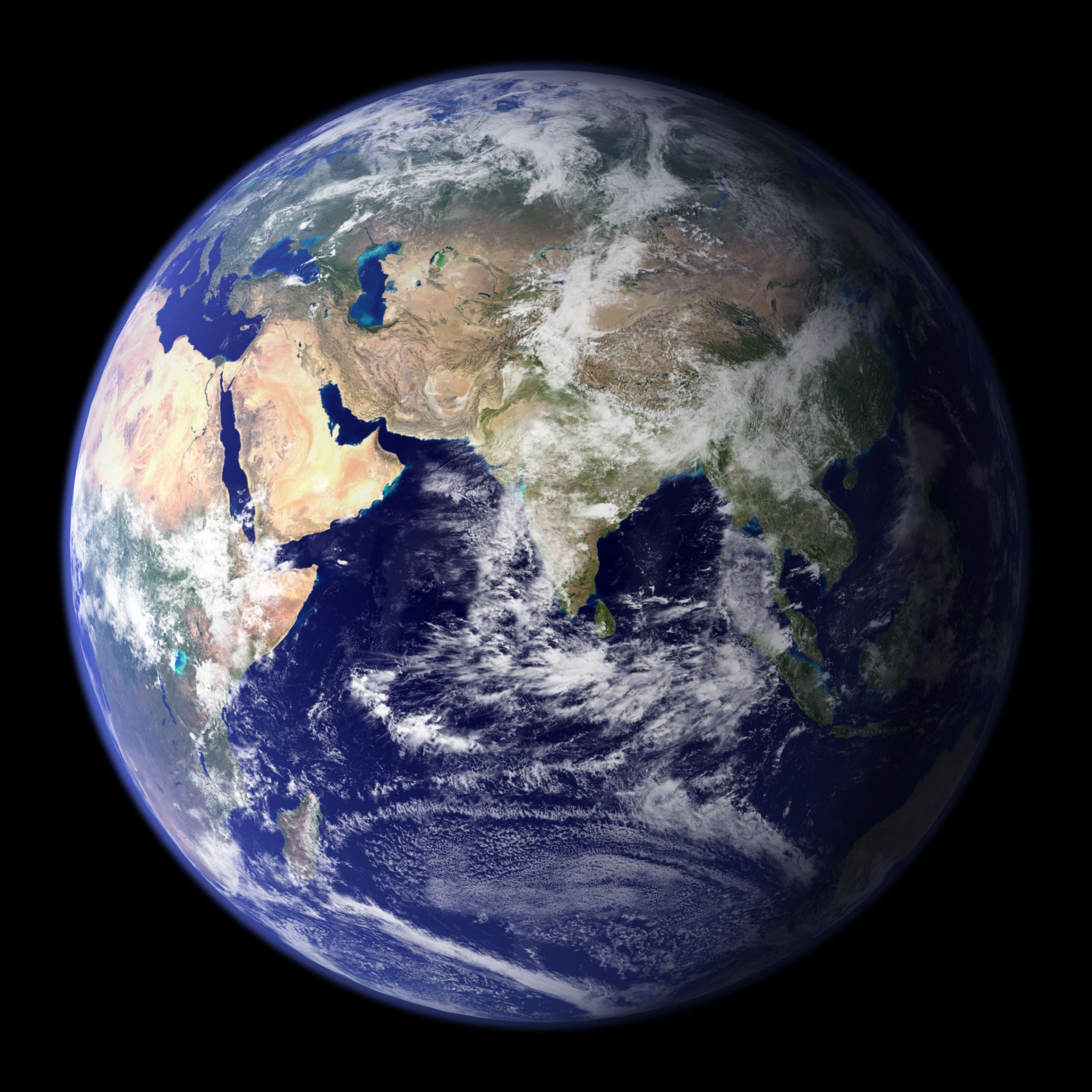
Recently I have been writing a research proposal with two collaborators who live in two different time zones which has made arranging on-line meetings challenging.  There was a brief period last month when the USA had shifted to summer time or daylight saving time a couple of weeks ahead of the UK which made life even more complicated.  Our time zones are based on the sun crossing the local meridian at noon, or in summer moving an hour of daylight from the morning to the evening (a meridian is a great circle joining the celestial poles).  Actually, our whole time system is heliocentric with one day being the period of time between instants when the sun passes over the local meridian and an Earth year being the period of orbit of the Earth around the sun.  A galactic year is the time period the sun takes to orbit the black hole at the centre of our galaxy, the Milky Way, which is 230 million Earth years.  On this basis, the Earth is only about 20 years old, that’s galactic years and based on current estimates of the age of the Earth as 4.5 billion Earth years. In Swahili culture, time has two dimensions, Sasa and Zamini.  Zamini might be measured in galactic years because it refers to the far and immeasurable past whereas Sasa describes the present and recent past.  Sasa is about the period that people can remember so when someone dies they remain in Sasa until the last person who can remember them also dies and then they move to Zamini.  Just as the Western concept of time is experienced differently by individuals [see ‘We inhabit time as fish live in water‘ on July 24th, 2019 and ‘Slowing down to think (about strain energy)‘ on March 8th, 2017], so are Sasa and Zamini since in my perception my paternal grandmother is in Sasa time but for my children, who never met her, she is in Zamini time.

Sources:

Thomas Halliday, Otherlands: A world in the making, London: Allen Lane, 2022.

Enuma Okoro, Ways of seeing, ways of knowing, FT Weekend, Saturday 11 March/Sunday 12 March 2023.

Mind-wandering on the hills

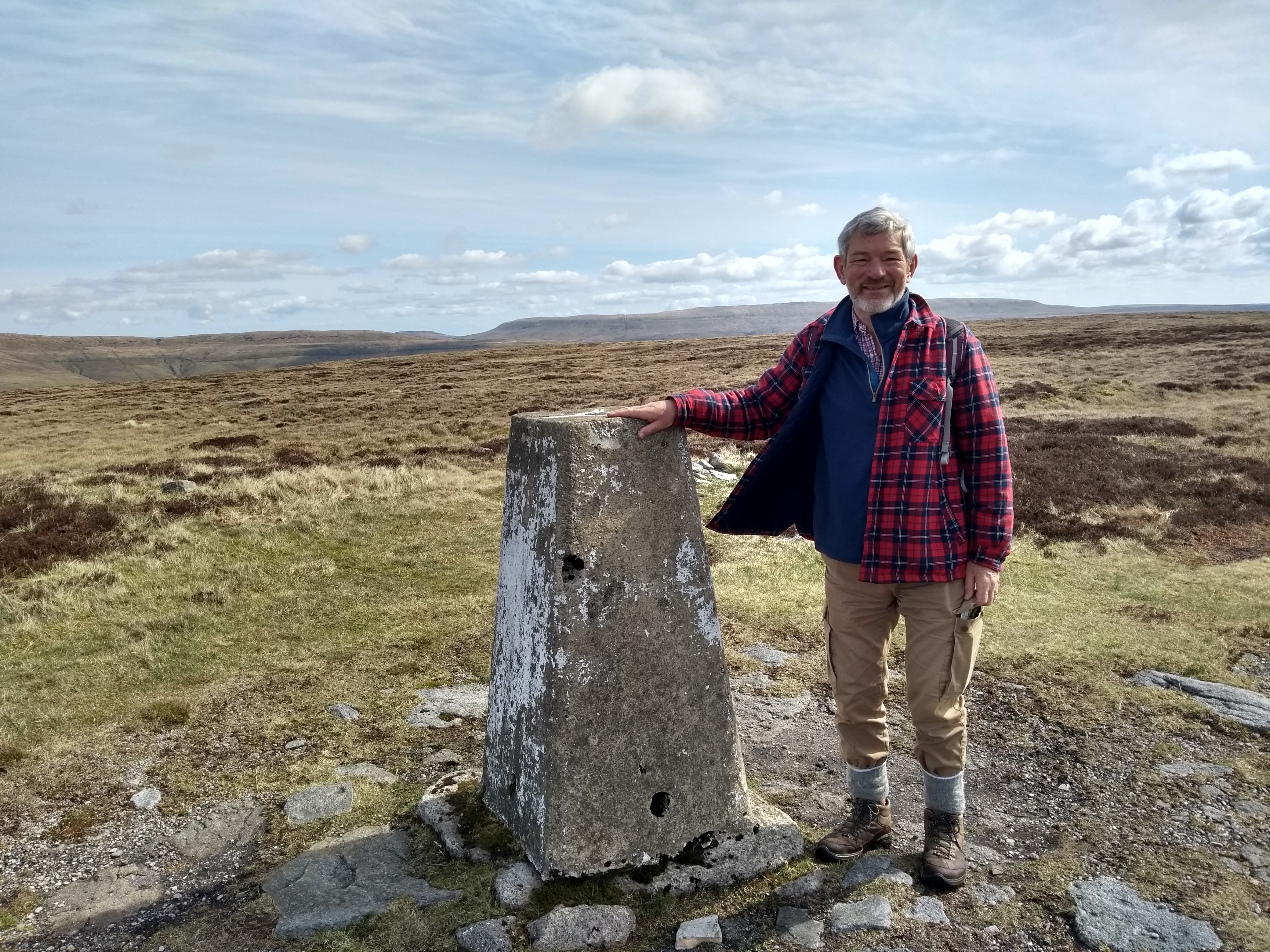
It is the Easter vacation for our undergraduate students and I am taking a week’s leave to wander the hills, digitally detox and return with my consciousness revived by sensory experiences.  So just two sentences and a picture this week though if you want to read more then follow these links: ‘Walking the hills‘ on April 13th, 2022; ‘Digital detox with a deep vacation‘ on August 10th, 2016; and ‘Feed your consciousness with sensory experiences‘ on May 22nd, 2019.The author stood next to a trig point on top of hill

Reliable predictions of non-Newtonian flows of sludge

Regular readers of this blog will be aware that I have been working for many years on validation processes for computational models of structures employed in a wide range of sectors, including aerospace engineering [see ‘The blind leading the blind’ on May 27th, 2020] and nuclear energy [see ‘Million to one’ on November 21st, 2018].  Validation is determining the extent to which predictions from a model are representative of behaviour in the real-world [see ‘Model validation’ on September 18th, 2012].  More recently, I have been working on model credibility, which is the willingness of people, besides the modeller, to use the predictions from models in decision-making [see, for example, ‘Credible predictions for regulatory decision-making’ on December 9th, 2020].  I have started to consider the complex world of predictive modelling of fluid flow and I am hoping to start a collaboration with a new colleague on the flow of sludges.  Sludges are more common than you might think but we are interested in modelling the flow of waste, both wastewater (sewage) and nuclear wastes.  We have a PhD studentship available sponsored jointly by the GREEN CDT and the National Nuclear Laboratory.  The project is interdisciplinary in two dimensions because it will combine experiments and simulations as well as uniting ideas from solid mechanics and fluid mechanics.  The integration of concepts and technologies across these boundaries brings a level of adventure to the project which will be countered by building on well-established research in solid mechanics on quantitative comparisons of measurements and predictions and by employing current numerical and experimental work on wastewater sludges.  If you are interested or know someone who might want to join our research then you can find out more here.

Image: Sewage sludge disposal in Germany: Andrea Roskosch / UBA

A view from the middle

Red tulips in a window boxI was schooled to compete in the classroom, in examinations and on the sports field in preparation for life in, what Mary Midgley described as, the ‘intense competitiveness of the Western world’.  Many of us are obsessed with winning, believing that life is not worth living unless we are at the top of the hierarchy.  As result, we strive for the top where there are only a limited number of places so most people remain in the middle or bottom no matter how hard they strive.  If they are led to believe that they are despised for their position in the hierarchy then they will be miserable and make those around them, both above and below, miserable too.  It took me some time to realise that happiness was not the exclusive property of those at the top of the hierarchy but can be found anywhere through supporting and valuing others.  As a young naval officer, I was trained to look after those under my command and to gain their respect.  I hope that as a leader in academia I have learned to blend the competitive and compassionate elements of the training I received as a young man to create happy and successful communities in which individuals can thrive.  It is ongoing challenge that requires constant vigilance [see ‘Leadership is like shepherding‘ on May 10th, 2017].

Sources:

Mary Midgley, Beast and Man – the roots of human nature. Abingdon, Oxon. Routledge Classics, 2002.