Category Archives: energy science

Conversations about engineering over dinner and a haircut

For decorative purposes: colour contour map of a face mask produced using fringe projectionRecently, over dinner, someone I had just met asked me what type of engineering I do. I always find this a difficult question to answer because I am sure that they are just being polite and do not want to hear any technical details but I find it hard to give an interesting answer without diving into details. Earlier the same day I had given a lecture on thermodynamics to about 300 undergraduate students so I told my inquisitor about this experience and explained that thermodynamics was the science of energy and its transformation into different forms. Then, I muttered something about being interested in making and using measurements to ensure that computational models of aircraft and nuclear power stations are reliable and the conversation quickly moved on. A week or so earlier, I was having my hair cut when the barber asked me a similar question about what I did and I told him that I was a professor of engineering which led to a conversation about robots. We speculated about whether we would ever lose our jobs to robots and decided that we were both fairly secure against that threat. There is a high degree of creativity in both of our roles – while I always ask for the same haircut, my hair is in a different state every time I visit the barbers’ and I leave looking slightly different every time. I don’t think that I would like the uniformity that a row of robots in the barbers’ shop might produce. And, then there is the conversation during the haircut. A robot would need to pass the Turing test, i.e., to exhibit intelligent behaviour indistinguishable from a human, which no computer has yet achieved or is likely to do so in our lifetime, at least not a cost that would allow them to replace barbers. The same holds for professors – the shift to delivering lectures online during the pandemic might have made some professors worry that their jobs were at risk as recorded lectures replaced live performances; however, student feedback tells us that students have a strong preference for on-campus teaching and the high turnout for my thermodynamics lectures supports that conclusion.

Footnotes:

For a new website I was asked to describe my research interests in about 25 words and used the following: ‘the acquisition of information-rich measurement data and its use to develop digital representations of complex systems in the aerospace, biological and energy sectors’.  Fine for a website but not dinner conversation! 

There have been some attempts to build a robot that cut your hair, for example see this video

Image shows a colour contour map describing the shape of a facemask produced using fringe projection which could be used as part of the vision system for a robotic barber.  For more information on fringe projection see: Ortiz, M. H., & Patterson, E. A. (2005). Location and shape measurement using a portable fringe projection system. Experimental mechanics, 45(3), 197-204 or watch this video from the INDUCE project that was active from 1998 to 2001.

Everything is in flux but it’s not always been recognised

Decorative photograph or ruins of Fountains Abbey next to River SkellI am teaching thermodynamics to first year undergraduate students at the moment and in most previous years this experience has stimulated me to blog about thermodynamics [for example: ‘Isolated systems in nature?’ on February 12th, 2020].  However, this year I am more than half-way through the module and this is the first post on the topic.  Perhaps that is an impact of teaching on-line via live broadcasts rather than the performance involved in lecturing to hundreds of students in a lecture theatre.  Last week I introduced the second law of thermodynamics and explained its origins in efforts to improve the efficiency of steam engines by 19th century engineers and physicists, including Rudolf Clausius (1822 – 1888), William Thomson (1827 – 1907) and Ludwig Boltzmann (1844 – 1906).  The second law of thermodynamics states that the entropy of the universe increases during all real processes, where entropy can be described as the degree of disorder. The traditional narrative is that thermodynamics was developed by the Victorians; however, I think that the ancient Greeks had a pretty good understanding of it without calling it thermodynamics.  Heraclitus (c. 535 BCE – c. 475 BCE) understood that everything is in flux and nothing is at rest so that the world is one colossal process.  This concept comes close to the modern interpretation of the second of law of thermodynamics in which the entropy in the universe is constantly increasing leading to continuous change.  Heraclitus just did not state the direction of flux.  Unfortunately, Plato (c. 429 BCE – c. 347 BCE) did not agree with Heraclitus, but thought that some divine intervention had imposed order on pre-existing chaos to create an ordered universe, which precludes a constant flux and probably set back Western thought for a couple of millennia.  However, it seems likely that in the 17th century, Newton (1643 – 1727) and Leibniz (1646 – 1716), when they independently invented calculus, had more than an inkling about everything being in flux.  In the 18th century, the pioneering geologist James Hutton (1726 – 1797), while examining the tilted layers of the cliff at Siccar Point in Berwickshire, realised that the Earth was not simply created but instead is in a state of constant flux.  His ideas were spurned at the time and he was accused of atheism.  Boltzmann also had to vigorously defend his ideas to such an extent that his mental health deteriorated and he committed suicide while on vacation with his wife and daughter.  Today, it is widely accepted that the second law of thermodynamics governs all natural and synthetic processes, and many people have heard of entropy [see ‘Entropy on the brain’ on November 29th, 2017] but far fewer understand it [see ‘Two cultures’ on March 5th, 2013].  It is perhaps still controversial to talk about the theoretical long-term consequence of the second law, which is cosmic heat death corresponding to an equilibrium state of maximum entropy and uniform temperature across the universe such that nothing happens and life cannot exist [see ‘Will it all be over soon?’ on November 2nd, 2016].  This concept caused problems to 19th century thinkers, particular James Clerk Maxwell (1831 – 1979), and even perhaps to Plato who theorised two worlds in his theory of forms, one unchanging and the other in constant change, maybe in an effort to dodge the potential implications of degeneration of the universe into chaos.

Image: decaying ruins of Fountains Abbey beside the River Skell.  Heraclitus is reported to have said ‘no man ever steps twice into the same river; for it’s not the same river and he’s not the same man’.

Democratizing education

One motivation for developing Massive Open Online Courses (MOOC) has been to democratize education by giving everyone access to knowledge often presented by leading professors.  It was certainly one reason why I developed and delivered two MOOCs on ‘Energy: Thermodynamics in Everyday Life‘ in 2015/16 and ‘Understanding Super Structures’ in 2017.  The workload involved in supporting thousands of learners around the global is not insignificant and was unsustainable for me so I gave up after running them for a couple of years despite the intangible rewards [see ‘Knowledge spheres‘ on March 9th, 2016 and ‘A liberal engineering education‘ on March 2nd, 2016] . However, I incorporated the MOOC on energy into my undergraduate module on thermodynamics to create a blended approach to learning [see ‘Blended learning environments‘ on November 14th, 2018].  This paid dividends for me when the pandemic forced our campus into lock-down in the middle of semester last March and I already had a large number of bite-sized activities available online for our students.  Most universities have had to move their teaching online due to the pandemic; but not all students are able to access the online materials as easily others.  The Booker shortlisted novelist, Tsitsi Dangarembga has reported how one of her neighbours has struggled to access resources recommended to him by lecturers at his college in Bulawayo due to the cost and unreliability of Wi-Fi in Zimbabwe.  She tried to help him by registering him for her hotspot package but, in common with many students, he studies mainly at night when hotspot venues are closed.  The maps shows the global distribution of learners in one of the Energy MOOCs that I delivered and you can see the holes in Africa and South America which, at the time, we thought might be due to a lack of computer and internet access and Dangarembga’s account seems to support this hypothesis.  So, we designed our second MOOC on Structures to be accessible via a mobile phone by using fewer videos and more audio clips that could be quickly downloaded and listened to offline.  Unfortunately, we ran out of resources to complete the research on whether it was accessed more successfully in those grey areas on the map; however, the audio recordings were unpopular with the more traditional audience in the USA and UK who gave us immediate and vocal feedback!

Source:

Tsitsi Dangarembga, Protest and prizes, FT Weekend, 26/27 September 2020.

Patterson EA, Using everyday engineering examples to engage learners on a massive open online courseInternational Journal of Mechanical Engineering Education, p.0306419018818551


Thermodynamics labs as homework

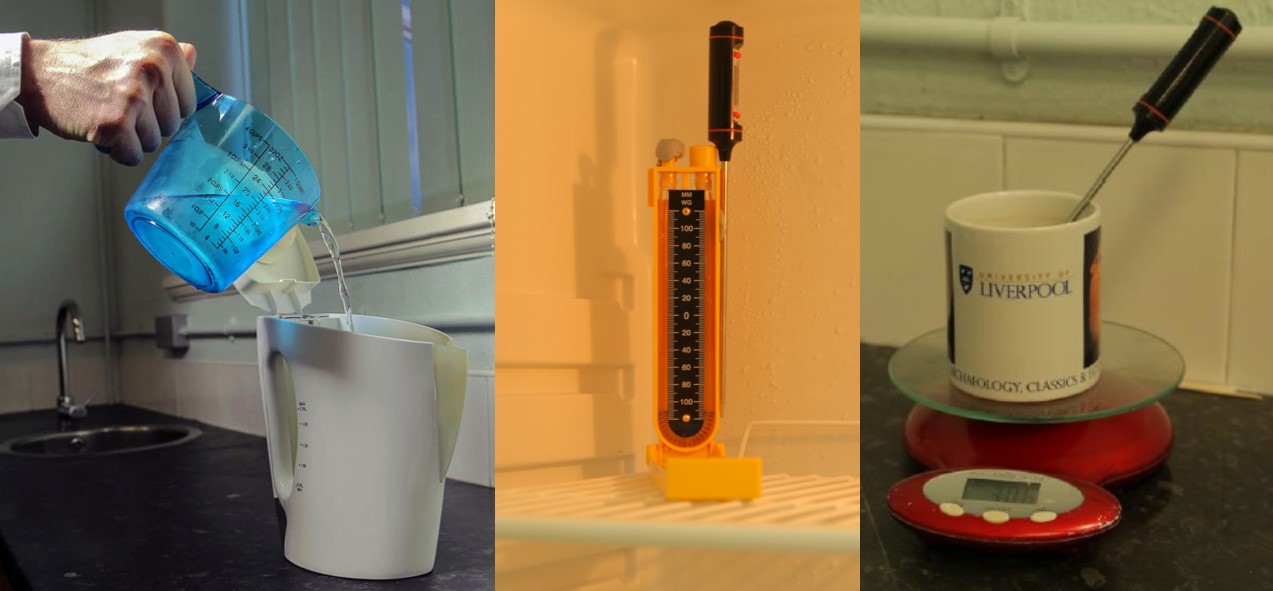
Many of my academic colleagues are thinking about modifying their undergraduate teaching for next academic year so that they are more resilient to coronavirus.  Laboratory classes present particular challenges when access and density of occupation are restricted.  However, if the purpose of laboratory classes is to allow students to experience phenomena, to enhance understanding, to develop intuition and to acquire skills in using equipment, making measurements and analysing data, then I believe this can achieved using practical exercises for homework.  I created practical exercises, that can be performed in a kitchen at home, as part of a Massive Open Online Course (MOOC) about thermodynamics [See ‘Engaging learners on-line‘ on May 25th, 2016].  I have used the same exercises as part of my first year undergraduate module on thermodynamics for the past four years with similar levels of participation to those experienced by my colleagues who run traditional laboratory classes [see ‘Laboratory classes thirty years on‘ on May 15th, 2019].  I have had a number of enquiries from colleagues in other universities about these practical exercises and so I have decided to make the instruction sheets available to all.  Please feel free to use them to support your teaching.

The versions below are from the MOOC entitled ‘Energy: Thermodynamics in Everyday Life‘ and provide information about where to obtain the small amount of equipment needed, and hence are self-contained.  Although the equipment only costs about £20, at the University of Liverpool, we lend our students a small bag of equipment containing a measuring beaker, a digital thermometer, a plug-in power meter and a plumber’s manometer.  I also use a slightly different version of these instructions sheets that provide information about ‘lab’ reports that students must submit as part of their coursework.

I reported on the initial introduction of blended learning and these practical exercises in Patterson EA, 2019, Using everyday examples to engage learners on a massive open online course, IJ Mechanical Engineering Education, 0306419018818551.

Instruction sheets for thermodynamics practical exercises as homework:

Energy balance using the first law of thermodynamics | Efficiency of a kettle

Ideal gas behaviour | Estimating the value of absolute zero

Overall heat transfer coefficient | Heat losses from a coffee cup & glass