Category Archives: Soapbox

Mining data

Random winter scene: Old Mission Point Light, MI, USA

Random winter scene:
Old Mission Point Light, MI, USA

Last week I went to a one-day conference in London on High Performance Computer and Big Data.  We were talking about computers with 96,000 processors and datasets in the exascale, which means the number of pieces of data they contain is one with eighteen noughts after it.  We were just across the street from the Houses of Parliament and David Willetts, the UK Minister of Universities and Science, addressed us and told us that ‘future scientific advances are dependent on our ability to accumulate and analyse big data’.  For the industrialists amongst us the slogan from the Director of the UK’s biggest computer was ‘to compute is to out compete’.

Suzy Moat and Tobias Preis of Warwick Business School made a great presentation about the link between online behaviour and economic decision making around the globe.  They have found that the frequency terms such as ‘debt’, ‘stocks’ and ‘portfolio’ are predictors of subsequent stock market movement.  They performed some of their research by mining data available from Google Trends – if you have never visited this bit of Google’s domain then I recommend a visit, its interesting at all sorts of levels.

Another Google data-miner is Seth Stephens-Davidowitz who has revealed that American parents want their boys to be smart and their girls skinny.  Parents are two and half times more likely to ask Google ‘Is my son gifted?’ than ‘Is my daughter gifted?’ despite the fact that in American schools girls are 11 percent more likely to be in gifted programs.  And conversely, parents are twice as likely to ask ‘Is my daughter overweight?’ than ‘Is my son overweight?’ even though roughly equal proportions of girls and boys are overweight in the USA.  In his article in the NYT, Seth concludes by asking ‘How would girls’ lives be different if parents were half as concerned about their bodies and twice as intrigued about their minds?’

Perhaps, one answer is that they would be more likely to opt for what are perceived at school as the hard subjects, i.e. mathematics and physics.  See my earlier post entitled ‘Chemical Imbalance’ on October 2nd, 2013, in which I bemoaned the low proportion of girls taking A-level Physics at school.  As professional engineers and university teachers many of us are working hard to redress the gender imbalance in engineering but now I wonder if we are have identified a new handicap, i.e. parents are undermining their daughters’ confidence to enter the ‘problem-solving’ professions.

Sources:

Seth Stephens-Davidovitz, ‘Is my son a genius?’ in the International New York Times on Monday 20th January, 2014. www.nytimes.com/2014/01/19/opinion/sunday/google-tell-me-is-my-son-a-genius.html?_r=0

Pries, T., Moat, H.S., Stanley, H.E., 2013, Quantifying trading behaviour in financial markets using Google Trends, Scientific Reports 3, 1684. www.nature.come/strep/2013/130425/srep01684/pdf/srep01684.

Setting standards

cenLast week I wrote about digital image correlation as a method for measuring surface strain and displacement fields.  The simplicity and modest cost of the equipment required combined with the quality and quantity of the results is revolutionizing the field of experimental mechanics.  It also has the potential to do the same in computational mechanics by enabling more comprehensive validation of models and thus enhancing the credibility and confidence in engineering simulations.  I have written and lectured on this topic many times, see for instance my post of September 17th, 2012 entitled ‘Model credibility’ or  http://sdj.sagepub.com/content/48/1.toc

At the moment, I am chair of a CEN workshop WS71 that is developing a precursor to a standard on validation of computational solid mechanics models.  To inform our deliberations, we have organised an Inter-Laboratory Study (ILS) to allow people to try out the proposed validation protocol and give us feedback.   If you would like to have a go then download the information pack.  You don’t need to do any experiments or modelling, just try the validation procedure with some of the data sets provided.  The more engineers that participate in the ILS then the better that the final CEN document is likely to be; so if you know someone who might be interested then forward this blog to them or just send them the link.

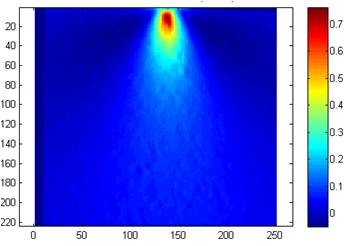
Displacement field measured using image correlation for metal wedge indenting a rubber block

Displacement field measured using digital image correlation for a metal wedge indenting a rubber block

CEN WS71: http://www.cen.eu/cen/Sectors/TechnicalCommitteesWorkshops/Workshops/Pages/WS71VANESSA.aspx

EU FP7 project VANESSA: www.engineeringvalidation.org

For information on the data field shown to the right see: http://sdj.sagepub.com/content/49/2/112.abstract

Silence is golden

118-1804_IMGThe digital age has led to us being overwhelmed with sources of information and entertainment.  It is unfashionable to suggest that it might be unproductive to take advantage of multiple data streams to interact with the virtual world, listen to your favourite music and study simultaneously.

However in 1973, Kahneman proposed that the amount of attention that an individual can deploy at any time is limited.  It is known as the ‘capacity model of attention’ and is based on the assumptions that attention can be freely allocated to activities based on their arousal level and that your total attention is finite.  The model has been used to explain research findings on the effect of background television on cognitive performance.  While recent research has demonstrated that students read and study better in silence; though if they must listen to music then certain types are better than others, for instance light classical music has a less deleterious effect than hip hop music – maybe because it has a lower arousal level.

So multi-tasking is not conducive to high quality output or efficient working.  Many people have arrived at this conclusion by the time they graduate from University or have spent a few years in a mentally demanding job.  However, it is an uphill task to convince young people that they would perform better and finish tasks faster without the distractions made readily available by the digital age.

Or that is safer not to cross the road while listening to music and texting your friends!

Sources:

For many references to the research literature see Chou, P. M-T., Attention drainage effect: how background music effects concentration in Taiwanese college students, Journal of Scholarship of Teaching & Learning, 10(1):36-46, 2010. http://josotl.indiana.edu/issue/view/158

Kahneman, D., Attention and effect, Englewood Cliffs, NJ: Prentice Hall, 1973.

Knowledge-economy

bigagSmall landholding farmers often have a wealth of local knowledge about their landscape and crop varieties that allows them to deliver food to the mouths of local customers more efficiently than industrial agriculture [see my post entitled ‘Productive Cheating on November 25th, 2013].  This has been termed ‘knowledge-based agriculture’ as opposed to the ‘energy-based agriculture’ used by agri-business with its dependence on fossil fuels and chemical fertilizers, which are also fossil fuel based.  Mark Bittman [in the New York Times on October 15th, 2013] argues it is easier to achieve sustainable food production using a knowledge-based rather than an energy-based approach.

The same is true of engineering design for sustainability.  Engineers need to exploit their creativity and knowledge to generate elegant designs with minimal ecological footprints, i.e. designs need to be knowledge-based or intensive rather than energy-intensive.

Politicians are fond of extolling the virtue of having a knowledge-based economy. I am not sure many of them would articulate it in terms of knowledge-based agriculture or engineering, as I have above, but it is probably the best available route to a sustainable society.

Happy New Year to all my readers and followers.

Source: http://www.nytimes.com/2013/10/15/opinion/how-to-feed-the-world.html?ref=markbittman&_r=0