Category Archives: Soapbox

Work, rest and play in Smallville

Decorative imageI am comfortable with the lack of certainty about us not being in a simulation [see ‘Are we in a simulation?‘ on September 28, 2022].  However, I know that some of you would prefer not to consider this possibility.  Unfortunately, recently published research has likely increased the probability that we are in a simulation because the researchers set up a simulation of a community of human-like agents called Smallville [Park et al, 2023].  The generative agents fuse large language models used in artificial intelligence with computational, interactive agents who eat, sleep, work and play just like humans and coalesce into social groups.  The simulation was created as a research tool for studying human interactions and emergent social behaviour which completely concurs with the argument for us already being part of a simulation created to study social behaviour.  Smallville only had 25 virtual inhabitants but the speed of advances in artificial intelligence and computational tools perhaps implies that a simulation of billions of agents (people) is not as far in the future as we once thought thus making it more credible that we are in a simulation.  The emergent social behaviour observed in Smallville suggests that our society is essentially a self-organising complex system that cannot be micro-managed from the centre.

Sources:

Oliver Roeder, Keeping up with the ChatGPT neighbours, FT Weekend, August 26/27 2023.

Camilla Cavendish, Charities could lead new age of community spirit, FT Weekend, August 26/27 2023.

Park JS, O’Brien JC, Cai CJ, Morris MR, Liang P, Bernstein MS. Generative agents: Interactive simulacra of human behavior. arXiv preprint arXiv:2304.03442. 2023.

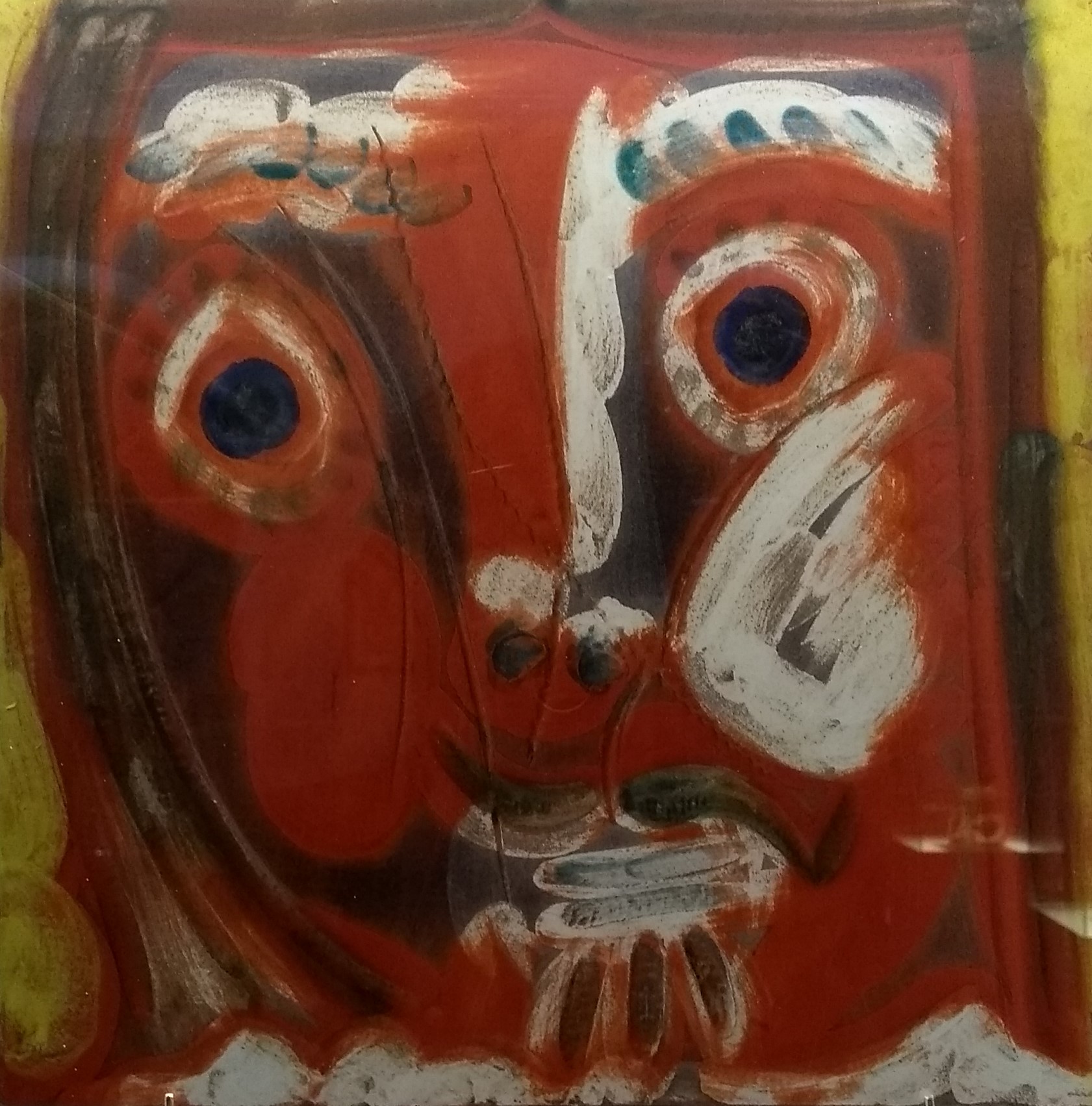
Image: Ceramic tile by Pablo Picasso in museum in Port de Sóller Railway Station, Mallorca.


Difficult or inconvenient data about electric vehicles

photograph of a MDI Airpod 2.0The embodied carbon (i.e. the greenhouse gas emissions produced by its manufacture and assembly) of a typical small (compact) battery electric vehicle (BEV) is about 14 tonnes CO2 compared to about 7 tonnes CO2 in a compact internal combustion engine vehicle (ICEV) [see brusselblog.co.uk for overview of estimates from several sources].  This is mainly a result of the embodied carbon in the batteries.  My compact ICEV does about 50 mpg and we drive about 8,000 per year so we burn 160 gallons per year and one gallon generates about 9 kg CO2; thus, the carbon emissions from my ICEV are about 1.4 tonnes CO2/year. Hence, with our driving habits, building and using a compact ICEV car for five years is equivalent, in carbon emissions (= 7 + (1.4 x 5)), to just building a small electric car.  This does not account for the carbon footprint of electricity generation for the electric car which will not be zero and be dependent on how the electricity is generated; nor is recycling of your old vehicle included.  If you already have a ICEV car then your additional emissions resulting from its continued use will take about a decade to be more than buying a new electric car though by buying an electric vehicle you will move the pollution away from where you live and work.  If you buy an electric SUV, as about 45% of new car purchasers do worldwide [see IEA data], then many more years will be required to acheive a net reduction in carbon emission because the embodied carbon in an electric SUV can be five to ten times more than a compact ICEV.  The challenge for engineers is to develop vehicles that have both zero emissions in use and also zero embodied carbon.  Meanwhile, the bottom line is to use public transport whenever possible but if you need a car then have a small one and keep an electric one for much longer than an internal combustion engine vehicle – neither helps achieve net zero.

Image: the MDI Airpod that runs on compressed air [see ‘Hot air is good for balloons but cold air is better for cars‘ on May 19th , 2021.

Reflecting on the future of RealizeEngineering

Decorative image of a flowerMy recent summer vacation [see ‘Entropy and junkies‘ on August 2nd, 2023] was a period of relaxation, recuperation and reflection.  One of my reflections was on the future of this blog.  It has become more of a commentary from an engineer than the ‘engineering commentary’ referred to in the tagline in its masthead.  Perhaps this was inevitable when I have been writing a weekly post for more than a decade, starting in January 2013 [see ‘500th post‘ on February 2nd, 2022]. There is an archive of almost six hundred posts available for you to browse, including about twenty written before I started weekly posting.  I have decided that I will aim to complete twelve years of weekly postings and then probably return to random postings in early 2025.  About five years ago, I wrote ‘Sometimes it is a joy to order my thoughts and commit some of them to writing; other times it is a chore and a challenge to dream up something vaguely interesting to tell you’ [see ‘Thinking more clearly by writing weekly‘ on May 2nd, 2018]. Recently, it has become more often a chore and less often a joy so I hope to temporarily redress the balance by creating an end-point without taking a precipitious decision to stop weekly posts now.

Clouds, bees and artificial friends

Decorative image of a bee on a flowerAnthropomorphism featured in several of the books that I read during my recent digital detox [see ‘Entropy and junkies‘ on August 2nd, 2023].  I really liked the opening section of ‘When I Sing, Mountains Dance‘ by Irene Sola which is narrated from the perspective of clouds that arrive over a landscape with painfully full ‘black bellies, burdened with cold, dark water, lightening bolts, thunderclaps.’  Her poetic prose, beautifully translated from the Catalan by Mara Faye Lethem, is wonderfully evocative and explores the complex relationship between people and the land they inhabit.  I was less impressed with a fig tree as a narrator in Elif Shafak’s novel ‘The Island of Missing Trees‘.  There was too much emphasis on facts about trees and their relationship to the fauna and flora around them which are well-described in recent non-fiction books [see, for example, ‘Tree are amongst the slowest moving being with which we share our world‘ on October 16th, 2019 and ‘The rest of the planat has been waiting patiently for us to figure it out‘ on September 21st, 2022].  However, I did enjoy the bee’s eye perspective on being trapped in a room when someone closed the window through which the bee had flown to find out what was happening inside.  At the moment, I am reading ‘Klara and the Sun‘ by Kazou Ishiguro, which is told from the perspective of Klara, an Artificial Friend or AF, and is in a similar vein to ‘Frankisstein‘ by Jeanette Winterson and ‘Machines like Me‘ by Ian McEwan [see ‘Where is AI on the hype curve?‘ on August 12th, 2020].