 A couple of weeks ago I read about Google’s new weather forecasting algorithm, GraphCast. It takes a radical new approach to forecasting by using machine learning rather than modelling the weather using the laws of physics [see ‘Storm in a computer‘ on November 16th, 2022]. GraphCast uses a graph neural network that has been trained on 39 years (1979 -2017) of historical data from the European Centre for Medium-Range Weather Forecasts (ECMWF). It requires two inputs: the current state of the weather and the state six hours ago; then it predicts the weather six hours ahead with a 0.25 degree latitude-longitude resolution (about 17 miles) at 38 vertical levels. This compares to ECMWF’s high resolution forecasts which have 0.1 degree resolution (about 7 miles), 137 levels and 1 hour timesteps. Although the training of the neural network took about four weeks on 32 Cloud TPU v4 devices (Tensor Processing Units), the forecast requires less than a minute on a single device whereas the ECMWF’s high resolution forecast requires a couple of hours on a supercomputer. Within a day or so of reading about GraphCast, we watched ‘The Day After Tomorrow’, a movie in which a superstorm suddenly plunges the entire northern hemisphere into an ice age with dramatic consequences. Part of the movie’s message is that humanity’s disregard for the state of the planet could lead to existential consequences. It occurred to me that the traditional approach to weather forecasting using the laws of physics might predict the onset of such a superstorm and avoid it becoming a black swan event; however, it is very unlikely forecasts based on machine learning would predict it because there is nothing like it in the historical record used to train the neural network. So for the moment we should continue to use the laws of physics to model and predict the weather since climate change appears to be making superstorms more likely [see ‘More violent storms‘ on March 1st 2017].
Sources:
Blum A, The weather forecast may show AI storms ahead, FT Weekend, 18/19 November 2023.
Lam R, Sanchez-Gonzalez A, Willson M, Wirnsberger P, Fortunato M, Alet F, Ravuri S, Ewalds T, Eaton-Rosen Z, Hu W, Merose A. Learning skillful medium-range global weather forecasting. Science. 10.1126/science.adi2336, 2023.
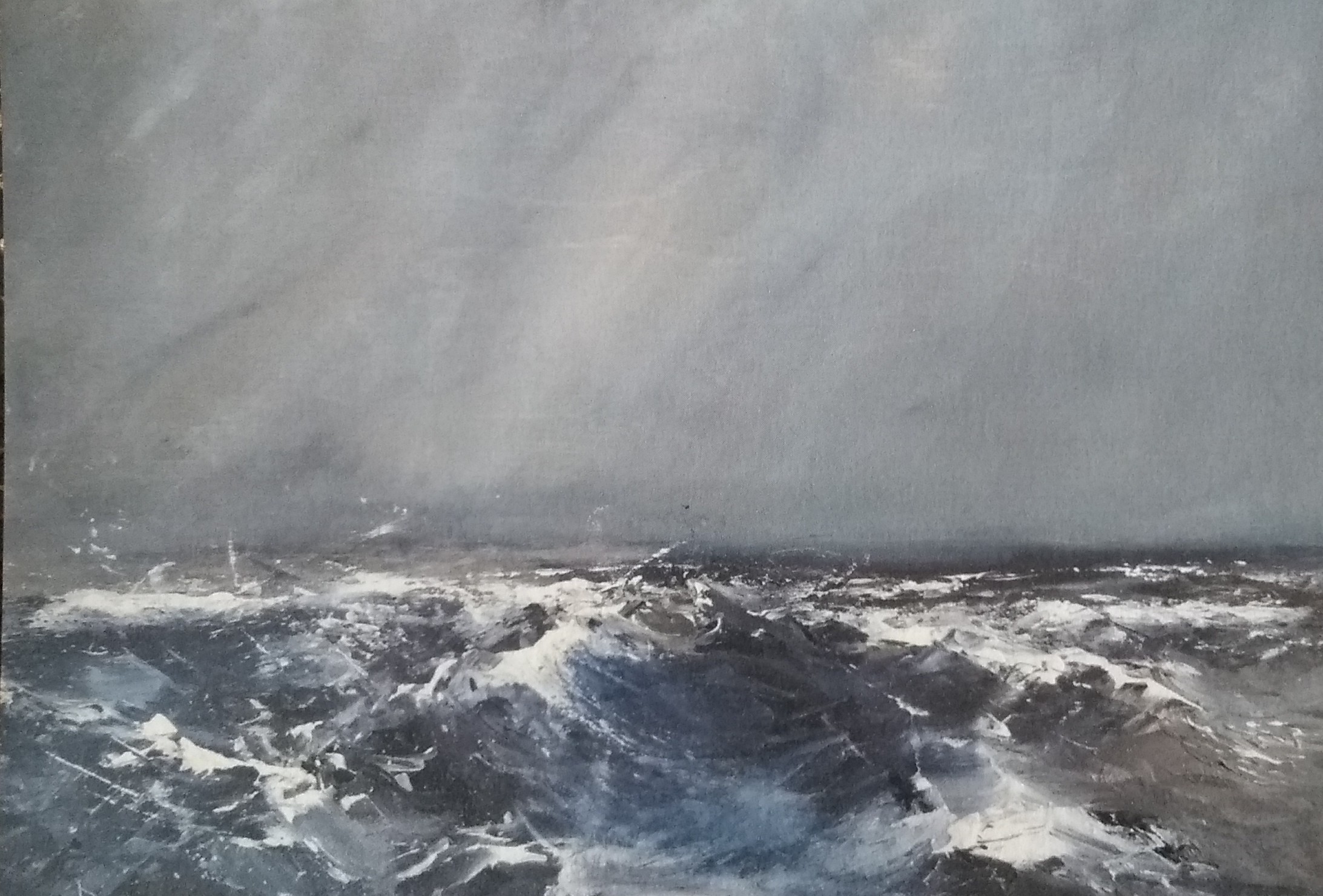
Image: Painting by Sarah Evans owned by the author.


 Realize Engineering