Category Archives: Learning & Teaching

Webs of expertise and knowledge

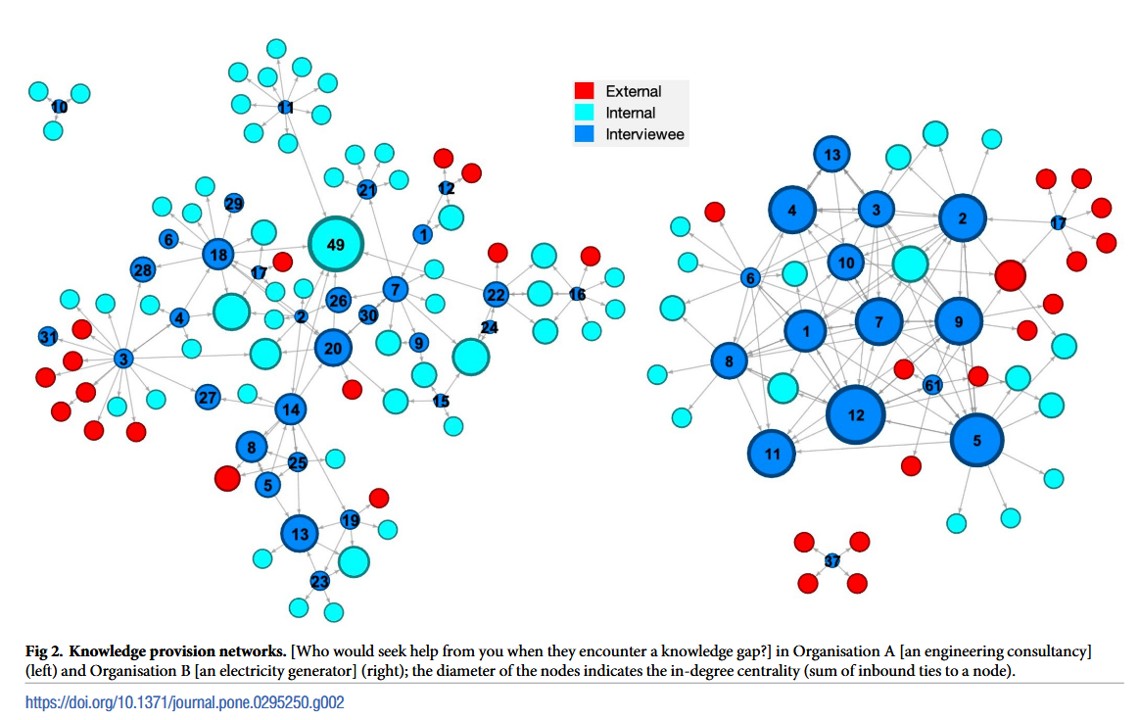
I am writing this post while I am in the middle of leading a breakout activity for more than a hundred PhD students from our Centres for Doctoral Training in nuclear science and engineering, GREEN and SATURN.  We have asked them to construct a knowledge network for a start-up company commissioned to build either a fusion energy power station or a power station based on small modular reactors (SMRs).  A knowledge network is a web of expertise and information whose value comes from the connections and interactions within and outside an organization.  Our aim is to encourage students to think beyond science and engineering and consider the interactions required to deliver safe, economic nuclear power.

We have brought the students together in York from six universities located in the North of England (Lancaster, Leeds, Liverpool, Manchester & Sheffield) and Scotland (Strathclyde).  This is an annual event usually held in the first working week of the New Year (see ‘Nuclear Winter School’ on January 23rd 2019).

The breakout activity has three one-hour time-slots on three consecutive days.  In today’s time-slot, we have divided the students into twenty groups of seven and given them paper, pencils, and a circle stencil plus an eraser with which to draw knowledge networks.  We are hoping for creativity, lively discussions, and some fun.  In yesterday’s one-hour slot, they had briefings from the Chief Manufacturing Engineer for a company building SMRs and the Deputy Chief Engineer of a company developing a fusion power station, as well as from a Digital Knowledge Management Consultant whose PhD led to a paper on knowledge networks, which we shared with the students last month (see ‘Evolutionary model of knowledge management’ on March 6th, 2024).  Tomorrow, one person from each group will have two minutes to present their knowledge network, via a portable visualiser, to an audience of several hundred.  What can go wrong?  Twenty two-minute presentations in one hour with one minute for questions and changeover.

GREEN (Growing skills for Reliable Economic Energy from Nuclear) is co-funded by a consortia of industrial organisations and the UK EPSRC (grant no. EP/S022295/1).

SATURN (Skills And Training Underpinning a Renaissance in Nuclear) succeeded GREEN and is also co-funded by a consortia of industrial organisations and the UK EPSRC (grant no. EP/Y034856/1).

Image shows thumbnail of figure from shared paper with knowledge networks for an engineering consultancy company and an electricity generator, follow this link for full size image.

Going around in circles

I spent a day last month marking essays that were part of the assessment for a postgraduate module I have been teaching about engineering leadership. I use Boyatzis’s theory of self-directed learning to talk about how students can develop their leadership competences. Then, we ask the students to reflect on the leadership and ethical issues associated with one or two incidents they had experienced or observed vicariously. Most of the time we teach engineering students to make rational technical decisions based on data; so, they find it difficult to reflect on their feelings and emotions when faced with ethical and leadership dilemmas. We show them Gibbs’s cycle for reflective thinking and encourage them to use it to structure their thoughts and as a framework for their essay.  There are obvious and natural similarities between the theories of Boyatzis and Gibbs.  Of course, some students use them and some don’t. However, so far, this is an assignment for which they cannot use an essay mill or a large language model, because we ask them to write about their personal experiences and feelings; and LLMs do not understand anything, let alone feelings.

Goleman D, Boyatzis R & McKee A, The new leaders: transforming the art of leadership into the science of results, London: Sphere, 2002, p.139.

I have written previously on teaching leadership, see for example ‘Inspirational Leadership‘ on March 22nd 2017, ‘Leadership is like shepherding‘ on May 10th 2017, ‘Clueless on leadership style’ on June 14th 2017.

Inducing chatbots to write nonsense

titanium dental implant face profile technical pictureThe chatbot, ChatGPT developed by OpenAI, has been in the news recently and is the subject of much discussion in universities primarily because of its potential use by students to complete their coursework assignments but also the positive uses to which it might be applied. After last week’s invitations to edit two special issues in different journals on cosmetic dentistry and wire arc additive manufacturing (WAAM) [‘Wire arc additive manufacturing and cosmetic dentistry?‘ on February 8th, 2023], I did a little research in the scientific literature to find out if anyone had published research on using WAAM to make parts for cosmetic dentistry but found nothing.  I was not surprised – the level of precision achievable with WAAM is about 1 millimetre which would be insufficient for most applications in cosmetic dentistry.  Then, I signed up for a free trial with ChatGPT and conducted an experiment by asking it to write about wire arc additive manufacturing and cosmetic dentistry.  The chatbot produced 128 words about how WAAM is becoming increasing popular in cosmetic dentistry because of its accuracy and precision also because a wide range of materials can be used allowing a match to the colour and texture of teeth.  I repeated the experiment and the chatbot produced 142 different words, again stating that dental prostheses can be produced using WAAM with high precision and accuracy to match a patient’s existing teeth in colour so that restorations appear natural and undetectable.  In each case the six or seven sentences were well-written and included some facts that were used to construct a set of false statements, which superficially appeared reasonable; however, only a modicum of knowledge would be required to identify the fallacious rationale.  Some of my colleagues are already exploring incorporating the chatbot into students’ coursework by asking students to use it to generate a description of a technical topic and then asking them to critique its output in order to assess their understanding of the topic.  I expect chatbots will improve rapidly but for the moment it is relatively easy to induce them to write nonsense.

Bibliography

Li Y, Su C, Zhu J. Comprehensive review of wire arc additive manufacturing: Hardware system, physical process, monitoring, property characterization, application and future prospects. Results in Engineering,100330, 2021.

Image: www.authoritydental.org CC BY 2.0 downloaded from https://www.flickr.com/photos/dental-photos/50730990757

Storm in a computer

Decorative painting of a stormy seascapeAs part of my undergraduate course on thermodynamics [see ‘Change in focus’ on October 5th, 2022) and in my MOOC on Thermodynamics in Everyday Life [See ‘Engaging learners on-line‘ on May 25th, 2016], I used to ask students to read Chapter 1 ‘The Storm in the Computer’ from Philosophy and Simulation: The Emergence of Synthetic Reason by Manuel Delanda.  It is a mind-stretching read and I recommended that students read it at least twice in order to appreciate its messages.  To support their learning, I provided them with a précis of the chapter that is reproduced below in a slightly modified form.

At the start of the chapter, the simplest emergent properties, such as the temperature and pressure of a body of water in a container, are discussed [see ‘Emergent properties’ on September 16th, 2015].  These properties are described as emergent because they are not the property of a single component of the system, that is individual water molecules but are features of the system as a whole.  They arise from an objective averaging process for the billions of molecules of water in the container.  The discussion is extended to two bodies of water, one hot and one cold brought into contact within one another.  An average temperature will emerge with a redistribution of molecules to create a less ordered state.  The spontaneous flow of energy, as temperature differences cancel themselves, is identified as an important driver or capability, especially when the hot body is continually refreshed by a fire, for instance.  Engineers harness energy gradients or differences and the resultant energy flow to do useful work, for instance in turbines.

However, Delanda does not deviate to discuss how engineers exploit energy gradients.  Instead he identifies the spontaneous flow of molecules, as they self-organise across an energy gradient, as the driver of circulatory flows in the oceans and atmosphere, known as convection cells.  Five to eight convections cells can merge in the atmosphere to form a thunderstorm.  In thunderstorms, when the rising water vapour becomes rain, the phase transition from vapour to liquid releases latent heat or energy that helps sustain the storm system.  At the same time, gradients in electrical charge between the upper and lower sections of the storm generate lightening.

Delanda highlights that emergent properties can be established by elucidating the mechanisms that produce them at one scale and these emergent properties can become the components of a phenomenon at a much larger scale.  This allows scientists and engineers to construct models that take for granted the existence of emergent properties at one scale to explain behaviour at another, which is called ‘mechanism-independence’.  For example, it is unnecessary to model molecular movement to predict heat transfer.  These ideas allow simulations to replicate behaviour at the system level without the need for high-fidelity representations at all scales.  The art of modelling is the ability to decide what changes do, and what changes do not, make a difference, i.e., what to include and exclude.

Source:

Manuel Delanda Philosophy and Simulation: The Emergence of Synthetic Reason, Continuum, London, 2011.

Image: Painting by Sarah Evans owned by the author.