Tag Archives: probability

Chirping while calculating probabilities

Decorative image of a pink roseA couple of weeks ago, I visited the London headquarters of IBM in the UK and Ireland for discussions about possible areas of collaboration in research and education.  At the end of our meeting, we were taken to see some of their latest developments, one of which was their Quantum System One computer.  We had seen its casing, a shiny silver cylinder about half metre in diameter and a metre and half long with a hemispherical lower end, hanging in a sealed glass cube in the lobby of the building.  The computer we viewed was also suspended from the ceiling of a sealed glass cube in order to isolate it from vibration, but was without its cylindrical cover so that we could see its innards which need to be cooled to cryogenic temperatures.  The room in which it was displayed was darkened and a soundtrack of the computer operating added to the atmosphere – it sounded like birds chirping.  IBM are already operating quantum computers, starting in 2019 with a 27-qubit processor and achieving 433 qubits last year with plans for 4,158+ qubits in 2025 in their roadmapThere are about 80 companies focussed on quantum computing worldwide, including Universal Quantum who are working on a million qubit computer.  Qubit is short for quantum bit and is the quantum mechanical analogue of a classical computer bit.  A computer bit works in binary and can only have a value of 0 or 1.  Whereas a qubit holds information about the probability amplitudes for 0 and 1 which will always have a sum of 1.  The use of probability amplitudes allows complex systems to be described more efficiently and larger solution spaces to be explored.  IBM’s quantum processors are thin wafers about the same size as the one in your laptop but their need for cryogenic temperatures and vibration isolation means we will not be using them at home any time soon.

How many engineers do you need when the lights go out?

An exemplar adverse outcome pathway for microplastics in aquatic species

From Galloway & Lewis, 2016

One to change the lightbulb and five to perform a Fault Tree Analysis (FTA).  A fault tree is a diagram that illustrates the relationship between failures at component and system levels.  Engineers use them to understand the mechanisms or logic that lead from component malfunctions to system breakdowns and to identify components that are critical to system reliability.  They are useful in optimizing designs, demonstrating compliance with safety requirements and as diagnostic tools when things go wrong.  There are some simple examples of fault trees for ‘no light in room’ and ‘missing the bus’ amongst others available from Visual Paradigm Online.  All of these examples illustrate qualitative relationships but we can also establish quantitative relationships using the rate of occurrence of each initiating event to arrive at a probability of failure (PoF) for the system.  There is an example for an indicator light in an automobile in a 2016 paper by Nabarun Das and William Taylor (see figure 2 in the paper).  An equivalent in biology are Adverse Outcome Pathways (AOPs) that identify the relationship between a molecular initiating event and a toxic effect through a series of key events.  For instance, microplastics causing altered gene expression and oxidative damage leading to altered fatty acid metabolism, stress response and altered cellular division resulting ultimately in population decline in aquatic species as shown in the graphic from a paper by Tamara Galloway and Ceri Lewis also published in 2016. Most AOPs are qualitative; however, quantitative Adverse Outcome Pathways (qAOPs) are starting to be developed as tools for quantitative risk assessment of chemicals.  Biologists and engineers are not using the same words, actually they are using entirely different vocabularies; nevertheless they are talking about the same methodologies.  An AOP network and an FTA are essentially the same concept and a probabilistic fault tree analysis is a quantitative adverse outcome pathway.  However, it seems unlikely that either biologists or engineers will adopt the language used by the other so they will be reliant on a few foolhardy interlocutors prepared to cross the discipline boundaries and highlight the opportunities for cross-fertilization of ideas and solutions.

Sources

Das N, Taylor W. Quantified fault tree techniques for calculating hardware fault metrics according to ISO 26262. In2016 IEEE Symposium on Product Compliance Engineering (ISPCE), pp. 1-8. IEEE, 2016. Also available at https://incompliancemag.com/article/quantified-fault-tree-techniques-for-calculating-hardware-fault-metrics-according-to-iso-26262/

Galloway TS, Lewis CN. Marine microplastics spell big problems for future generations. Proceedings of the national academy of sciences. 113(9):2331-3, 2016.

Are we in a simulation?

Decorative photograph of trains at terminusThe concept of digital twins is gaining acceptance and our ability to generate them is advancing [see ‘Digital twins that thrive in the real-world’ on June 9th, 2021].  It is conceivable that we will be able to simulate many real-world systems in the not-too-distant future.  Perhaps not in my life-time but possibly in this century we will be able to connect these simulations together to create a computer-generated world.  This raises the possibility that other forms of life might have already reached this stage of technology development and that we are living in one of their simulations.  We cannot know for certain that we are not in a simulation but equally we cannot know for certain that we are in a simulation.  If some other life form had reached the stage of being able to simulate the universe then there is a possibility that they would do it for entertainment, so we might exist inside the equivalent of a teenager’s smart phone, or for scientific exploration in which case we might be inside one of thousands of simulations being performed simultaneously in a lab computer to gather statistical evidence on the development of universes.  It seems probable that there would be many more simulations performed for scientific research than for entertainment, so if we are in a simulation then it is more likely that the creator of the simulation is a scientist who is uninterested in this particular one in which we exist.  Of course, an alternative scenario is that humans become extinct before reaching the stage of being able to simulate the world or the universe.  If extinction occurs as a result of our inability to manage the technological advances, which would allow us to simulate the world, then it seems less likely that other life forms would have avoided this fate and so the probability that we are in a simulation should be reduced.  You could also question whether other life forms would have the same motivations or desires to create computer simulations of evolutionary history.  There are lots of reasons for doubting that we are in a computer simulation but it does not seem possible to be certain about it.

David J Chalmers explains the probability that we are in a simulation much more elegantly and comprehensively than me in his book Reality+; virtual worlds and the problems of philosophy, published by Penguin in 2022.

Near earth objects make tomorrow a little less than certain

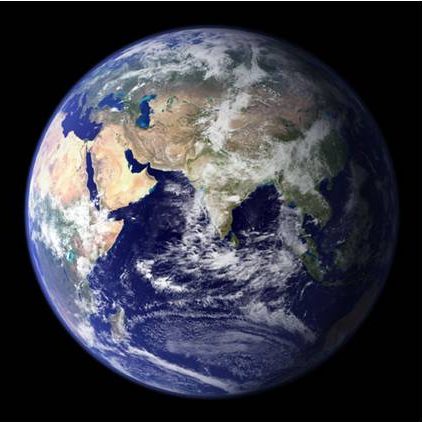
Photograph of earth from spaceA couple of weeks ago, I wrote about unattainable uncertainty [see ‘Uncertainty is unattainable and near-uncertainty unaffordable’ on May 12th, 2021] and you might have thought that some things are certain, such as that tomorrow will follow today.  However, even that’s not certain – it has been estimated that there is a 1 in 300,000 chance in the next one hundred years of an asteroid impact on earth resulting in more than one million fatalities.  It might seem like a very small probability that you will not be around tomorrow due to an asteroid impact; however, as Sir David Spiegelhalter has pointed out, if that probability of fatalities related to an industrial installation, then it would be considered an intolerable risk by UK Health and Safety Executive.  By the way, if you want a more accurate estimate of the probability that an asteroid impact will prevent you seeing tomorrow then NASA provides information about the next Near Earth Object (NEO) to pass within 10 lunar distances (the distance between the moon and the earth which is 384,000 km) at https://cneos.jpl.nasa.gov/.  121 NEOs came within one lunar distance during the last twelve months of which the largest had a diameter of between 88 m and 200m, which is about the size of an Olympic Stadium, and came within 310,000 km; while the closest came within 8000 km, less than a Earth’s diameter which is 12,742 km, and was between 4.8 m and 11 m in diameter or about the size of two double-decker buses.  Spiegelhalter reassures us by telling us that there is no record of anyone, except a cow, being killed by an asteroid whereas tragically the same cannot be said about double decker buses!

Sources:

Reinhardt JC, Chen X, Liu W, Manchev P, Pate-Cornell ME. Asteroid risk assessment: a probabilistic approach. Risk Anal. 36:244–61, 2016.

Spiegelhalter D. Risk and uncertainty communication. Annual Review of Statistics and Its Application. 4:31-60, 2017.