Tag Archives: 5Es

Everyday examples contribute to successful learning

Some weeks ago I quoted Adams and Felder [2008] who said that the ‘educational role of faculty [academic staff] is not to impart knowledge; but to design learning environments that support…knowledge acquisition’ [see ‘Creating an evolving learning environment’ on February 21st, 2018].  A correspondent asked how I create a learning environment and, in response, this is the first in a series of posts on the topic that will appear every third week.  The material is taken from a one-day workshop that Pat Campbell [of Campbell-Kibler Associates] and I have given periodically in the USA [supported by NSF ] and UK [supported by HEA] for engineering academics.

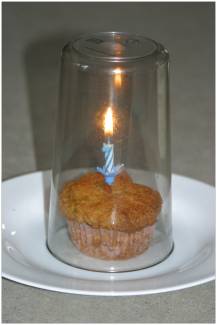
Albert Einstein is reputed to have said that ‘knowledge is experience, everything else is just information’.  I believe that a key task for a university teacher of engineering is to find the common experiences of their students and use them to illustrate engineering principles.  This is relatively straightforward for senior students because they will have taken courses or modules delivered by your colleagues; however, it is more of a challenge for students entering the first year of an engineering programme.  Everyone is unique and a product of their formative conditions, which makes it tricky to identify common experiences that can be used to explain engineering concepts.  The Everyday Engineering Examples, which feature on a page of this blog [https://realizeengineering.blog/everyday-engineering-examples/], were developed to address the need for illustrative situations that would fall into the experience of most, if not all, students.  Two popular examples are using the splits in sausages when you cook them to illustrate two-dimensional stress systems in pressure vessels [see lesson plan S11] and using a glass to extinguish a birthday candle on a cup cake to explain combustion processes [see lesson plan T11].

Everyday Engineering Examples were developed as part of an educational research project, which was funded by the US National Science Foundation [see ENGAGE] and demonstrated that this approach to teaching works.  The project found that significantly more students rated their learning with Everyday Engineering Examples as high or significant than in the control classes independent of the level of difficult involved [Campbell et al. 2008].  So, this is one way in which I create a learning environment that supports knowledge acquisition.  More in future posts…
References

Adams RS & Felder RM, Reframing professional development: A systems approach to preparing engineering educators to educate tomorrow’s engineers. J. Engineering Education, 97(3):230-240, 2008

Campbell PB, Patterson EA, Busch Vishniac I & Kibler T, Integrating Applications in the Teaching of Fundamental Concepts, Proc. 2008 ASEE Annual Conference and Exposition, (AC 2008-499), 2008


CALE #1 [Creating A Learning Environment: a series of posts based on a workshop given periodically by Pat Campbell and Eann Patterson in the USA supported by NSF and the UK supported by HEA]


Depressed by exams

I am not feeling very creative this week, because I am in middle of marking examination scripts; so, this post is going to be short.  I have 20 days to grade at least 1100 questions and award a maximum of 28,400 marks – that’s a lot of decisions for my neurons to handle without being asked to find new ways to network and generate original thoughts for this blog [see my post on ‘Digital hive mind‘ on November 30th, 2016].

It is a depressing task discovering how little I have managed to teach students about thermodynamics, or maybe I should say, how little they have learned.  However, I suspect these feelings are a consequence of the asymmetry of my brain, which has many more sites capable of attributing blame and only one for assigning praise [see my post entitled ‘Happenstance, not engineering‘ on November 9th, 2016].  So, I tend to focus on the performance of the students at the lower end of the spectrum rather than the stars who spot the elegant solutions to the exam problems.

Sources:

Ngo L, Kelly M, Coutlee CG, Carter RM , Sinnott-Armstrong W & Huettel SA, Two distinct moral mechanisms for ascribing and denying intentionality, Scientific Reports, 5:17390, 2015.

Bruek H, Human brains are wired to blame rather than to praise, Fortune, December 4th 2015.

Steamy show

The Australian Academy of Technology and Engineering published a report sometime ago called ‘Technology is really a way of thinking‘.  They were right.  Once you become an engineer, then you can’t help looking at everything through the same ‘technology’ lens.  Let me give you an example.

A couple of weekends ago we went to see  ‘Anthony and Cleopatra‘ performed by the Royal Shakespeare Company in Stratford-upon-Avon.  It was a magnificient spectacle and a captivating performance, especially by Josette Simon as Cleopatra.  Before the performance started, we couldn’t help noticing the columns of steam forming in the auditorium from the ceiling downwards.  Initially, we thought that they were a stage effect creating an atmosphere in the theatre; but then I realised, it was ‘steam’ forming as the air-conditioning pushed cold air into the auditorium.  It’s the same effect that sometimes causes alarm on an aircraft, when it appears that smoke is billowing into the cabin prior to take-off.

The air in the theatre was a mixture of air and water vapour that was warm enough that the water was completely gaseous, and hence, invisible.  However, when the air-conditioning pumped cold air into the theatre, then the mixture of air and water was cooled to below the dew point of the water vapour causing it to condense into small droplets that were visible in the auditorium’s downlighters, forming the columns of ‘steam’.  Of course, the large mass of warm air in the auditorium quickly reheated the cold air, causing the droplets to evaporate and the columns of steam to disintegrate.  Most people just enjoyed the play; it’s just the technologists that were preoccupied with what caused the phenomenon!

If you want a more technical explanation, in terms of partial pressures and psychrometry, then there is an Everyday Engineering Example lesson plan available : 5E lesson plan T10 – psychrometric applications.

Picture: https://www.rsc.org.uk/shop/item/30200-anthony-and-cleopatra-poster-2017/

Listening with your eyes shut

I am in the London Underground onboard a train on my way to a conference on ‘New Approaches to Higher Education’ organised by the Institution of Engineering and Technology and the Engineering Professors’ Council.  The lady opposite has her eyes closed but she is not asleep because she opens them periodically as we come into stations to check whether it’s her stop.  I wonder if she is trying to reproduce John Hull’s experience of the depth of sounds as a blind person [see my post entitled ‘Rain brings out the contours in everything‘ on February 22, 2017].  For the second time in recent weeks, I close my eyes and try it for myself.  It is surprising how in a crowded train, I can’t hear anyone, just the noise made by the train.  It’s like a wobble board that’s joined by a whole percussion section of an orchestra when we go around a bend or over points.  The first time I closed my eyes was at a concert at the Philharmonic Hall in Liverpool.  My view of the orchestra was obstructed by the person in front of me so, rather than stare at the back of their head, I closed my eyes and allowed the music to dominate my mind.  Switching off the stream of images seemed to release more of my brain cells to register the depth and richness of Bach’s Harpsichord Concerto No. 5.  I was classified as tone deaf at school when I was kicked out of the choir and I learned no musical instruments, so the additional texture and dimensionality in the music was a revelation to me.

Back to the London Underground – many of my fellow passengers were plugged into their phones or tablets via their ears and eyes.  I wondered if any were following the MOOC on Understanding Super Structures that we launched recently.  Unlikely I know, but it’s a bit different, because it is mainly audio clips and not videos.  We’re trying to tap into some of the time many people spend with earbuds plugged into their ears but also make the MOOC more accessible in countries where internet access is mainly via mobile phones.  My recent experiences of listening with my eyes closed, make me realize that perhaps we should ask people to close their eyes when listening to our audio clips so that they can fully appreciate them.  If they are sitting on the train then that’s fine but not recommended if you are walking across campus or in town!