Category Archives: uncertainty

Safety first!

cornerMost of us walk up and down stairs at home without a second thought and often without holding the handrail. It’s a personal choice to hold the handrail or not. However, for some when you are at work it is no longer a personal choice but a health and safety rule. You must hold the handrail and in many organisations you are expected to politely ask visitors to do so. This is justified on the basis that trips/slips and falls are the most common sources of workplace injuries accounting for 40% of serious injuries. For managers it is about managing risk and reducing costs.

Risk is the probability of something happening multiplied by the consequences when it does happen. Many of us subconsciously calculate risk when we make decisions in everyday life. The consequences of the aircraft crashing on the way to your holiday destination is very serious, if not fatal, but the probability is extremely small so that overall the risk is acceptably low. We make lots of risk assessments in our personal life but as soon as an organisation gets involved and feels that it might be liable for the consequences then our freedom of choice is eroded quickly. Hence, the instruction to hold the handrail on the stairs. However, the equation is changed when the cost of reducing the risk involved in an essential or profitable activity is too high or perceived to be so. A simple example would be being free to stand on a platform within half a metre of a passing express train. It would be too expensive and probably impractical to install railings or remove everyone from the platform. However, at least we have platforms and are not allowed to wander around on the track; that would be really dangerous with both a high probability of being hit and fatal consequences as the Liverpool MP William Huskisson found out at the inauguration of the first scheduled passenger train service on September 15, 1830. When the train stopped on the way from Liverpool to Manchester, he got out and walked down the track to the Prime Minister who was in the next carriage to enthuse about the service and he was killed by the train going the other way. There are easier ways to get a street named after you, not to mention a town in Australia!

Source: http://www.workplacesafetyadvice.co.uk/common-injuriescauses-accidents-work.html.  BTW – according to this website, the finance is the safest sector in which to work and agriculture the most dangerous sector.

Photo credits: Sarah & CharlesPicture8

Setting standards

cenLast week I wrote about digital image correlation as a method for measuring surface strain and displacement fields.  The simplicity and modest cost of the equipment required combined with the quality and quantity of the results is revolutionizing the field of experimental mechanics.  It also has the potential to do the same in computational mechanics by enabling more comprehensive validation of models and thus enhancing the credibility and confidence in engineering simulations.  I have written and lectured on this topic many times, see for instance my post of September 17th, 2012 entitled ‘Model credibility’ or  http://sdj.sagepub.com/content/48/1.toc

At the moment, I am chair of a CEN workshop WS71 that is developing a precursor to a standard on validation of computational solid mechanics models.  To inform our deliberations, we have organised an Inter-Laboratory Study (ILS) to allow people to try out the proposed validation protocol and give us feedback.   If you would like to have a go then download the information pack.  You don’t need to do any experiments or modelling, just try the validation procedure with some of the data sets provided.  The more engineers that participate in the ILS then the better that the final CEN document is likely to be; so if you know someone who might be interested then forward this blog to them or just send them the link.

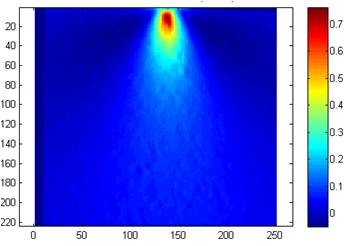
Displacement field measured using image correlation for metal wedge indenting a rubber block

Displacement field measured using digital image correlation for a metal wedge indenting a rubber block

CEN WS71: http://www.cen.eu/cen/Sectors/TechnicalCommitteesWorkshops/Workshops/Pages/WS71VANESSA.aspx

EU FP7 project VANESSA: www.engineeringvalidation.org

For information on the data field shown to the right see: http://sdj.sagepub.com/content/49/2/112.abstract

War and peace

The recent negotiations with Iran have brought nuclear weapons back into the forefront of the public’s consciousness, if they ever left it.  This leads to some misplaced sentiments about nuclear energy due to the closely linked history and science of nuclear technology for war and peace.  There is no doubt that nuclear bombs are terrible weapons of mass destruction but so are certain chemical agents and yet there is not the same level of public and political angst about building chemical plants as there is over nuclear power stations.  The civil chemical and nuclear industries are both strictly regulated but the chemical industry has had some horrific accidents, such as at Bhopal, India in 1984 where 8000 people were killed when a pesticide plant leaked toxic gas, or more recently in the US when a fertilizer plant in West, Texas exploded killing 15 people and levelling hundreds of homes.  These incidents are not well-known outside of the engineering industry whereas by contrast the nuclear industry has had a small number of very well-publicized accidents that have killed very few people, or no one in the case of the recent accident at Fukushima.

People will argue that I am ignoring the long-term effects of exposure to radiation so it is appropriate to examine the evidence.  The atomic bomb dropped on Hiroshima killed an estimated 130,000 people, mainly due to the blast rather than radiation, while a long-term study of survivors within 10 kilometres of the explosions has found increased incidents of cancer arising from radiation exposure.  Following the Chernobyl accident in 1986, 240,000 workers were exposed to radiation levels higher than 100 millisieverts and 28 died from acute radiation sickness (ARS) that year.  The World Health Organisation estimates that about 4000 of these workers will die from cancer as a consequence of their radiation exposure about another 9000 amongst the exposed population in Belarus, the Russian Federation and Ukraine.  These are large numbers but represent only about a 1% of the total number of cancer deaths in these populations from other causes, for instance smoking caused about 294,000 deaths in the roughly the same twenty years in Belarus.

It’s time we decoupled the use of nuclear technology in war and peace.  We don’t handicap other technologies used in war and peace with the same indistinguishable associations.  We use fossil fuels to power tanks, jet-fighters and warships and then burn so much of it for peaceful purposes that 1.2 million people died prematurely last year from the pollution it generated [see my post entitled ‘Year of Air: 2013’ on 20th November, 2013].

Sources:

http://news.bbc.co.uk/onthisday/hi/dates/stories/december/3/newsid_2698000/2698709.stm

http://www.huffingtonpost.com/2013/08/01/obama-chemical-plants_n_3688272.html

http://news.bbc.co.uk/onthisday/hi/dates/stories/august/6/newsid_3602000/3602189.stm

http://www.rerf.jp/glossary_e/lss.htm

Little, M., 2009, Cancer and non-cancer effects in Japanese atomic bomb survivors, Journal of Radiological Protection, 29(2A):A43-59. http://iopscience.iop.org/0952-4746/29/2A/S04;jsessionid=7838AA7D498065F13C23094F1D01DBBA.c3

Cardis. E., et al., 2006, Concer consequences of the Chernobyl accident: 20 years on, Journal of Radiological Protection, 26:127-140. http://iopscience.iop.org/0952-4746/26/2/001/pdf/0952-4746_26_2_001.pdf

http://www.ctsu.ox.ac.uk/research/mega-studies/mortality-from-smoking-in-developed-countries-1950-2010/mortality-from-smoking-in-developed-countries-1950-2010/view


Risky predictions

flood

Risk is a much mis-understood word.  In a technical sense, it is the probability of something happening multiplied by the consequences when it does [see post on Risk Definition, September 20th, 2012].  Tight regulation and good engineering could reduce the probability of earthquakes induced by fracking and such earthquakes tend not to produce structural damage, i.e. low consequences, so perhaps it is reasonable to conclude that the risks are low because two small quantities multiplied together do not produce a big quantity [see last week’s post on ‘Fracking’, 28th August, 2013].

The more common definition of risk is the probability of a loss, injury or damage occurring, i.e. severity is ignored.  Probability is used to describe the frequency of occurence of an event.  A classic example is tossing a fair coin, which will come down heads 50% of the time.  This is a simple game of chance that can be played repeatedly to establish the frequency of the event.  It is impractical to use this approach to establish the probability of fracking causing an earthquake, so instead engineers and scientists must simulate the event using computer models.  One approach to simulation is to generate a set of models, each based on slightly different set of realistic conditions and assumptions, and look at what percentage of the models predict earthquakes, which can be equated to the probability of a fracking-induced earthquake.  When the set of conditions is generated randomly, this approach is known as Monte Carlo simulation.  Weather forecasters use simulations of this type to predict the probability of rain or sunshine tomorrow.

The reliability of a simulation depends on the model adequately describing the physical world.  We can test this (known as validating the model) by comparing predicted outcomes with real-world outcomes [see post on 18th September, 2012 on ‘model validation’].  The quality of the comparison can be expressed as a level of confidence usually as a percentage.  Crudely speaking, this percentage can be equated to the frequency with which the model will correctly predict an event, i.e. the probability that the model is reliable, so if we are 90% confident then we would expect the model to correctly predict an event 9 out of 10 times. In other words, there would be a 10% ‘risk’ that the model could wrong.

In practice we cannot easily calculate the probability of a fracking-induced earthquake because it is such a complex process. Validating a model of fracking is also a challenge because of the lack of real examples so that establishing confidence is difficult.  As a consequence, we tend be left weighing unquantified risks in a subjective manner, which is why there is so much debate.

If you made it this far – well done and thank you!   If you want more on weather forecasting and extending these ideas to economic forecasting see  John Kay’s article in the Financial Times on August 14th, 2013 entitled ‘Spotting a banking crisis is not like predicting the weather’ [ http://www.ft.com/cms/s/0/fdd0c5bc-0367-11e3-b871-00144feab7de.html#axzz2dNrTKPDy ].