Category Archives: Soapbox

Engineering is all about ingenuity

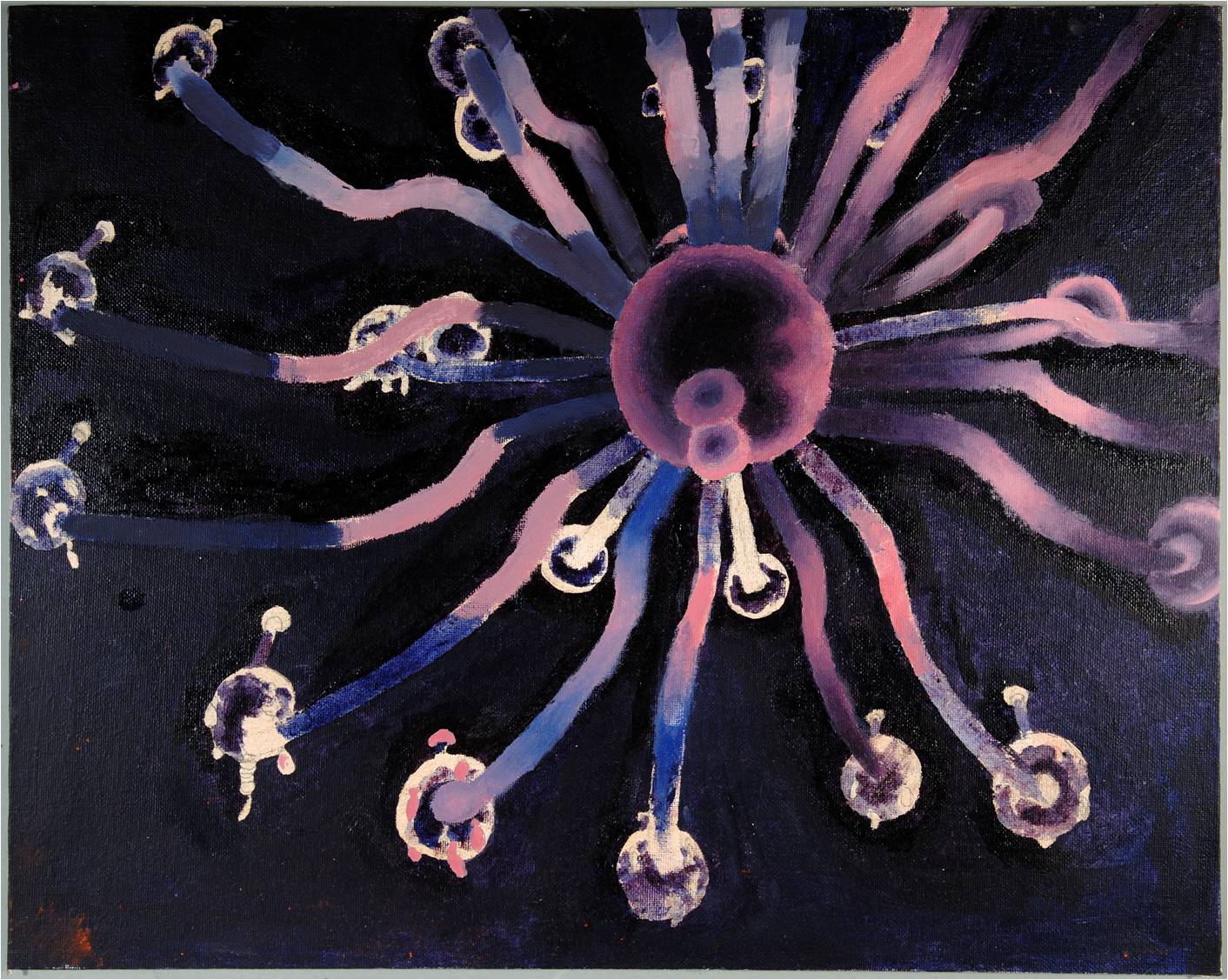
Painting from Okemos High School Art Collection at MSU

Painting from Okemos High School Art Collection at MSU

Who was the first engineer?  It’s a tricky question to answer.  Some sources cite Ailnolth, who lived in the second half of the twelfth century and worked on the Tower of London, as one of the first to be called an ‘ingeniator’.  The word comes from the Latin and the Roman writer, Vitruvius, describes master builders as being ingenious or possessing ‘ingenium’.  Leonardo da Vinci (1452 – 1519) was perhaps the first person to be appointed as an engineer.  The Duke of Milan appointed him ‘Ingenarius Ducalis’ or Master of Ingenious Devices.

So it would appear that an engineer is ‘a skilful contriver or originator of something’,  which is the third definition in the on-line Oxford Dictionary after ‘a person who designs, builds, or maintains engines, machines or structures’ and ‘a person who controls an engine especially on an aircraft or ship’.  This type of engine, which uses heat to do work, is a relatively recent invention probably by Thomas Savery and Thomas Newcomen in the early eighteenth century.  Engineers have been contriving, designing and inventing ‘works of public utility’ [quote from my older hard copy Oxford English Dictionary] for many centuries before the heat engine hijacked the terminology.

Why does this matter?  Well, many people have a misconception that engineering is all about engines, the heat kind; and yes, some of us do design, build and maintain engines but very many more engineers contrive, design and invent works of public utility – in the broadest sense of the words, i.e. just about everything ‘invented’ in the world. In other words, engineering is using human ingenuity to produce something useful; preferably something that improves the quality of life – oh, but now we are moving into ethics and I will leave that for another day!

Sources:

Blockley D, Engineering: A Very Short Introduction, Oxford: Oxford University Press, 2012.

Auyang SY, Engineering – an endless frontier, Cambridge MA: Harvard University Press, 2004.

Little W, Fowler HW & Coulson J, The Shorter Oxford English Dictionary, C.T. Onions (editor), London: Guild Publishing, 1983.


Hell’s harmonies fade in the twilight

WP_20150730_005As I write, it is evening in Liverpool and the daylight is fading. ‘Minds exhausted by the toils of the day settle, and their thoughts bathe in the tender half-tones of the twilight’.  This quote is from a translation of a piece of Charles Baudelaire’s prose poetry, called ‘Evening Twilight’ published original in French in 1855.  Although it’s a short piece the translation is copyright so I can’t reproduce it here.  Baurelaire continues to describe two friends who were made ill by twilight.  One who saw coded insults in everything and was unable to enjoy twilight as the prelude to feasts of pleasure; and the other who was frustrated by ambition and became increasingly ‘sour, moody, short-tempered as [the] day waned’.  He contrasts the reaction to twilight of his friends to the calm induced himself, the stilling of his thoughts, thoughts startled by hell’s harmonies.

Perhaps today’s hell’s harmonies are the constant stream of digital communication and information transmitted to us by our constantly-connected devices and so many of us read, write and think deep into the night after our friends and colleagues have settled from the toils of the day and ceased to communicate (at least those in the same time zone).  Perhaps nothing changes except the form of hell’s harmonies.

Source:

Baudelaire, C., ‘No. 22 Evening twilight’ in Paris Spleen, Martin Sorrell (trans.), Richmond, UK: Alma Classics Ltd, 2010.

WOW projects, TED talks, Cosmicomics and indirect reciprocity

33 finsbury squareWOW projects, TED talks, Cosmicomics and indirect reciprocity.  What do they have in common?  Well, each of them features in a new and rather different education programme that we are launching next month on the University of Liverpool’s campus at 33 Finsbury Square, London.  We are targetting mid-career engineers and scientists, working in research and development organisations, who want to develop their skills and advance their careers. I write ‘we’ because it is a joint effort by the School of Engineering at the University and the UK’s National Nuclear Laboratory.  It has been something of an adventure for me putting the modules together and we hope they will form a voyage of discovery and adventure for our delegates.

In case you are wondering about WOW projects, TED talks, Cosmicomics and indirect reciprocity – they will feature in modules on Science Leadership & Ethics, Technical Communication, Technical Writing, and Technical Reputation respectively.  These four five-credit modules plus a work-based project form the programme that leads to a Post-graduate Award.  Each module involves a day on campus in London supported by reading and assignments before and afterwards; and we are running a module per month between now and Christmas.

If you’re curious to find out more then visit our website or watch our Youtube video.

Ideas from a balanced mind

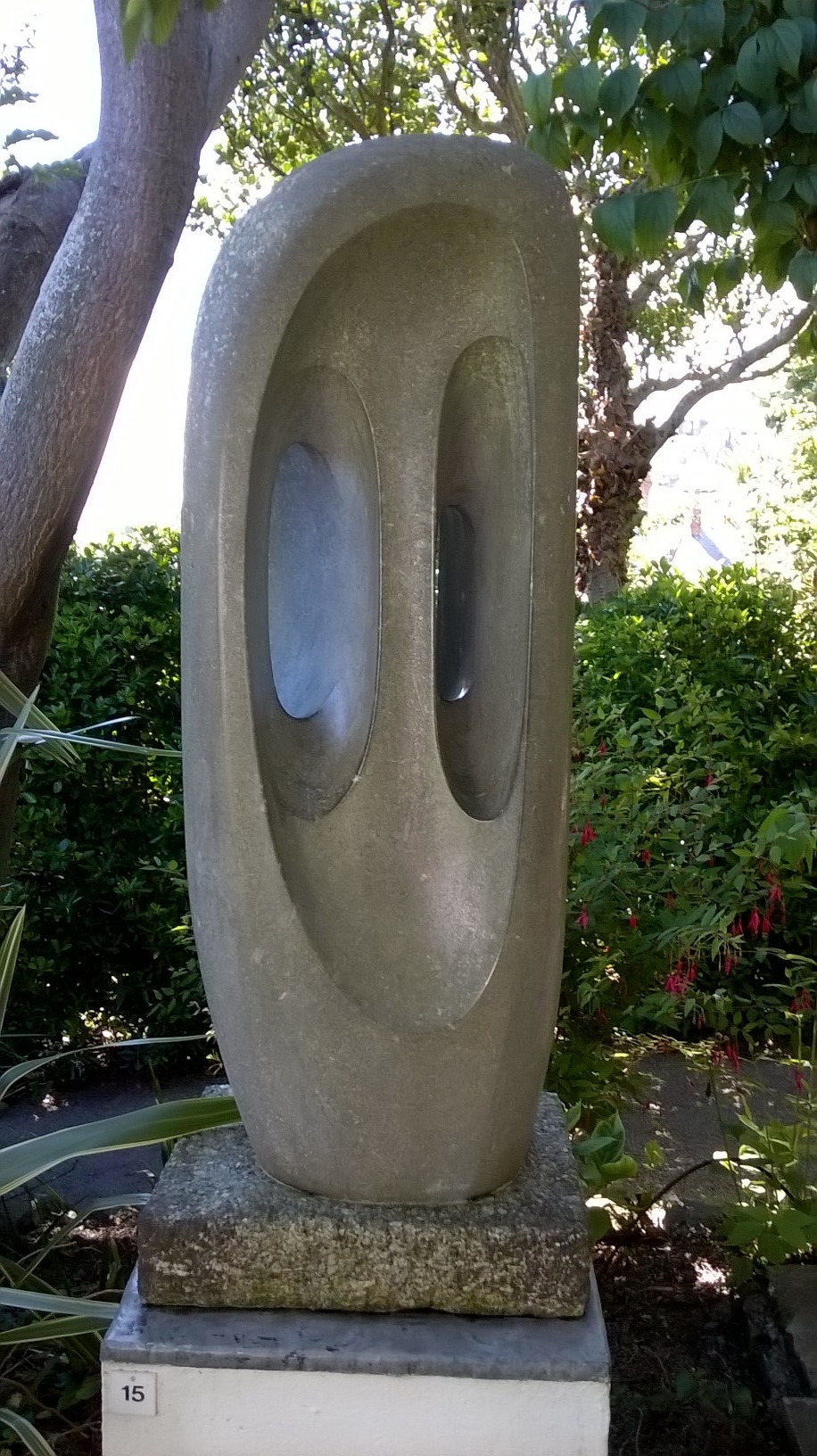
WP_20160714_014I have written about the virtues of mind-wandering on a number of occasions.  A recent article in the Harvard Gazette has stressed the importance of distinguishing between intentional and unintentional mind-wandering.  Unintentional mind-wandering or loss of concentration happens more frequently than we perhaps would like to admit. Some research has shown that office-workers are distracted every three minutes and that it takes about 20 minutes to achieve a high level of engagement in a task.  Obviously, I am not advocating unintentional mind-wandering but the intentional kind that occurs when we achieve the ‘Steadiness and placidity‘ that Michael Faraday found so productive [see my post on July 13th, 2016].  Perhaps this is important to our creativity because, to quote Barbara Hepworth, ‘Ideas are born through a perfect balance of our conscious and unconscious life and they are realized through this same fusion and equilibrium.’  And, creativity contributes to workplace success, healthy psychological functioning and the maintenance of loving relationships according to Oppezzo and Schwartz [see my post: ‘Love an engineer‘ on September 24th, 2014].

Sources:

Reuell, P., Minding the details of mind wandering, Harvard Gazette, July 20th, 2016 online at http://news.harvard.edu/gazette/story/2016/07/intentional-mind-wandering/

Hepworth, B., ‘Sculpture’, in Circle: International Survey of Constructive Art, JL Martin, B Nicholson & N Gabo (editors), London 1937 reproduced in Bowness, S., (editor), ‘Barbara Hepworth – Writing and Conversations’ London: Tate Publishing, 2015.

Oppezo, M., & Schwartz, D.L., 2014, ‘Give your ideas some legs: the positive effect of walking on creative thinking’, J. Experimental Psychology, Learning, Memory & Cognition, 40(3):1142-1152.

Image: photograph taken in the Barbara Hepworth Musuem and Garden in St Ives.