Author Archives: Eann Patterson

No closed systems in nature

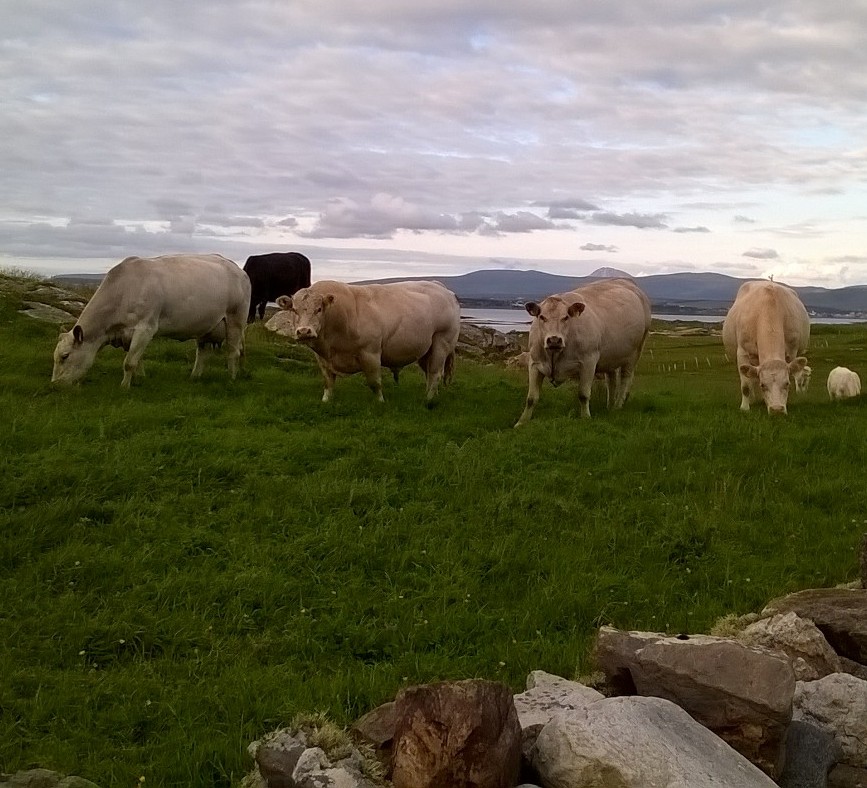
WP_20150722_008 (2)While I was away on vacation last month, WordPress sent an email congratulating me on the third anniversary of the start of this blog.  This stimulated me to look at the statistics on the most frequently read, or at least viewed, of the approximately 160 postings that I have written.  Top of the list is an early posting which asks the question ‘Are there any closed systems in nature?’ (see post entitled ‘Closed systems in Nature?’ on December 21st, 2012).  Since this question has generated more interest than any of my subsequent postings, it seems appropriate, after 30 months, to attempt an answer.

Alexander Bogdanov (1873-1928), and independently Karl Ludwig von Bertalanffy (1901-1972), recognized that all living systems are open systems in the thermodynamic sense, which operate far-from equilibrium and require a continual flux of matter and energy to sustain life.  By contrast, closed thermodynamic systems tend to settle into a state of equilibrium, i.e. with no differences in energy, no chemical reactions in progress and no unbalanced forces.

The cybernetist, William Ross Ashby (1903-1972) suggested that living systems are energetically open but operationally closed, i.e. closed to information and control.  In other words, a cell, or any other living organism, needs no information from the environment to be itself. All the information for a bee to be a bee is contained inside a bee (for more on the bee theme see ‘Entropy management for bees and flights‘ on November 5th, 2014 and ‘Fields of flowers’ on July 8th, 2015).  These concepts, of being energetically open and operationally closed, form the essence of the characteristics of biological life as described by Capra and Luisi, whom I have loosely quoted in the previous sentence.

So, to answer my original question, there are no closed living systems in nature.  We can take this a step further: in 1927  Charles Elton defined an ecosystem in terms of the flow of energy and matter from one organism to another. Consequently, the only waste generated by an ecosystem as a whole is the entropy associated with respiration, which allows the system to satisfy the second law of thermodynamics, and the waste is replaced with energy from the sun through photosynthesis.  The sum of all ecosystems is the biosphere.  So, it can be construed that everything on Earth is part of one giant open system – this is essentially the Gaia hypothesis.

Sources:

Gorelik, G., Principal ideas of Bogdanov’s tektology: the universal science of organisation, General Systems, 20:3-13, 1975.

Bertalanffy, L. von, General Systems Theory, New York: Braziller, 1968.

Ashby, W.R., Design for a Brain, New York: Wiley, 1952.

Capra, F., Luisi, P.L., The Systems View of Life – A unifying vision, Cambridge: Cambridge University Press, 2014.

Elton, C.S, Animal Ecology, London: Sidgwick & Jackson, 1927 (reprinted 2001, University of Chicago Press).

Lovelock, J., Gaia, Oxford: Oxford University Press, 1979.


Engineering novelist

Photo credit: Tom

Photo credit: Tom

Reading books is an important aspect of coming to know who we are [see my post entitled ‘Reading offline’ on March 19th, 2014] and it forms a keycomponent of my deep vacation [see last week’s post]. For the last two years, we have read the books shortlisted for Baileys’ Women’s Fiction Prize [see my comment on Field of Flowers posted on July 8th, 2015] during our family vacation. Our holiday rental cottage was stocked with a large collection of second-hand books and so after the shortlist I moved onto some older novels, one of which was the ‘Lonely Road’ by Nevil Shute. Nevil Shute (1899 – 1960) was an aeronautical engineer who also wrote very successful novels, of which the most famous are perhaps are ‘On the Beach‘ and ‘A Town Like Alice’. His engineering background is often evident in his novels, particularly the pair of novels published posthumously under the title ‘Stephen Morris’. I found his novel, ‘Ruined City’ about industrial and urban regeneration, particular poignant in the current economic climate. These novels were as popular with the younger members of my family as with my generation, which leads me to suggest that they are good vehicles for raising awareness at a subliminal level about engineering. What we need are some modern authors to follow the example provided by Nevil Shute. Maybe it could be your books filling the bookshelves or tablets of budding engineers in a few years time? [see my post entitled ‘Good reads for budding engineers‘ on February 25th, 2015].

Deep vacation

117-1735_IMG

I have just returned from a deep vacation. If you are reading this then may be you are not, in which case I hope you have enjoyed one already or have one planned. If you are not sure what I am talking about then read my earlier posts entitled ‘Mind wandering‘ on September 3rd, 2014 and ‘Love an engineer‘ on September 24th, 2014. Meanwhile enjoy the picture – its better than the fracture surfaces from last week [see my post entitled ‘Forensic engineering‘ on July 22nd, 2015]!

Forensic engineering

Picture1The picture above shows the fracture surface of a thin bar of aluminium alloy that had a circular hole through the middle, like the peep-hole in a front door. The photograph was taken in a Scanning Electron Microscope (SEM) at x160 magnification. There is a scale bar in the bottom right corner showing a length of 100 microns. We are looking approximately in the longitudinal direction, which was the direction of loading, and across the photograph from left to right corresponds to the direction you would look through the hole. The lower one third of the picture shows the machined surface of the hole cut or machined by the drill. The top two-thirds shows the surface created by the fatigue crack as it extended incrementally with each cycle of load. The crack started from edge of the machined surface approximately on the vertical centre-line of the picture. I can tell this because all of the features in the texture of the fracture surface point towards this point because the failure radiated out from this location. The picture below shows the crack initiation area at x1000 magnification. It is a small area at interface with hole above the letters ‘SS40’ in the top photograph; this should be enough to let you identify the common features but the interpretation of these images requires significant skill.

Fractography is the forensic study of failure surfaces such as this to establish the cause of failure. In this example, the hole in aluminium bar ensured that it will always fail with cyclic loading through the growth of a crack from somewhere around the hole. The textured form of the fracture surface occurs because the material is not homogeneous at this scale but made up of small grains. The failure of each grain is influenced by its orientation to the loading which results in the multi-faceted surface in the photographs.

I made the photographs the focus of this post because I thought they are interesting, but may be that’s because I’m an engineer, and because they are a tiny part in a fundamental research programme on which I have been spending a significant portion of my time. A goal of programme is to understand how to use these materials to build more energy-efficient structures that are cheaper and last longer without failing by, for example, fatigue.

More details:

The bar was 1.6mm thick and 38mm wide in the transverse direction and made from 2024-T3 Aluminium alloy. The hole diameter was 6.36mm. A tension load was repeatedly applied and removed in the longitudinal direction which caused the initiation and growth of a fatigue crack from the hole that after many cycles of loading led to the bar breaking in half along a plane perpendicular to the load direction. The pictures were taken at the University of Plymouth by Khurram Amjad with the assistance of Peter Bond and Roy Moate using a JEOL JSM-6610LV.

x1000