Tag Archives: innovation

Small is beautiful and affordable in nuclear power-stations

Most of you will have domestic carbon footprints that are similar to mine, i.e. dominated by energy consumption, probably mainly your car and climate control in your home, and you will struggle to reduce your footprint [see my post entitled ‘New Year Resolution’ on December 31st, 2014]. We live in a fossil fuel economy and so even if you make your home entirely powered by electricity and buy a plug-in car then your utility provider is still very likely to use fossil fuel to generate the electricity supplied to you and your carbon emissions will have been simply moved elsewhere. If you are lucky enough to live in a suitable location then installing geothermal, solar or wind power for your home might be viable; but otherwise the majority of us are dependent on power-stations for our electricity.

I discussed the impossibility, with today’s technology, of providing all of our electrical power needs using renewable sources in my post entitled ‘Energy Blending‘ on May 22nd, 2013. The alternatives are either to reduce our power consumption dramatically, which seems unlikely to happen given that everyone would like to enjoy the lifestyle of typical readers of blogs, or to build a very large number of nuclear power stations.  The scale of the problem facing China was the topic of my post entitled ‘Mass-produced nuclear power plants‘ on November 12th, 2014 and it is many times large on a global scale.

A major obstacle to building nuclear power-stations is their exorbitant capital cost, e.g. £24 billion for the planned Hinckley Point C reactor in the UK. This level of investment is beyond the reach of most companies and the construction of a fleet of such power-stations to provide national needs is beyond the budget of most national governments. Small modular reactors (SMR), whose components could be mass-produced and assembled on-site, have been proposed and both their small size and the manufacturing approach would lead to considerable reductions in unit costs. Although many designs for SMRs are under development, with mature designs in China and India, progress towards implementation and mass-production is slow so that the situation is ripe for a disruptive technology from another industrial sector to transform the nuclear power landscape. One possible candidate is the fusion reactor being developed by Lockheed Martin’s Skunk works [see my post entitled ‘Mass-produced nuclear power plants‘ on November 12th, 2014] or the Travelling Wave Reactor being developed by the spin-out company TerraPower.

We need to think big about small affordable solutions instead of thinking and spending big money on massive projects that tend towards a big unaffordable solution.

Also see Bill Gates on Energy-Miracles
Mind wandering

IMG_0116 (2)

Photo credit: Tom

Most of us have returned from vacation by now but I wonder how refreshed you are feeling.  Was you vacation like the character in the cartoon published recently in the New York Times (INYT Friday, August 8th, 2014), i.e. still connected to the grid?  Or did you follow my advice in the posts entitled ‘Gadget stress‘ (April 9th, 2014) and ‘Reading offline‘ (March 19th, 2014) by engrossing yourself in reading a few good books with all gadgets switched off.  I know some of my colleagues did not because I have received automatic vacation replies to my emails followed by detailed email responses a few hours later or even a minute or two later in one case, often including a reminder that they are on vacation!   David Levitin writing in the NYT (on August 9th, 2014) asserts that a ‘vacation isn’t a luxury’ and I agree with him.  We went to an undisclosed location with no telephone, no internet and no mobile phone signal and even then we thought that two weeks was not long enough!

David Levitin goes on to say that we should not skimp on daydreaming.  He describes how our brains have two modes of operation: central executive mode and mind-wandering mode.  We tend to operate in one mode or the other and the switching between them is controlled by the insula, which is located in our brain about 25mm below the top surface of your skull.  Tasks requiring focussed attention, such as learning and problem-solving are performed in central executive mode while day-dreaming and surfing from one idea to another is undertaking in mind-wandering mode.  Scientists believe that switching too frequently between the modes makes you feel tired.  Central executive mode functions better without distractions and in sustained periods spent on single tasks as recommended in my post entitled ‘Silence is golden‘ [January 14, 2014].  Creativity tends arise from mind-wandering, which can be stimulated by listening to music or taking a walk in nature [see my post entitled ‘The Charismatic Engineer‘ on June 4th, 2014], and allowing ideas to shuffle into perspective or the great breakthrough to emerge, apparently miraculously.

So the recipe for intellectual productivity and creativity seems to be to focus on tasks for sustained periods of times, Levitin suggests 30 to 50 minutes with email closed and phones muted.  Take short breaks and go for a stroll, eight minutes is sufficient according Stanford researchers, Marily Oppezzo and Dan Schwartz.  Set aside specific time to deal with email each day and also time for mind-wandering.

For more, see:

http://www.huffingtonpost.com/tag/working-vacation

http://www.psychologytoday.com/blog/maybe-its-just-me/201408/why-you-might-not-want-hit-the-reset-button-in-your-brain

Goodhart’s law

blueskyWe used to talk about R&D, i.e. research and development. In broad terms, most research happened in universities and national labs while most development was undertaken by companies. Nowadays we are being pressed to research and innovative. Nearly, every application for research funding from government agencies must include a section on the likely impact of the proposed research. This emphasis on impact is a global trend that was identified by Dr Helen Neville, Vice-President at Procter & Gamble for Global Open Innovation, in a recent talk I heard her give on trends in international research collaboration. The focus of university research used to be blue-sky, i.e. research with no pre-conceived application. We are exploiting the blue-sky research of twenty or thirty years ago now. And by only funding research with identifiable impacts our successors are likely to be short on breakthroughs to exploit in the middle of the century. It is analogous to a forester harvesting trees planted by his parents and not planting any for his children.

Attempting to evaluate the potential impact of a piece of research whose outcome, by definition, is not yet known is problematic and a matter of judgement rather than measurement.  Even for a piece of university research performed twenty years ago it is not possible to make a precise measurement of its impact. There are no international standards against which to make the measurement, as there is for the metre or the kilogram.  Consequently, the impact of research is probably one of those cultural measures that are subject to Goodhart’s law.  In 1975, Charles Goodhart postulated that once a measure is chosen for making policy decisions it begins to lose its value as a measure.  This is because people adjust their behaviour to optimise the value of the measure, e.g. university researchers tend towards research with short-term impact rather than focussing on discovery followed by dissemination and, or development.

Source: Measuring culture.  Robert P Crease in Physics World, April 2013.

The Charismatic Engineer

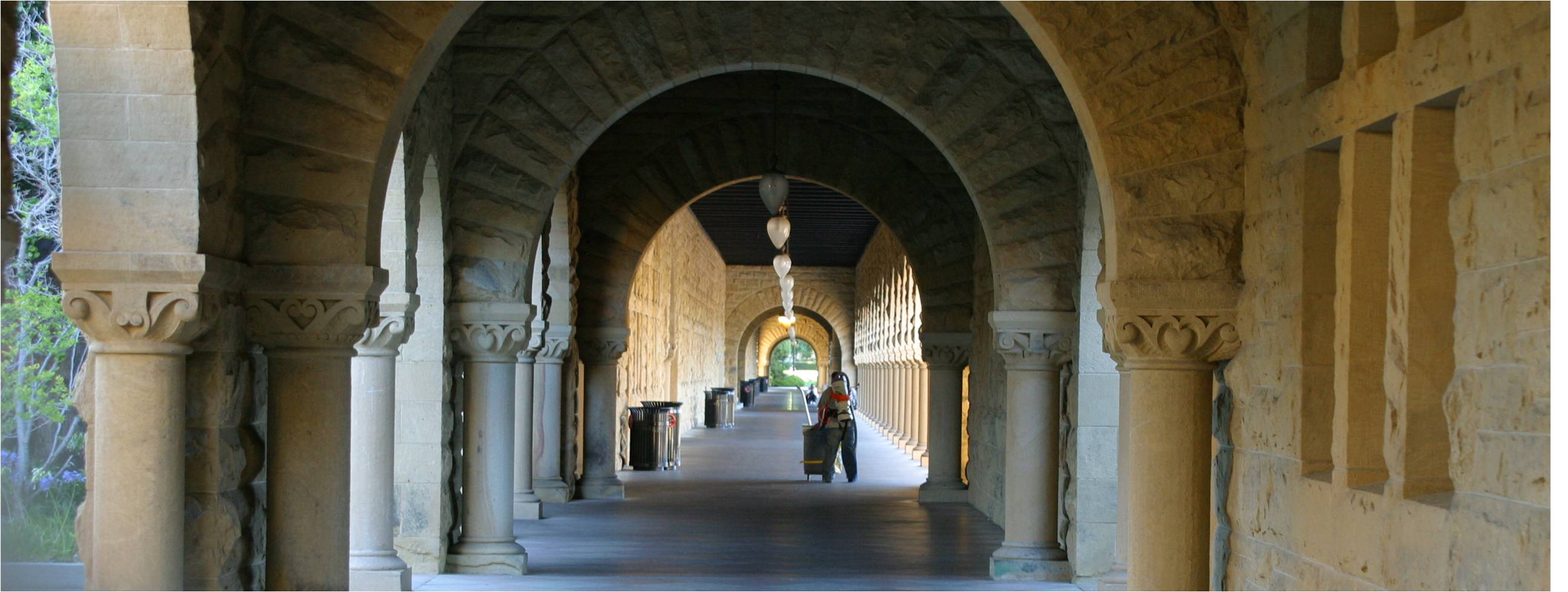
stanfordcloisterEngineers do not have a great reputation for being charismatic leaders or communicators. In both print and speech we have a tendency towards being precise and concise, which often also means boring. However communicating is probably the most important part of the job for many engineers and for this charisma is important. The German historian and sociologist, Max Weber observed that people voluntarily comply with three types of authority: traditional, rational-legal and charismatic. Traditional authority is the type vested in age-old rules and conventions; so not much chance of engineers possessing much of this type of authority. Rational-legal authority derives from the bureaucratic or administrative system, the ‘laws’ enacted by it and their implementation by those appointed within the system; so again not much hope for engineers except within some engineering organisations. Charismatic authority is possessed by individuals who appear to be extraordinary or have ‘at least specifically exceptional powers or qualities’. I think engineers have a decent chance of this last type of authority. As a profession, we have pretty extraordinary powers. Just look at our ability to provide round-the-clock water, food, energy, shelter and transportation in densely populated cities. Never mind adapting systems to cope with natural disasters or designing vehicles to land on Mars. So as individuals we need to develop exceptional qualities of integrity and communication, if we want society, or even just the CEO, to listen to and accept our advice.

Many engineers will shy away from the line that I have expressed above, preferring to hide in the test lab or behind their computer screen. This is in part because engineers are trained as problem-solvers and solving problems often requires a degree of solitude and silence that is not compatible with high profile communication. This conflict is shared by many scientists, who are often judged by their publication profile rather than their scientific achievements in part because it is easier to count publications that to assess the significance of achievements. Some of us enjoy the solitude of writing blogs, lectures and papers. I find the process deepens my understanding and goes a long way to resolving the conflict between communicating and problem-solving. However, it can be difficult in a modern professional life to create the necessary calm for problem-solving creativity.

Marily Oppezzo and Dan Schwartz at Stanford University have shown that taking a walk can stimulate creativity. So perhaps monks knew this when they built magnificent cloisters adjacent to many great cathedrals and monasteries in Europe. However, you don’t need a beautiful set of cloisters, the Stanford researchers found that creativity increased by the same amount whether their subjects strolled in Stanford’s lovely leafy campus or walked on a treadmill opposite a blank wall. So next time you feeling challenged by the preparation of a charismatic talk or you are stuck solving a problem, take stroll. The Stanford team found that eight minutes was enough to produce an appreciable improvement in creativity.

And oh, yes. Don’t forget to leave behind all your electronic devices when you walk. Their silence is crucial. See my post entitled ‘Silence is golden’ on January 14th, 2014.

Sources:

Robert P Crease, ‘Critical Point: Why don’t they listen?’ Physics World, May 2014

Max Weber, ‘Economy and Society’, 1922

Gretchen Reynolds, ‘Take a walk to stimulate creativity’, INYT, May 7th, 2014

Oppezzo, M., J. Schwartz, D., Give your ideas some legs: the positive effect of walking on creative thinking, Experimental Psychology: Learning, Memory & Cognition, April 2014.

Felicity Mellor, Shhhh?  Scientists need to talk about not talking, The Guardian Newspaper blog January 15th, 2014 also The power of silence, Physics World, April 2014