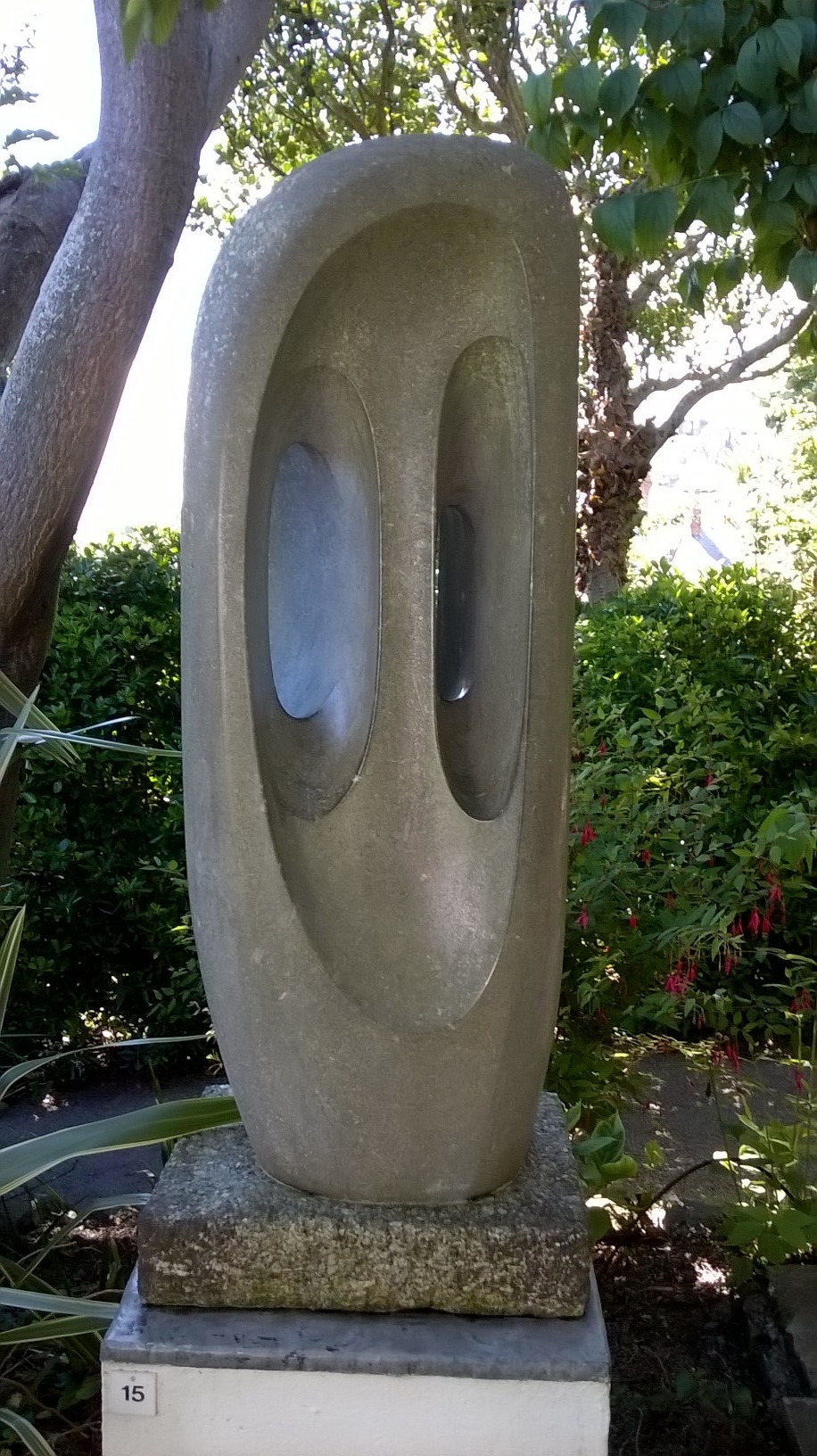
 I have written about the virtues of mind-wandering on a number of occasions. A recent article in the Harvard Gazette has stressed the importance of distinguishing between intentional and unintentional mind-wandering. Unintentional mind-wandering or loss of concentration happens more frequently than we perhaps would like to admit. Some research has shown that office-workers are distracted every three minutes and that it takes about 20 minutes to achieve a high level of engagement in a task. Obviously, I am not advocating unintentional mind-wandering but the intentional kind that occurs when we achieve the ‘Steadiness and placidity‘ that Michael Faraday found so productive [see my post on July 13th, 2016]. Perhaps this is important to our creativity because, to quote Barbara Hepworth, ‘Ideas are born through a perfect balance of our conscious and unconscious life and they are realized through this same fusion and equilibrium.’ And, creativity contributes to workplace success, healthy psychological functioning and the maintenance of loving relationships according to Oppezzo and Schwartz [see my post: ‘Love an engineer‘ on September 24th, 2014].
Sources:
Reuell, P., Minding the details of mind wandering, Harvard Gazette, July 20th, 2016 online at http://news.harvard.edu/gazette/story/2016/07/intentional-mind-wandering/
Hepworth, B., ‘Sculpture’, in Circle: International Survey of Constructive Art, JL Martin, B Nicholson & N Gabo (editors), London 1937 reproduced in Bowness, S., (editor), ‘Barbara Hepworth – Writing and Conversations’ London: Tate Publishing, 2015.
Oppezo, M., & Schwartz, D.L., 2014, ‘Give your ideas some legs: the positive effect of walking on creative thinking’, J. Experimental Psychology, Learning, Memory & Cognition, 40(3):1142-1152.
Image: photograph taken in the Barbara Hepworth Musuem and Garden in St Ives.




 Realize Engineering