Category Archives: Soapbox

Innovation jobs

Yesterday, I listened to an interesting talk by Dr Liang-Gee Chen, President of the National Applied Research Laboratories of Taiwan at the UK-Taiwan Academic-Industry & Technology Transfer Collaboration Forum organised by the British Council.  He presented some statistics from the Kaufmann Foundation [http://www.kauffman.org/research-and-policy/business-dynamics-statistics.aspx], which demonstrated that nearly all new jobs in the USA are generated by new companies.  When you combine this with my conclusion in my posting on ‘Population crunch’, that we need a higher level of innovation in engineering, then we need to review the education programmes provided for our engineers to ensure that they include innovation and entrepreneurship.  These need to be integrated in engineering education programmes [see Handscombe et al, 2009].  We seem to have lost the plot in the UK and retreated to teaching engineering science, design and management orientated towards the employers with the loudest voice, i.e. multi-nationals, who are not likely to be the source of innovation jobs that will pull us out of the global recession.

Handscombe, R.D., Rodriguez-Falcon, E., Patterson, E.A., 2009, ‘Embedding enterprise in engineering’, IJ Mechanical Engineering Education, 37(4):263-274.

Population crunch

The current growth trends suggest that the global population will increase by a billion in the next few decades, with perhaps 500 million additional people in Africa and the same number in Asia [see http://www.un.org/esa/population/publications/longrange2/WorldPop2300final.pdf%5D.  Another observable trend is urbanisation.  Thus, taking these together it is not unreasonable to expect most of the population growth to occur in cities.  The typical size of cities in Africa is 0.5 million people and so we might expect to see 1000 new cities in Africa and perhaps around 500 in Asia where the average size is 1 million.

The challenge for engineers is to provide an acceptable quality of life in these cities.  This involves providing a built environment, food, energy, transport and health care using scientific advances in novel materials, information communication technology, biosciences, electronics and photonics.

Can it be done? Probably, but it will require a higher level of innovation than is the norm at the moment, otherwise the population crunch might take many forms.

Waste is unavoidable

Image from http://www.nucleartourist.com/systems/ct.htm
Courtesy KKN Liebstadt NPP

If you read my previous post on perfect engines, then you might have thought a heat engine that did not discharge any heat would be more efficient.  However, this would contravene the second law of thermodynamics, which requires that every real process must generate an increase in disorder, in this case by the discharge of waste heat.  Thermodynamicists like to call this increase in disorder, an increase in ‘entropy’.

A consequence of the second law of thermodynamics is that the entropy, or disorder, of the universe is always increasing; but now I have strayed from engineering to physics.  Together with Bob Handscombe, I wrote a book on this topic called the ‘Entropy Vector: Connecting science and business’.  It was not a best-seller but it got some good reviews, see http://www.worldscientific.com/worldscibooks/10.1142/5365#t=reviews.

Perfect engines

We can’t build perfect engines and even if we could they would not be 100% efficient. A heat engine generates power [or does work] by absorbing heat from a source into a working fluid, often water,Image using the hot fluid to create motion, e.g. via a turbine, then discharging waste heat to a heat sink before pumping the fluid back to the heat source.  This is the operating cycle of most power stations.  The heat source might be a fossil fuel furnace, a nuclear reactor or a solar concentrator; and the heat sink is often the environment.

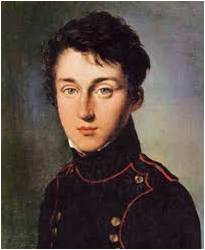
A Frenchman, Nicolas Leonard Sadi Carnot [1796-1832], deduced that the best efficiency achievable by a heat engine was given by one minus the ratio of the temperatures [in Kelvin] of its heat sink to heat source.

A perfect heat engine operating with a heat source at about 350°C [623K] and a heat sink at 20°C [293K] would have a Carnot efficiency of about 45%.  We can only hope to increase this efficiency by finding a naturally occurring very cold heat sink or by increasing the temperature of the heat source, which is why we are interested in strain measurement in very hot components (see post on ‘hot stuff’) –  we don’t want our super-efficient engines to break!